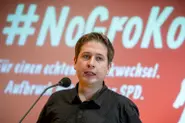
The new, leftist leaders of Germany's Social Democrats offered Angela Merkel's struggling coalition a lifeline at a key congress on Friday but vowed to push for more action on climate protection and public investments.
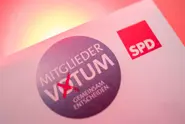
The SPD started a membership ballot Tuesday on whether to again govern under Chancellor Angela Merkel's conservatives after an opinion poll showed them trailing the
far-right AfD for the first time.
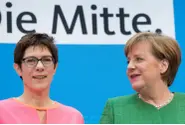
The popular female premier of tiny Saarland state is set to take over as secretary general of Angela Merkel's conservative party, sources said Monday, fuelling speculation the chancellor is lining up her potential successor.
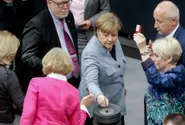
German Chancellor Angela Merkel vowed on Sunday to serve another full four-year term despite growing criticism within her conservative ranks of the sweeping concessions she made to hold onto power.
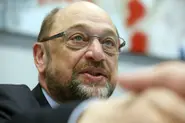
Barely a year after promising to jolt Germany's oldest party back to life, Martin Schulz has said he will step down as leader of the Social Democrats - weakened by a poll debacle and a U-turn too many.
Coalition talks between Germany's centre-left and conservative parties have been finalized and a deal to form a fourth Merkel government has been struck.
Chancellor Angela Merkel's conservatives and the centre-left Social Democrats embark on a final round of talks on Tuesday to seal a coalition deal and end months of political limbo in Europe's top
economy.
Talks between the top German parties on forming a new government for Chancellor Angela Merkel's fourth term spilled into overtime Monday but confidence appeared to be growing they would strike a deal.
Shortly before the end of grand coalition talks with Chancellor Angela Merkel's conservatives, support for the Social Democrats (SPD) has reached a historic low of 18 percent, according to a new survey.
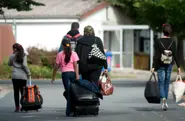
Germany's parliament voted after a heated debate on Thursday to resume family reunions for temporary refugees from mid-year but sharply restrict the number of relatives arriving at 1,000 a month.
Chancellor Angela Merkel’s conservatives agreed with the Social Democrats on Tuesday to allow refugee family reunions to bring up to 1,000 people a month to the country, removing a key hurdle in their talks to form a government.
At the weekend the Social Democrats (SPD) voted to continue coalition talks with Angela Merkel’s conservatives. But the left-wing of the party believe they can still collapse the talks.
While Social Democrats (SPD) leader Martin Schulz continues to promote the new edition of a grand coalition after an agreement was reached with Chancellor Angela Merkel’s conservatives on Friday, more and more of his colleagues are speaking out against it.
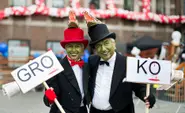
Nearly three months after Germany’s general election, the Social Democrats are considering a “KoKo” or a “cooperation coalition” with Merkel’s conservatives. But what exactly could this agreement entail?
The head of Germany's Social Democrats, Martin Schulz, said on Monday he had been urged by French President Emmanuel Macron and other European leaders to join Chancellor Angela Merkel's next government and
push for EU reforms.
Germany came in for a political first on Tuesday as a new poll showed combined support for Chancellor Angela Merkel's coalition government dropped below 50 percent for the first time.
Voters are abandoning Germany's ruling grand coalition government for smaller parties, a poll released on Wednesday suggested, amid dissatisfaction with in-fighting and squabbles.
Germany's junior government coalition partner, the centre-left Social Democrats, seem to the public to be defining policy more than Chancellor Angela Merkel's conservatives, according to a survey.
Merkel's "grand coalition" government is such an extreme combination of passivity and aggression, it is practically sado-masochist, Malte Lehming argues in Cicero magazine this month.
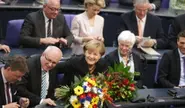
The German parliament elected Angela Merkel to her third term as chancellor on Tuesday morning. Merkel won 462 of the 631 votes from the members of parliament.
Professor Michael Wohlgemuth, director of think tank Open Europe Berlin, looks back on the last four months since Germany’s election campaign began and argues there are no great expectations of the “grand coalition”.
Germany's next foreign minister, Frank-Walter Steinmeier, is a familiar face in world capitals, having held the same job just four years ago, before being beaten by Chancellor Angela Merkel in the 2009 election.
Germany's new "grand coalition" government on Sunday unveiled Chancellor Angela Merkel's cabinet for her third term, with a long-time rival to take its toughest job.
Germany's centre-left Social Democrats overwhelmingly approved the formation of a "grand coalition" government under Chancellor Angela Merkel on Saturday, removing the final obstacle to her third term.
Germany's top parties hope to end three months of political limbo at the weekend by giving final approval to a coalition deal. But thousands of votes cast by party members to ratify the agreement are invalid, reports on Thursday said.