Germany has decided to start a fresh search for a radioactive waste depot site in the country, delaying for years a tough decision on an issue that has long divided the nation.
Since radioactive waste started being transported to a nuclear waste facility in Lower Saxony, fewer girls have been born in the region – a phenomenon eerily similar to what happened after the Chernobyl nuclear disaster, scientists said.
The nuclear waste convoy which has spent the last few days making its way from France to Germany reached its destination on Monday night, leaving around 100 police officers and more than 350 protesters injured.
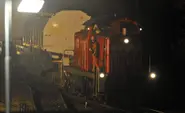
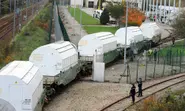
The train taking radioactive waste from a French reprocessing centre to storage in northern Germany completed the rail stage of its journey early on Monday morning, after days of fierce protests.
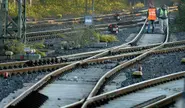
Trains are running once again between Berlin and Hamburg after workers cleared the rail lines Saturday evening following a suspected arsonist fire on the tracks.
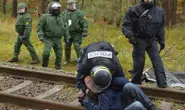
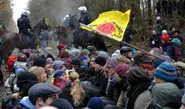
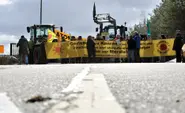
Police early Sunday began to clear thousands of anti-nuclear protestors from railroad tracks to allow the passage of a train carrying radioactive waste from France for to a storage facility in Lower Saxony.
Thousands of anti-nuclear protestors were awaiting the arrival of a train carrying radioactive nuclear waste from France to its destination in northern Germany Saturday.
The police will deploy 19,000 officers to secure a shipment of German atomic waste from France to Lower Saxony next week amid expectations of huge anti-nuclear protests.
Five weeks after massive protests stalled the delivery of radioactive waste from France to Germany’s controversial Gorleben facility, another convoy began a similar trip on Wednesday. It is expected to cross the border sometime after noon.
In the wake of reports that the community around the Asse atomic waste dump in Lower Saxony has suffered a rise in cancer cases, authorities insisted Friday the illnesses were not caused by nuclear contamination.
A row has broken out over the use of French police officers in Germany during last week’s demonstrations against the nuclear waste transport to Gorleben. Meanwhile northern ports cities could refuse to let new waste transports through.
Germany must search for alternative storage facilities for nuclear waste in the event that the site at Gorleben is deemed unsafe, Hesse's state premier Volker Bouffier said Friday.
German police and protesters geared up Monday for the final journey of a shipment of 123 tonnes of nuclear waste that drew a wave of angry protests during its much-delayed trip from France.
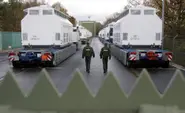
A train carrying over 100 tonnes of nuclear waste completed its journey to Germany, setting up a final showdown between police and protestors Monday before the dangerous cargo is deposited underground.
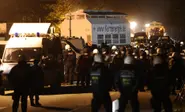
Police clashed Sunday with activists trying to halt a train carrying nuclear waste from France to Germany as protests against the shipment turned increasingly violent.
Anti-nuclear protestors chained themselves to train tracks in France on Friday, blocking a nuclear waste delivery billed by opponents as the “most radioactive in history” on its way to Germany.
Over a hundred anti-nuclear power demonstrations are expected to take place throughout Germany on Saturday, mostly directed at the transport of radioactive waste to the controversial storage site near Gorleben.
Police are expecting massive demonstrations and riots next month when a transport of 11 containers of highly-radioactive waste is due to be brought from France to Gorleben, Lower Saxony.
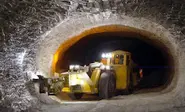
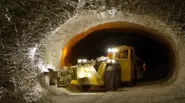
The former geological surveyor for the controversial nuclear waste depot Gorleben warned Wednesday that there could be dangerous gas deposits lurking beneath the old salt dome caverns.
The German government is reportedly considering extending the scheduled end to nuclear energy until 2050, though it’s not clear whether some of the country's power plants can continue operating that long.
German Environment Minister Norbert Röttgen is reportedly considering stripping the Federal Office for Radiation Protection (BfS) of its nuclear waste duties to expedite storage at the controversial Gorleben site.
The negotiating government coalition partners seem to have agreed on the outlines of a future energy policy – with nuclear power as a key component to bridge the time until renewable sources such as wind and solar supply what is needed.
The Federal Office for Radiation Protection (BfS) said Thursday that Germany's controversial nuclear waste storage facility in Gorleben cannot be considered as a permanent depot after new allegations about its safety emerged this week.
The Federal Office for Radiation Protection (BfS) said Wednesday that Germany needs to look for a new nuclear waste depot because the current Gorleben facility has “many birth defects.”