From mind control in the middle of Berlin to mysterious assassinations, Germans have no shortage of unbelievable yet slightly possible conspiracies to wrap your head around.
The International Energy Agency said Friday that Germany must shield its consumers from paying too much of the cost of its ambitious switch from nuclear power and fossil fuels toward renewable energy.
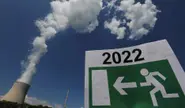
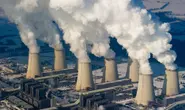
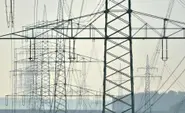
Germany's energy transition project - in which nuclear power will be phased out and replaced with energy from renewable sources - is facing the challenges of cheap coal, unresolved energy storage and an out-of-date electricity grid.
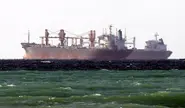
After a freighter went up in flames at the start of the month while carrying radioactive material into Hamburg's harbour, it has emerged that the German port city receives such hazardous cargo up to seven times a month.
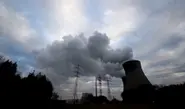
Germany has decided to start a fresh search for a radioactive waste depot site in the country, delaying for years a tough decision on an issue that has long divided the nation.
Two years after the Fukushima nuclear disaster in Japan, major German banks are funding atomic power projects despite having promised not to do so, a new study claims.
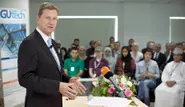
Germany's foreign minister said on Friday he wanted his EU counterparts to consider further measures against North Korea beyond UN sanctions in the wake of Pyongyang's recent provocations.
German Foreign Minister Guido Westerwelle on Wednesday welcomed US President Barack Obama's commitments to nuclear disarmament and a transatlantic free trade initiative in his State of the Union address.
The United Nations should consider more sanctions against North Korea as a response to Pyongyang's third nuclear test, German Foreign Minister Guido Westerwelle said on Tuesday.
Despite the German government's dedication to ridding the country of nuclear power, it will continue to use public money to guarantee the construction of such power stations in other countries, it was reported at the weekend.
Grid operators vastly overestimated the cost of developing Germany's electricity grid to cope with the planned switch from nuclear to renewable energy, it emerged Sunday.
German power giant RWE will build no more nuclear power stations - not only in Germany, where nuclear power is to be phased out by 2022 - but anywhere in the world, the company announced on Monday.
In a direct challenge to Chancellor Angela Merkel on Wednesday, Bavarian State Premier Horst Seehofer warned that his state will go it alone if the government doesn’t speed up the nuclear phase-out.
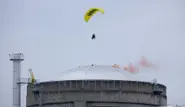
A German man was in French police custody on Wednesday, after dropping a smoke bomb onto a nuclear power station near Lyon from his paraglider as part of a Greenpeace initiative to show up security gaps.
German Foreign Minister Guido Westerwelle said on Sunday on a visit to Oman that countries must take action against smuggling to Iran to help avert an escalation over Tehran's nuclear programme.
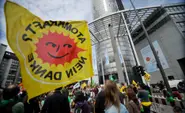
German Chancellor Angela Merkel defended her country's decision to phase out nuclear power on Saturday, speaking on the eve of the first anniversary of Japan's Fukushima disaster. But Germany has its work cut out if it is to reach ambitious national targets.
RWE, Germany's second biggest-power supplier, said Tuesday earnings last year were hit by a one-billion-euro ($1.3-billion) charge related to the shutdown of some of its nuclear power plants.
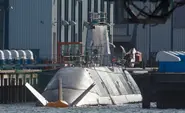
A controversial submarine soon to be delivered to Israel – the largest produced in Germany since World War II – has made an appearance at the northern port city of Kiel.
Germany’s electricity grid came to the brink of blackout last week – not because of the cold, but because traders illegally manipulated the system. They tapped emergency supplies, saving money but putting the system at risk of collapse.
After exporting power to France earlier this week, Germany has switched on reserve energy plants amid surging demand for electricity due to the ongoing deep freeze hitting Europe.
The leaders of Britain, France and Germany late on Monday called on Tehran to immediately suspend its nuclear activities after the EU slapped an embargo on Iran's oil exports as part of tough new sanctions.
Tech giant Siemens has warned that Germany’s nuclear phase-out could cost the country nearly €2 trillion by 2030, much higher than previously estimated.
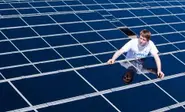
Predictions that Germany's decision to phase out nuclear energy will lead to the creation of hundreds of thousands of jobs in the renewable energy sector have met with scepticism.