After years of pressing for tighter financial regulation German politicians got a bad case of schadenfreude and "I told you so" last week as US financial system grappled with the biggest crisis since the Great Depression.
German business confidence dropped for the fourth straight month in September, the key Ifo index showed on Wednesday, as the biggest European economy was gripped by the international financial crisis.
Germany on Monday said the country would not participate in the US government’s $700-billion bailout package for troubled banks, as Chancellor Angela Merkel renewed her call for greater regulation of the financial sector.
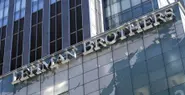
The €350-million transfer to Lehman Brothers from German state development bank KfW transfer was not a mistake, according to the Monday edition of daily <i>Frankfurter Allgemeine Zeitung</i>.
Three officials called "Germany's dumbest bankers" have been suspended at state development bank KfW after it mistakenly wired a huge sum of money to Lehman Brothers as it was collapsing.
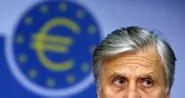
The European Central Bank and the world's top monetary authorities on Thursday announced a huge onslaught to boost the liquidity available to troubled global money markets.
State development bank KfW was assailed by the German government on Wednesday for mistakenly transferring €300 million ($427 million) to Lehman Brothers just as the US investment bank was collapsing.
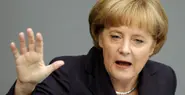
German Chancellor Angela Merkel on Wednesday called for tighter regulatory control on the international financial system following the recent turmoil on Wall Street.
German economists and banking experts said on Tuesday the world’s third largest economy would likely cope fairly well with the fallout from the demise of US investment bank Lehman Brothers.
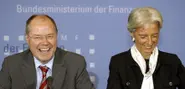
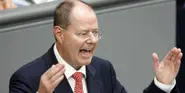
Despite dark clouds on the horizon, Finance Minister Peer Steinbrück said on Tuesday Germany was well positioned to weather the financial crisis that brought down US investment bank Lehman Brothers.
German Finance Minister Peer Steinbrück on Friday rejected the idea of a European stimulus plan to revitalize the economy, as EU finance chiefs gathered to map out a way to avert a recession.
German prices at the factory gate, an early indicator of inflation, rose at their fastest rate in 27 years in July, data showed Tuesday in another worrying sign for Europe's biggest economy.
A squeeze on lending to home buyers and businesses that followed the US subprime crisis has shown slight signs of easing in the last three months, the European Central Bank said on Friday.
The European Central Bank raised its key interest rate as expected by a quarter of a percentage point to 4.25 percent on Thursday to combat surging inflation in Germany and the rest of the euro zone.
German inflation picked up speed in June, jumping to an annual 3.3 percent, the fastest pace since 1993, from 3.0 percent in May, official figures showed Friday.
German investor confidence has plunged to the lowest level since late 1992, a survey showed on Tuesday, due to record oil prices and expectations of higher borrowing costs in the euro zone.
German inflation reached 3.0 percent in May as the cost of energy stoked consumer price increases in the biggest European economy, figures released Friday by the Federal Statistics Office showed.
German industrial production declined further in April, the ministry of industry said Friday, another sign that Europe's biggest economy is slowing down.
Germany's central bank said Friday that growth in Europe's largest economy might be more subdued over the coming months, but it expects a pick-up later as global conditions improve and inflation abates.
European finance and political chiefs toasted on Monday the European Central Bank's tenth anniversary even as record inflation cast a pall over the party.
German prices at the factory gate jumped by 5.2 percent in April, the biggest 12-month increase since August 2006, figures from the national statistics office showed on Tuesday.
The Bundesbank said on Monday it expected only modest growth for Germany in the coming months following the scorching rate of expansion the world’s third-largest economy notched in the first quarter of 2008.
The German economy got off to a stronger-than-expected start to the year, growing 1.5 percent in the first quarter, preliminary data from the Federal Statistics Office showed on Thursday.