Germany's divided Social Democrats will hold a crunch vote on Sunday on whether to pursue a coalition deal with Chancellor Angela Merkel's conservatives, or plunge the nation into political turmoil.
Germany inched toward a new government on Friday as Chancellor Angela Merkel and the centre-left Social Democrats agreed to move ahead with formal talks to build a coalition.
The German Press Agency (DPA) has seen inside the 28-page paper that is the result of five days of talks between the Christian Union and the Social Democrats on forming a new government. Here are the key points.
The political crisis in Berlin challenges the idea of "German exceptionalism" as an anchor of democratic stability and a bulwark against a wave of populism, analysts said on Tuesday.
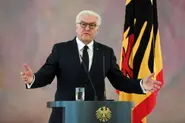
Germany's president was to lead a push from Tuesday to save the EU's top economy from the political turmoil sparked by the collapse of Chancellor Angela Merkel's coalition talks.
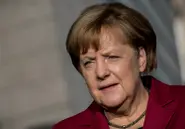
Chancellor Angela Merkel said on Monday that she was ready to lead her party into snap elections rather than risk leading an unstable minority government, after the collapse of coalition talks plunged Germany into a political crisis.
He is Germany's fresh-faced political
whizzkid, likes to tweet selfies, and shortly after midnight plunged
Chancellor Angela Merkel's caretaker government into turmoil.
In Germany’s biggest political upset in years, FDP liberals walked out on coalition talks with Chancellor Angela Merkel’s conservatives and the Greens. So what is Merkel’s next move? We take a look at the possible scenarios.
Chancellor Angela Merkel was scrambling to drag Germany out of crisis on Monday after high-stakes talks to form a new government collapsed, potentially forcing Europe's top economy into snap
elections.
German shares slid and the euro took a hit on Monday after talks to form a governing coalition failed, a rare sign of uncertainty in Europe’s biggest economy.
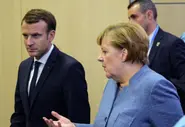
French President Emmanuel Macron expressed concern on Monday about Germany's political deadlock after talks to form a new government under Chancellor Angela Merkel failed.
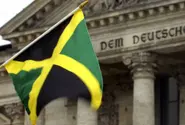
Our podcast this week looks at why Jamaica is all the rage in Germany, why Sweden is deporting its most talented workers, and why the F-word is all the rage in France.
Tough talks to form Germany's next government went into overtime Friday, putting Chancellor Angela Merkel's political future in the balance as failure to produce a deal could force snap elections.
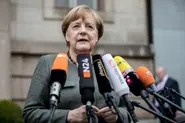
Chancellor Angela Merkel warned that "serious differences" remain between the parties hoping to form Germany's next government but voiced hope a deal would emerge on Thursday, hours before a deadline that could trigger snap polls.
There are only two days left for the parties trying to forge a new German government to agree in principle on a set of policies for the next four years. If they can’t, Germany faces the prospect of new elections.
German Chancellor Angela Merkel and other party leaders vowed on Friday to push on with thorny coalition talks and refrain from personal insults, despite deep differences on hot-button issues from immigration to climate change.
Threats, name-calling and a whole lot of dramatic posturing: talks among four fractious parties to form a new government under German Chancellor Angela Merkel have proved more fiery than
fruitful so far.
Germany's biggest political parties are in the throes of heated coalition debates. With the deadline looming, ministries are fighting over issues from gay marriage to pay and dual citizenship.
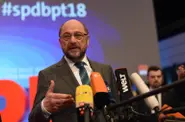
Germany's Social Democrats said Friday they will begin talks with Angela Merkel's Christian Democrats, who are trying to put together a "grand coalition" with their election rivals.
The Social Democrats will meet on Friday evening to discuss going into government with Angela Merkel. But concerns are so strong that this could upset party members that leaders are expected to call for a full party vote on any negotiations.