
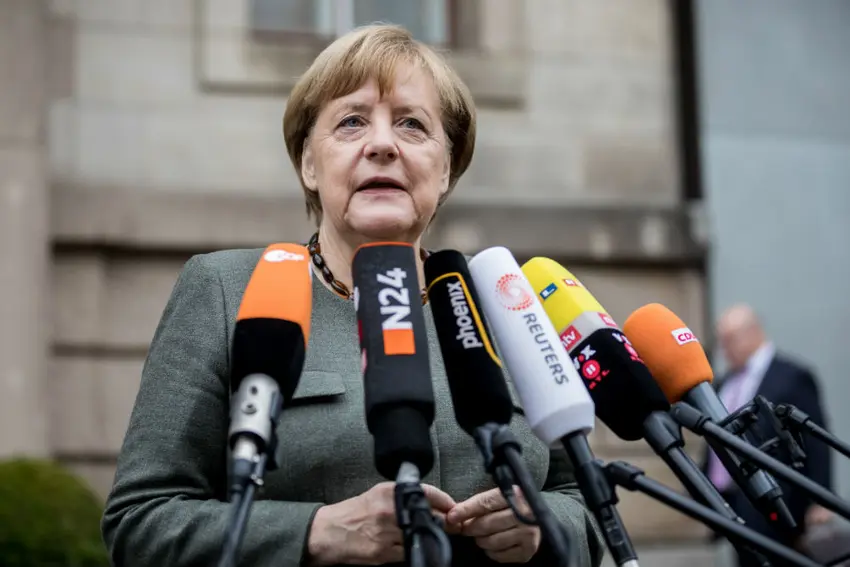
We have "very different positions" on some policy issues, Merkel told reporters, adding however that "I believe it can work".
After weeks of quarrelsome exploratory talks, Merkel's CDU/CSU bloc, the pro-business Free Democrats (FDP) and the left-leaning Greens are holding a final day of negotiations before announcing whether they have found enough common ground to begin formal coalition negotiations.
The awkward bedfellows, who differ on everything from refugees to climate protection and EU reforms, have been pushed together by September's inconclusive election, which left Merkel badly weakened as the far-right Alternative for Germany (AfD) lured millions of voters.
READ ALSO: These are the disagreements taking German coalition talks down to the wire
The conservatives are eager to tighten asylum policy after voters punished Merkel's decision to allow in over a million migrants and refugees since 2015.
Merkel's Bavarian CSU allies are even calling for a cap on migrant numbers, pitting them against the Greens who want to ease restrictions on family reunifications for asylum seekers.
The FDP's Kubicki urged the Greens to soften their stance, but they appear in little mood to compromise after already watering down key campaign pledges to overcome deadlocks on the environment.
The Greens notably abandoned demands for a 2030 end date for coal-fired plants and the internal combustion engine, and called on the other parties to show the same flexibility.
But Green proposals to make polluting diesel cars less attractive and close the country's 20 dirtiest coal plants have also met with resistance from the conservatives and the FDP, who worry about job losses and disrupting the mighty auto and energy sectors.
'Take Macron's hand'
Despite the divisions, the parties have been able to reach some broad agreements in recent weeks.
At a time when the state coffers are bulging, they have committed to maintaining Germany's cherished balanced budget, improving the nation's outdated internet infrastructure and increasing child benefits.
The draft document seen Thursday revealed that they have also agreed to phase out the so-called "solidarity surcharge" payments to Germany's lagging eastern states, introduced after reunification in 1990.
The parties, who are broadly pro-EU, also made headway on Europe after the liberal Free Democrats dropped their demand to wind down the eurozone's bailout fund.
Should a Jamaica government emerge, French President Emmanuel Macron could find in Merkel a willing and welcome co-pilot in his ambitious drive to reform the bloc - although his plans for a eurozone budget and finance minister will still prove divisive in Berlin.
The Greens' co-leader Cem Ozdemir said Germany should "take Macron's extended hand" and play a leading role in strengthening Europe.
As the clock ticks down towards the crunch deadline, commentators say all sides will want to avoid triggering snap polls that could end up bolstering the AfD.
Surveys suggest there is little appetite for a return to the ballot box, and some two-thirds of voters say they expect the coalition negotiations to succeed.
Comments