Germany is known for having a substantial support system, especially for families with kids. So how much do parents tend to spend on childcare and how does it stack up against other countries in Europe?
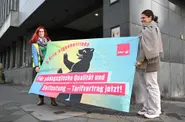
Berlin parents won't have to deal with childcare strikes that could last for weeks. Meanwhile, improvements are on the way for German kitas around the country - according to the federal government.
A recent study by the Federal Institute for Population Research (BiB) finds certain groups are still disadvantaged in the search for childcare spots in Germany—even though parents are supposed to be legally guaranteed one.
Working parents often face difficulties in finding childcare for school-age children that lasts all day. But the German government has taken a huge step forward to tackle this.
Throughout Germany there is a shortage of Kita, or childcare, spots. But a new Berlin programme is giving parents who can't secure a spot reimbursement for private care. Here's what you need to know.
Studies show that, not only do parents pay radically different prices for childcare across Germany, the poorest are also hit hardest. Will plans to completely cut charges solve the problem?
Families Minister Manuela Schwesig called on Wednesday for local governments to find a pay and conditions deal with daycare and social workers to avoid a new round of strikes.
When Verena Herz found out she was pregnant with twins, she had no idea what she was in for. Luckily, she was able to borrow a grandmother. The Local learns the advantages of welcoming a new grandparent into the family and why Omas and Opas say: "I tell everybody about it!"
German parents are unhappy with family support on offer from the government, according to a new study. Most said they wanted more day care places and help balancing work and caring for children.
Being a nanny or au pair can be a great way to experience German culture, but there can be pitfalls. Nicolette Kalbfell explores the ins and outs of working in Munich.
Germany’s family policies, with its billions of euros in support programmes, are largely ineffective and in some cases counterproductive, a study commissioned by the German government and reported by <i>Spiegel</i> on Sunday showed.
German grandparents could be legally entitled to time off work to help look after new grandchildren, initial details from a family ministry proposal suggest.
German lawmaker Dorothee Bär plans to go back to work eight weeks after the birth of her third child at the end of the minimum maternity leave, as she did for her first two children.
The global economic crisis is having a negative impact on German children, who have seen their allowances shrink this year, according to a new study published on Tuesday.
German mothers with young children who work full-time are happier than those who are employed part-time or stay at home, research released Tuesday indicated.
An ongoing strike by day care workers expanded to states in eastern Germany for the first time on Tuesday in an attempt to increase pressure on public employers to provide better working conditions and wages.
Public day care centres remained closed in much of Germany on Tuesday as workers staged a third day of strikes to pressure state employers into better wage and health care benefits.
Public day care workers began an open-ended strike in five German states on Friday in an ongoing wage and healthcare dispute. Parents were forced to find last-minute alternatives or stay home from work.
German Family Minister Ursula von der Leyen is opposed to proposals to extend paid maternity leave for women to 18 months, warning they could backfire and hamper jobs in Germany.