Applications are open for a third and final round of our popular Solutions Journalism for Migration Reporters course, run by The Local's journalists and offered free for journalists and students in the EU.
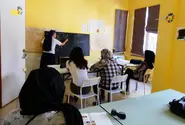
A university degree doesn't always guarantee that newly arrived foreigners will easily break into the Swedish job market. But fast-track training programme Korta Vägen hopes to boost their chances.
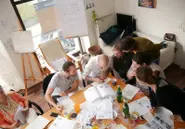
Meet the people behind a school that's hoping to close the talent gap in Germany's tech industry – while helping refugees and migrants kick-start their career in their new country.
In Sweden, every fourth student in compulsory education has a foreign background, which means that they were either born abroad or born in Sweden with both parents from abroad. However, students from Swedish families and their peers with foreign backgrounds are meeting less and less often in schools, in a result of increased segregation that is posing a challenge for many municipalities.
Cambridge Convoy Refugee Action Group, otherwise known as CamCRAG, is a small Cambridgeshire-based charity that was established in response to the migrant crisis in 2015. A small number of people, eager to make a difference, started to travel across the English channel to the Calais refugee camp to help out local aid organisations in the area. The mission soon grew to regular convoys, driving volunteers and donations on Fridays down to France, and taking the group back on Sunday evenings.
The coronavirus pandemic has forced many universities and students to shift from traditional to online learning methods in order to follow health and safety restrictions. While a blessing for many, for some international students, it appears to be a double-edged sword.
International students face many challenges during their stay in Sweden, ranging from classes in English to emotional and social setbacks. The key to the Swedish society and labour market is found in the Swedish language, which can become a barrier to students' ability to socialise. But in the town of Växjö in southern Sweden, students have formed a study circle to help each other.
Eastern European construction workers in Denmark have been plagued by unequal pay and subpar working conditions. Now the frontrunners of the Danish labour movement are trying to make them feel welcome.
Athens-based media organisation Solomon runs a training scheme for migrants and refugees that aims to give them the tools to tell their own stories themselves.
Thousands of migrants have moved to Sweden in recent years, but questions have been raised about balancing this with integration in the job market and society. A mentorship scheme with focus on work could be a way to bridge the gap between locals and newly arrived foreigners.
German authorities launched multilingual campaigns to make Covid-19 information more accessible, but concerns remain over the safety of asylum reception centres.
After an unpleasant encounter at a local market in the Czech Republic that was triggered by language barriers, Sarajevo-born Jelena Silajdzik, 66, knew things had to change.
Belgium needs IT workers, while disadvantaged migrants need the chance to access skilled jobs. A programme that trains refugees and asylum seekers in web development aims to help.
Facing discrimination on multiple fronts, activists in Bremen created Queeraspora: a group where LGBTQ+ people with a migration background can embrace all aspects of their identities.
Throughout 2020, The Local has offered training on a solutions-focused approach to migration reporting for over 100 journalists. Over the next few weeks we will be publishing some of their articles.
It’s been five years since German Chancellor Angela Merkel announced ‘Wir schaffen das’ — we can do it —and yet the EU is still struggling to find consensus over reforming its asylum policy. Now, local communities are taking the question of migrant integration into their own hands. One Berlin initiative is offering newcomers a pathway into German society, while providing a platform from which to tell their stories.
While conditions at refugee camps on the Greek island of Lesvos are dire, it hasn't stopped residents finding ways to live through the constant state of emergency.
About 50,000 refugees live in Hamburg, Germany's second largest city. More than half of them currently stay in public housing. They are supposed to move after six months; but on average, refugees remain in these temporary solutions for more than three years.
In 2015 the four million people fleeing Syria's civil war grabbed the world's attention. As the UK government pledged to resettle 20,000 of them, local communities were inspired to play their own part. Five years later, community sponsors say a scheme designed to help newcomers integrate has also helped their neighbourhoods thrive.
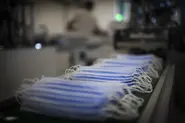
At the height of the Covid-19 pandemic, Dutch entrepreneurs teamed up with a work-learn programme for refugees to create the Netherlands' first face mask factory.
In Athens, one NGO has focused on adapting its services to suit refugees' needs, offering shelter, Greek and English lessons, food and above all a safe space.
Volunteers found that common interests and social events were key to fostering friendships between old and new residents of the German city of Wuppertal. Now, amid the coronavirus pandemic, they're having to find new ways to help.
When Cyprus went into lockdown in spring 2020, many migrants found themselves without easy access to food and other necessities. Here's how one charity quickly restructured its organisation to focus on its members' needs.
Bureaucracy might be a well-known source of grievances for most new arrivals in Germany, but for some, the burden is considerably heavier than for others. Meet the law students helping asylum seekers and refugees navigate German legislation.