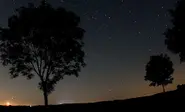
As Germany gears up to welcome in the 2015 Perseid meteor shower, The Local finds out how we can best experience one of the calendar's most stunning astronomical events.
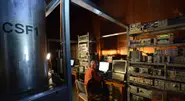
Germany's top time scientists are ready to spring into action in the dead of night on Tuesday, inserting an extra second into the clock while everyone else is asleep.
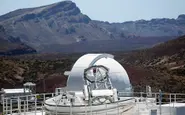
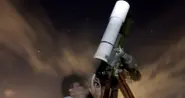
A powerful solar telescope billed as the largest in Europe opened Monday on Spain's Canary Islands which scientists say will allow them to study the sun in unprecedented detail. Its main backer was a German institute.
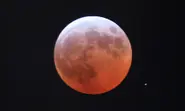
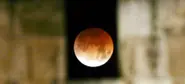
There will be a total lunar eclipse on Wednesday night, with fabulous views of the Moon reddening, disappearing and then reappearing expected across Germany.
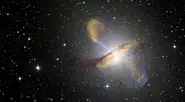
A pair of pioneering astronomers revealed Tuesday how they used a supercomputer to show that a nearby black hole is vastly more massive than scientists ever imagined.
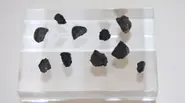
A German researcher has located nine ‘stinky’ pieces of the four-billion-year-old meteorite that broke through the atmosphere above Germany in January, daily <i>Bild</i> reported on Monday.
Police in Villingen-Schwenningen, a small town near the Black Forest in southwestern Germany found themselves with nothing better to do on Friday night than investigate a UFO sighting.
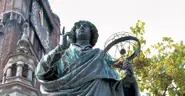
Poles are up in arms over what they complain is the European Commission's "Germanisation" of the name of the father of modern astronomy, Nicolas Copernicus, in the title of an EU space programme.
Much of Germany will be treated to a colourful lunar eclipse on Saturday evening, when the full moon is put into shadow by the earth coming between it and the sun.
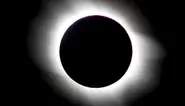
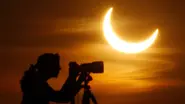
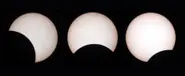
A partial solar eclipse will cast its shadow over Germany on Friday morning, but stormy weather over parts of the country could spoil the fun for hobby astronomers.