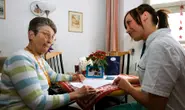
When Germany scrapped compulsory military service, along with the alternative civilian service in 2011, many feared shortages in the social care sector. But the opposite has been the case, it emerged on Wednesday.
Immigration pushed Germany's population higher in 2012, official statistics showed on Monday, the second gain in two years despite the country's rapidly ageing society.
Having employees between the ages of 45 and 67 increases a business' productivity, the German government announced on Tuesday in a report examining age-equality in the workplace.
Roughly one in five Germans believes they’ve been discriminated against because of their age – with the nation's youths feeling harder done by than its pensioners.
Scientists in central Germany are working on a method with which they reckon they could diagnose Alzheimer’s disease years before any symptoms are noticed – by looking up patients’ noses.
Hoyerswerda is Germany's fastest shrinking city – and a potential trailblazer for other communities facing demographic collapse. <b>Caitlan Carroll</b> reports on how its residents are trying to cope.
Are there limits to age and experience? When is it time to call it quits? <b>Roger Boyes</b>, Berlin correspondent for British daily The Times, explores Germany’s unhealthy age fetish.
A person’s lifespan depends on the month they were born, according to a new study by the University of Greifswald. November babies live on average nine months longer than those born in May, it found.
Many foreigners who came to Germany in the 1950s as “guest workers” have retired and now require special care. The situation has sparked a new niche market for retirement homes programmes that cater to the particular needs of ageing immigrants.
To a rock ‘n’ roll choir made up of singers in the autumn of their lives, Stairway to Heaven might seem an enticing choice of signature tune. But the bad boys and girls of the “Rock Not Retirement” group have opted instead for “Highway to Hell.”
A new book of portraits features the storied faces and fascinating tales of 100 German centenarians who participated in a genetics study. <b>Kristen Allen</b> spoke with photographer <b>Andreas Labes</b> about putting a human face on science.
The German baby food firm Hipp has found a recipe for growth even as the nation’s birth rate stays low and its population ages – feeding its products to elderly adults.
The Federal Statistic's Office on Wednesday forecast Germany's rapidly ageing population was likely to decline by 20 percent to around 65 million by 2060.
<b>With Germany’s society ageing rapidly, Roger Boyes, the Berlin correspondent of British daily The Times, explains why you soon might have to pay your grandmother for her valuable time.</b>
Up to 10,000 long-term unemployed Germans will be trained to care for people suffering from dementia, after a change in the law gave care homes budgets to employ more care workers.