Many German apartment buildings have a designated bin for unwanted advertisement pamphlets. An opt-in system may help reduce waste, but some believe it could be damaging for local business.
Germany's Volkswagen (VW) has
pulled an Instagram ad that showed a giant white hand pushing around a black person, saying it was "surprised and shocked" that viewers decried it as racist.
More and more children in Germany are much too overweight, according to the World Health Organization, who call for advertisements to be more restricted.
Despite their "Hot, Hot, Baby" advert being named the most sexist campaign in Germany, a Hamburg gym aren't worried. They've used the attention to help out a colleague, they tell The Local.
One of the parties in the Berlin government has set out its definition for what constitutes sexism in advertising, after Berlin agreed to ban sexist billboards last year.
The German firm behind Adblock Plus, the adblocker software, on Wednesday announced the launch of a service of "Acceptable Ads" for content publishers.
They used to be byword for cheapness and no-frills shopping. But now Aldi have released their first ever German TV advert - and it doesn't appear to have just been filmed on someone's phone.
Supermarket Edeka has struck on a winning formula of offbeat, laugh-out-loud viral advertising recently. A new campaign gets users to guess whether people in a video are having an orgasm or enjoying an Edeka snack.
A food watchdog presented Nestle with a prize to avoid on Wednesday for the cheekiest false advertising of the year. The runner-up was a chicken soup with no chicken in a vote of almost 160,000 Germans.
A district in Berlin could become an advertising-free zone after a citizens' group collected enough signatures to make councillors consider their demands for a ban on outside adverts.
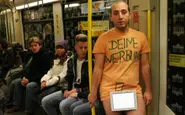
A Berlin-based performance artist is raising eyebrows in European capitals with a risque drive to expose the role of advertising in every day life - by pulling his trousers down in public.
Innocent members of the public have been tricked into thinking they were the victims of a nightmare mix-up for a German advertising gag, which put their pictures on a fake news broadcast saying they were being hunted by the police.
The mayor of Düsseldorf admits his city is “respected but not liked” and launched a campaign to try to get outsiders to change their minds – taking the :D grinning emoticon symbol as new logo.
German online media overtook traditional television advertising revenue for the first time last year, while the entire industry is set on a path of steady growth, a new report shows.
Germany's king of kitsch Dieter Bohlen, who earns a fortune criticising teenagers with sarcastic one-liners on a TV talent show, is going to the European Court of Human Rights over an advertising campaign that mocked him.
A picture of a steak branded with the slogan “Tofu is gay meat” is giving managers at a restaurant chain stomach-ache after it was designed as an advert for them but never used – and is now provoking outrage on the internet.
German television viewers will no longer be blasted by loud adverts, now private broadcasters agreed to join state groups in turning down the volume of their adverts.
The long-time face of the Germany's Alice phone company, Vanessa Hessler, has been sacked after she defended the family of late Libyan dictator Muammar Qaddafi and his son Mutassim, her former lover.
Germany’s advertising world could soon be one long-legged blonde-haired beauty fewer, as the model in the Alice phone company adverts could be sacked for remarks she made about her relationship to Muammar Qaddafi’s son Mutassim.
German drugstore Schlecker is trying to stem a public relations disaster after a spokesman said a derided advertising slogan had been chosen to fit the chain’s poorly educated customers.
An attempt to recruit the band <i>Wir Sind Helden</i> for this year’s <i>Bild</i> newspaper advertising campaign, which features an honest appraisal of the controversial paper, has failed spectacularly.
Data protection authorities in Lower Saxony are stepping up their efforts to make it harder for German websites to pass along visitors' IP addresses. If they succeed, it could mean the end of online advertising in Germany in its current form.
Vegetarian activists exposed their hoax on the German media on Thursday, revealing a new Berlin restaurant supposedly looking for human 'donors' was a public relations stunt to highlight the human cost of eating meat.