

Thursday's top story: Alternative for Germany has a strong lead in Saxony-Anhalt
Four months before a closely watched state election in Saxony-Anhalt, the far-right Alternative for Germany (AfD) party is polling at around 41 percent in the state, whereas the conservative Christian Democrats are the runners-up with just 26 percent.
That's according to an Infratest Dimap survey on behalf of MDR.
The Left Party has the next biggest share of votes with 12 percent, followed by the Social Democrats (SPD) with seven, and finally the Greens and Sahra Wagenknecht's alliance (BSW) with four percent each.
Interestingly, if voters were to pick their favourite minister president candidate directly, the CDU's Sven Schulze would be just ahead of the AfD's Ulrich Siegmund, with 36 percent to 32. This is due, in part, to more SPD and Left Party voters giving their support to Schulze.
In a comparison of the federal states, Saxony-Anhalt is one of the states with particularly low values in terms of satisfaction with the state government.
Only in Berlin is the rating even worse.
The election in Saxony-Anhalt is seen as highly important in that the AfD sees its largest supporter numbers here. Therefore the coming vote serves as a sort-of test for how coalitions may be formed if the AfD recieves a particularly large share of votes.
Germany grapples with accessibility draft law
German law maintains that people with disabilities have the right to participate in all areas of life: this is also guaranteed by the UN Convention on the Rights of Persons with Disabilities, which has been binding since 2009.
But in reality barriers -- like stairways without wheelchair ramps -- block some people with disabilities from entering buildings.
READ ALSO: Germany-based website revolutionizes wheelchair accessibility
The black-red coalition had agreed in its coalition agreement that it wanted to improve accessibility.
Therefore a draft law from the Ministry of Social Affairs provides that not only public bodies, but also private providers should remove barriers.
There is a caveat, however, that this requirement only applies if they are not disproportionately burdened by it.
The Federal Association for Physically and Multiple Disabled People (bvkm) finds this loophole unacceptably vague.
Chairwoman of the bvkm, Beate Bettenhausen told ARD that more solid definitions are needed: "What is inappropriate now? What is unfair? Is installing a grab bar next to a toilet now a matter of major structural changes?"
The draft law does mandate that federal buildings be made barrier free. The deadline for this, according to the draft, would be 2045.
The draft law is expected to go to parliamentary procedure after a debate on Thursday.
Germany urges overhaul of EU decision-making
Germany's foreign minister argued Wednesday the European Union should abolish the unanimity rule for many key decisions, saying it had led to the bloc being held "hostage" by national interests.
EU leaders have in particular grown frustrated with outgoing Hungarian leader Viktor Orban's stalling on crucial issues.
Foreign Minister Johann Wadephul said Brussels can "move faster" with weighted majority decisions, or agreements among smaller groups of EU countries.
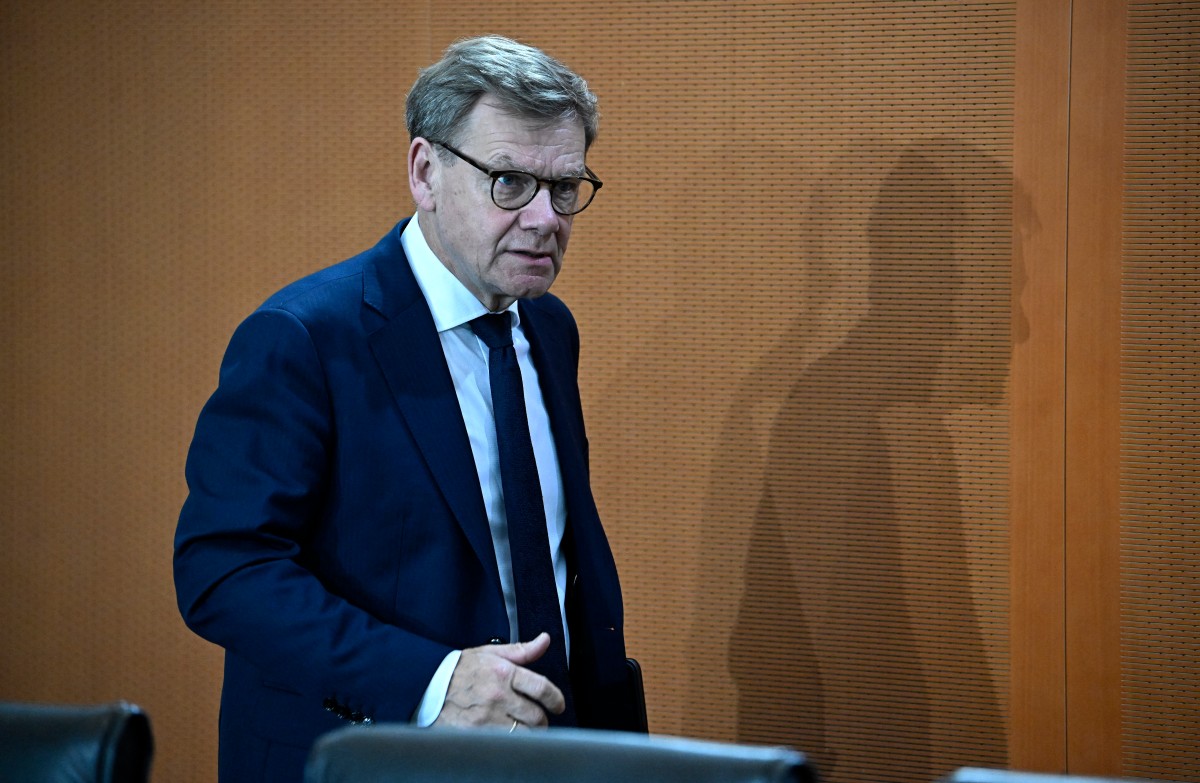
"Blockades" of decisions by lone EU countries "have sometimes held the EU hostage to national and extraneous interests", Wadephul said in a speech to the Konrad Adenauer Foundation, the think tank linked to his centre-right CDU party.
EU capitals already use weighted majorities to decide on legislation proposed by the European Commission.
But certain measures -- notably sanctions, enlargement, foreign policy decisions and EU taxes -- can only be adopted unanimously.
In the speech, Wadephul also called for Brussels to be given more power to withhold EU funds from countries "who violate our common values".
READ ALSO: US threatens to scrap EU visa waivers over data sharing demands
Bavaria mandates playing of anthems at school graduation ceremonies
Bavaria is set to introduce a new requirement for school graduation ceremonies, making the playing of at least two anthems mandatory from the 2026/27 school year.
The move follows a campaign by the conservative CSU and will see the Bavarian anthem played alongside either the German national anthem or the European anthem at all secondary‑school diploma ceremonies.
The change was confirmed in a letter from the Bavarian Ministry of Education and Cultural Affairs to schools across the state.
Originally, the CSU had pushed for all three anthems to be compulsory. The final version stops short of that demand following consultations with school representatives and other organisations
Schools will be free to decide whether the anthems are played via recordings or performed live, depending on their resources. There will be no obligation for pupils or guests to sing along, although schools are encouraged to provide lyric sheets.
The proposal has sparked controversy. While supporters frame it as a gesture of civic identity, critics have derided it as unnecessary symbolism.
READ ALSO: Planned immigration crackdown by Bavaria's CSU slammed as 'propaganda'
Hamburg launches first state‑run funding scheme for independent publishers
Hamburg is to provide targeted financial support for independent publishers, becoming the first German state to introduce structural funding for the sector.
The city will make €700,000 available each year, potentially benefiting around 40 small publishing houses based in Hamburg.
The scheme was announced by Hamburg’s Senator for Culture, Carsten Brosda (SPD), who said the move was intended as both practical support and a political signal.
While theatres and literary venues have long received public funding, publishers have largely been excluded. Hamburg, Brosda said, is now acting alone after years of failed attempts to agree a joint approach with the federal government and other states.
Publishers that have been operating in Hamburg for at least three years and generate less than €2 million in annual turnover can apply for grants of between €10,000 and €25,000 per funding round. Eligibility also depends on publishing at least three books a year and focusing primarily on literary works rather than merchandise.
Brosda argued that independent publishers play a crucial role in cultural diversity by giving space to new voices and ideas, but are under growing pressure from rising costs and limited visibility.
With reporting by DPA, AFP and Tom Pugh.
Comments