
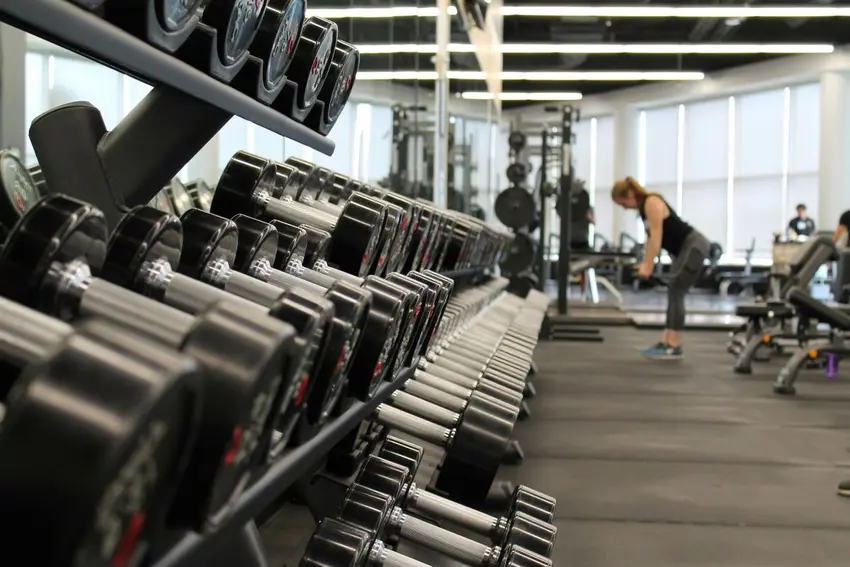
Joining a gym in Germany is a rite of passage for many new residents. You sign up with the best intentions, arrive with your towel (mandatory), then realise that while your muscles may know what to do, your German can’t keep pace.
The problem isn’t only that Germans are unfriendly or that gym culture is intimidating. It’s also that the language around fitness doesn’t map neatly onto English.
Here, concepts you imagined were straightforward – exercise, workout, gym – suddenly become slippery.
Add in compound nouns and false friends, and the whole experience can suddenly feel like more of a workout than you’d planned.
‘Making sport’
One of the first surprises for English speakers is that German doesn’t draw a clear line between “doing sport” and “exercising”.
The most common phrases you’ll hear include Sport machen and Sport treiben (to do sport or exercise).
This means that 'Ich mache Sport' ('I exercise') could describe anything from a game of football to a gentle yoga class or a punishing leg session.
If you want something more gym‑specific, Germans often use trainieren (to train / work out), which sounds more goal‑oriented and is often used to describe working on specific areas of the body: 'Ich trainiere Beine.' ('I’m training legs.')
And then there’s sich bewegen (to move around / be physically active), a pleasingly vague phrase popular with doctors and health insurance leaflets.
Examples:
Ich trainiere dreimal pro Woche.
I work out three times a week.
Heute trainiere ich Brust und Trizeps.
Today I’m training chest and triceps.
Ich versuche, mich mehr zu bewegen.
I’m trying to be more physically active.
Der Arzt sagt, ich soll mich mehr bewegen.
The doctor says I should move more.
The gym is not a gym
If you say Ich gehe ins Gymnasium, don’t be surprised if the person you’re talking to gives you a strange look.
Das Gymnasium in Germany is a type of secondary school, and emphatically not somewhere you’d go to lift weights. What you want is das Fitnessstudio.
You may also come across die Turnhalle (sports hall), but usually in the context of schools or gymnastics clubs rather than commercial gyms.
READ ALSO: How can I claim bonus rewards from my German health insurance provider?
Exercises
For individual exercises, the default verb is machen (to do). You simply name the movement and get on with it. Examples might include 'Ich mache Kniebeugen' ('I’m doing squats') or 'Ich mache Liegestütze' ('I’m doing push‑ups').
Other useful staples include:
- der Klimmzug (pull‑up)
- das Bankdrücken (bench press)
- der Ausfallschritt (lunge)
- die Planke / der Unterarmstütz (plank)
- das Kreuzheben (deadlift)
- die Schulterpresse (shoulder press)
And one thing you won't want to forget before working out is to stretch (dehnen).
Ich dehne mich normalerweise zehn Minuten, bevor ich trainiere.
I usually stretch for ten minutes before I work out.
Übung
German does have a word for exercise – but not in the sense of a general word used to describe healthy physical activity.
Instead, the word Übung means exercise in the sense of a specific, named movement – particularly in instructions or training plans.
In the gym, you’ll most often hear it in questions like 'Welche Übungen machst du?' ('Which exercises do you do?') or in explanations such as 'Diese Übung ist gut für den Rücken' ('This exercise is good for the back').
Equipment
German gym vocabulary for equipment is mostly logical, but it helps to recognise the basics.
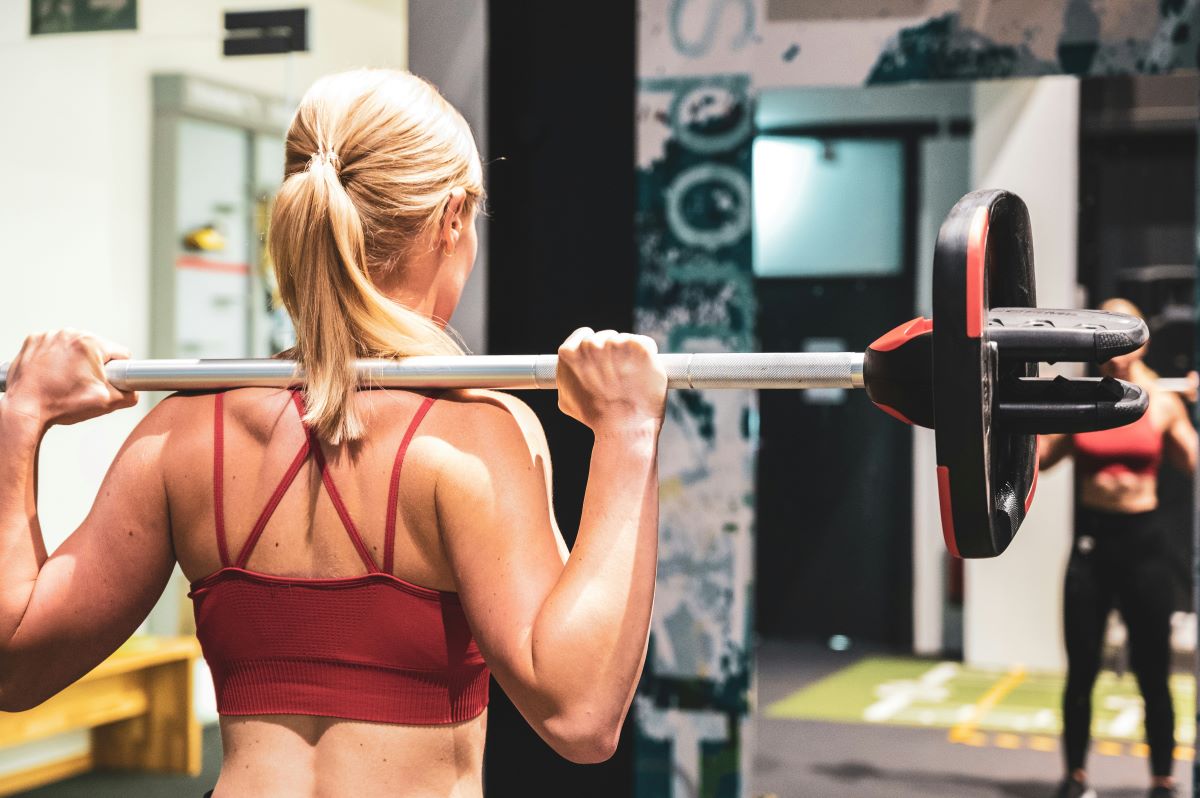
A dumbbell is die Hantel; a barbell, die Langhantel; and a weight bench, die Hantelbank.
Cardio fans will also encounter das Laufband (treadmill) and der Crosstrainer (elliptical), while a number of gym-related activities tend to happen on die Matte (exercise mat).
You’ll also want to understand phrases like 'Ich warte auf die Hantelbank'('I’m waiting to use the bench') or 'Ich würde danach gern an die Hantelbank'('I’d like to use the bench after you').
Germans tend to take order seriously at the gym: machines are usually claimed verbally, weights are re-racked immediately after use and leaving a mess behind is seen as a terrible moral failure.
This means that knowing how to clearly stake your claim can help you avoid awkward misunderstandings and (even worse) passive‑aggressive towel placement.
READ ALSO: Jugger to Sporthocking - Six off-the-wall German sports everybody should try
Injuries
The most common post‑workout complaint is stiffness (Verspannung).
Ich war nach dem Training total verspannt.
I was really stiff after training.
But at some point, you may also need the right vocabulary for describing specific injuries.
Useful words include:
- die Verspannung (muscle tightness)
- die Verstauchung (sprain)
- die Zerrung (muscle strain)
- die Sehnenentzündung (tendonitis)
- der Muskelschmerz (muscle pain)
Fortunately, talking about injuries is straightforward. You simply name the problem and where it is:
Ich habe eine Zerrung im Oberschenkel.
I have a strain in my thigh.
Ich habe mir das Knie verstaucht.
I’ve sprained my knee.
Ich habe eine Sehnenentzündung in der Schulter.
I have tendonitis in my shoulder.
No pain, no gain
Gyms the world over offer a unique blend of masochism (Masochismus) and motivation (Motivation), often expressed through slogans painted on the walls or printed above the mirrors. German gyms are no exception.
Common phrases you might see or hear include:
Ohne Fleiß kein Preis.
No pain, no gain.
READ ALSO: 7 places where you can actually make small talk with Germans
Wer schön sein will, muss leiden.
Whoever wants to be beautiful must suffer.
Von nichts kommt nichts.
Nothing comes from nothing.
Comments (2)