
There are days when it seems as if there’s no sport but football in Germany, with perhaps a little handball or hockey added in for good measure.
That is, until pass through a city park and spot people in costume attacking each others with foam sticks, or happen upon people flinging bright rubber balls along the nation's Landstrasse.
There are few better ways to get to know a country than to take an interest in its unique past times, and doing so could lead you to make some local friends and become better plugged in to your surrounding community.
Here are a few of Germany's more eccentric sports that you might want to try.
Boßeln
Anyone who has driven through East Frisia may have seen signs on the road reading Achtung Boßeln ("Attention Boßeln").
Apparently, Boßeln is even more popular than football in the region with as many as 40,000 active players organised in clubs and competitive leagues. The rules are simple. Players have a hard rubber ball which they have to throw as far as they can along country roads (doing their best to avoid being run over in the process).
READ ALSO: 'Smile and make conversation' - How to make friends with Germans
The typical playing area for a game of Boßeln is 9km and the winning team is the one which manages to cover the distance in the least number of throws. The routes often include twists, hills, and surface changes, requiring control and strength.
Boßeln evolved from Klootschieten, an older Frisian throwing game which historians think was played in the area to help people prepare to defend themselves from invasion (by throwing things at the invaders).
The game is typically played in the winter months and (anecdotally) often accompanied by a schnapps or two to defend against the cold.
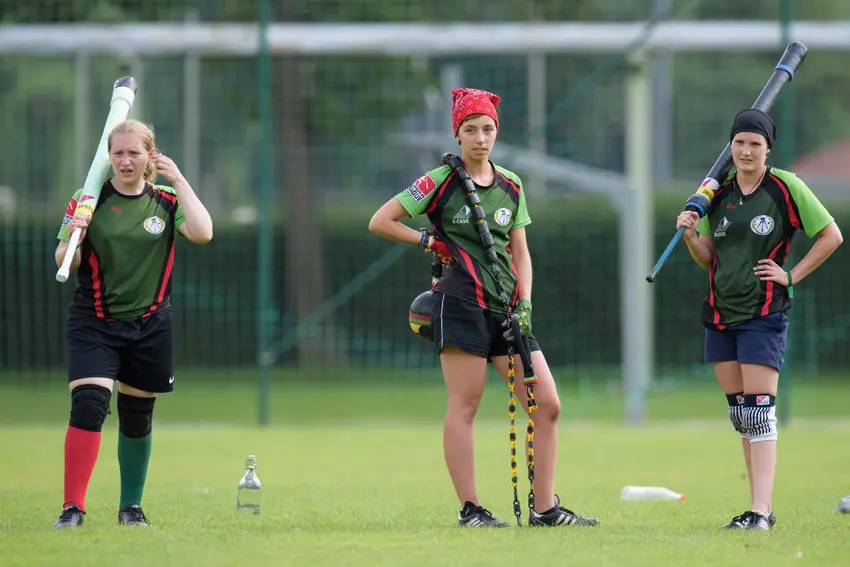
Jugger
The game of Quidditch has its supporters in Germany – as anyone who has been charmed by the sight of men and women cantering through the nation’s parks with broomsticks between their legs will know – but the true king of movie-inspired sports here is Jugger.
Jugger made its debut in a 1989 film called The Salute of the Jugger (or The Blood of Heroes in the US). A slightly less gory version involving sticks made from foam was subsequently developed by enthusiasts in Germany into a non-lethal sport with leagues and tournaments.
The sport has subsequently taken off in other European countries, as well as Australia and the US.
Jugger, played between two teams of five on a rectangular field, combines elements of rugby, fencing, and team strategy. Each team includes one runner (the "qwik") who is the only player allowed to carry the ball (a rubber dog skull called the "jugg"). The other players use padded weapons ("pompfen") to protect their runner.
READ ALSO: What's on in Germany - Ten unmissable events this October
The goal is to get the skull into the opposing team’s goal (a foam square target). Two main variations of the sport exist: “sport jugger” which focuses on agile play and teamwork, and “wasteland jugger” which includes elements of role playing.
Keep an eye out for competitive tournaments including the German Open and the World Club Championships.
Flunkyball
When school-leavers finish their exams each summer, it can feel as if every public space in the country is suddenly filled with Flunkyball enthusiasts.
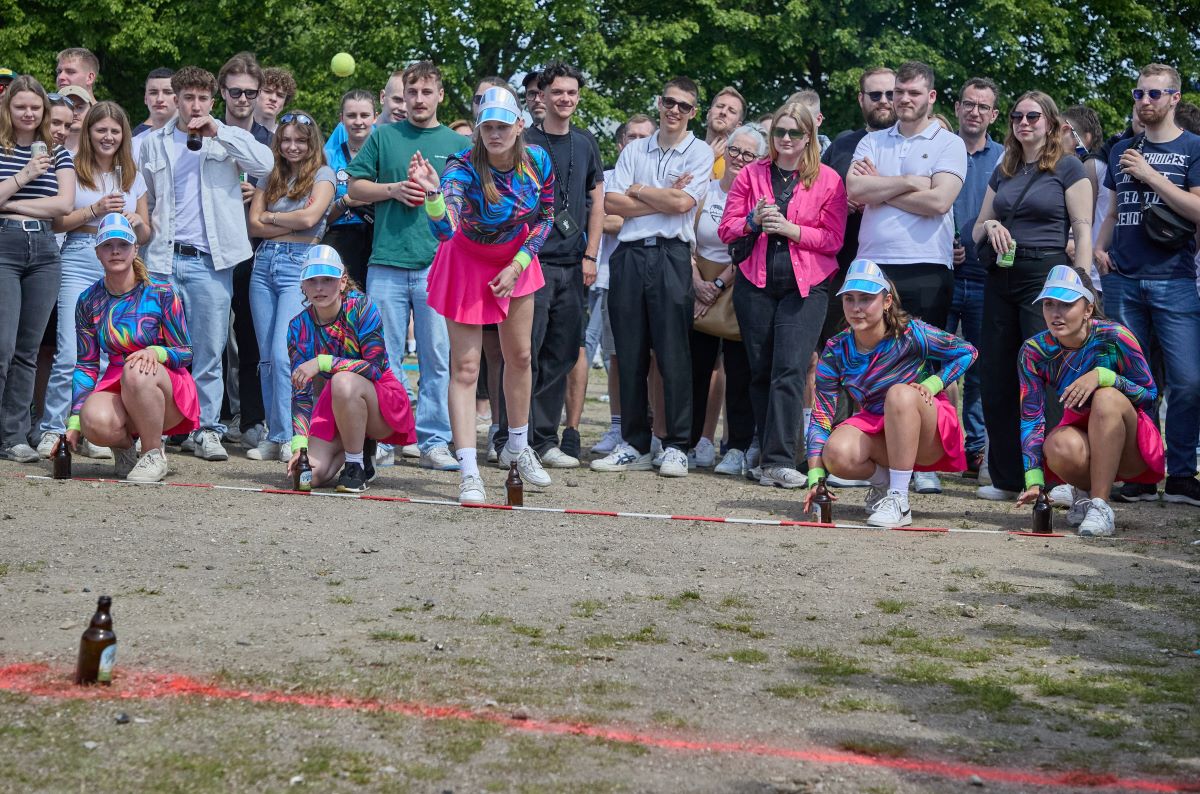
Also known as Bierball, the “sport” involves two teams using a ball to try and knock over a bottle placed between them.
When one team successful, they drink beer for as long as it takes the other team to run forward, right the bottle and retrieve the ball. The winning team is the first to empty their drinks.
Very much a German invention, Flunkyball is also growing in popularity internationally.
Extreme sitting
In theory, the concept of “extreme sitting” shouldn’t make any sense at all, although the future Buddha Siddhartha is said to have remained in the lotus position continuously for 49 days.
But meditation was definitely not uppermost in the minds of German brothers Michael and Stephen Landschutz when they invented Sporthocking in 2007.
READ ALSO: How popular is the NFL in Germany?
The name comes from the German verb to squat (hocken) and the word for a stool (der Hocker). In essence, Sporthocking is an individual sport in which participants perform tricks with a stool, often described as a combination of rhythmic gymnastics, skateboarding and breakdance.
Ultimately, it’s a sport that makes more sense when its seen rather than described.
Underwater Rugby
A niche sport admittedly, but one with a truly passionate following, Underwater Rugby was first played in Germany in the early 1960s.
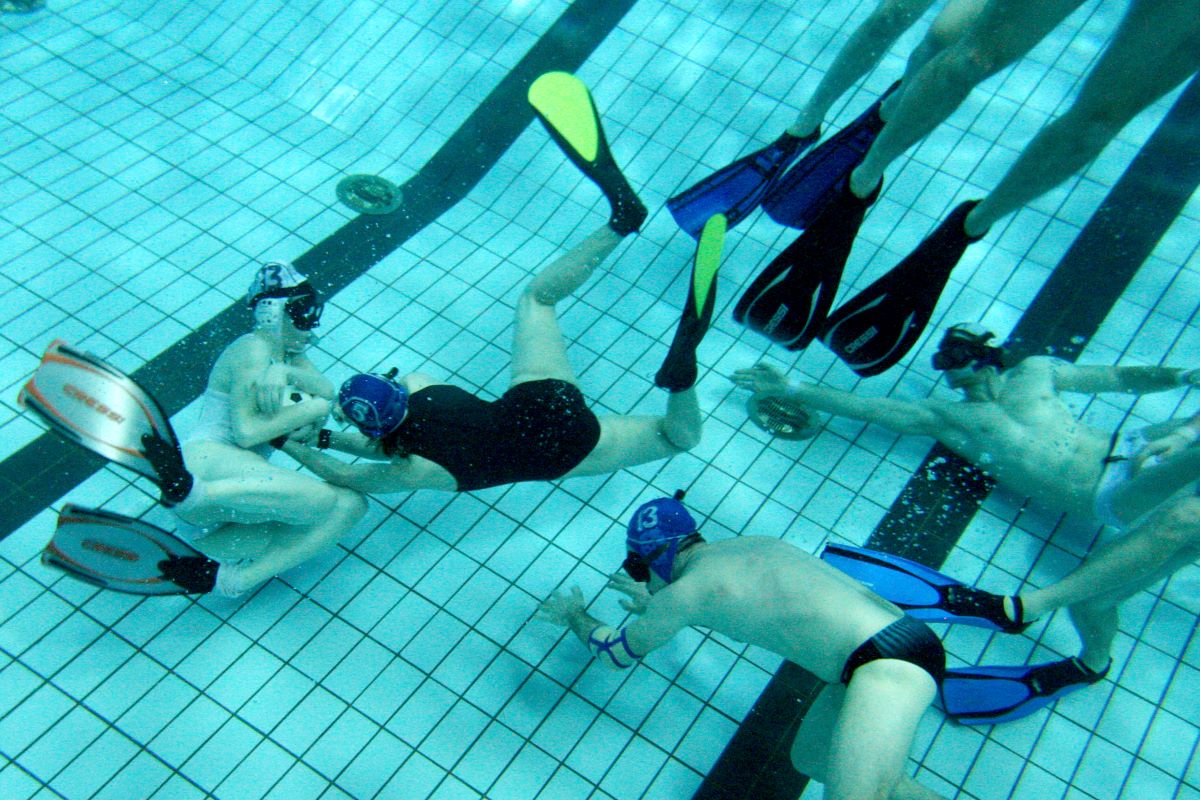
As the name suggests, underwater rugby is played underwater. Two teams of six players each wear masks, snorkels, fins, swimsuits and coloured caps for identification. A ball is filled with salt water so that it sinks and can be pushed along the bottom of the pool.
READ ALSO: What is a German 'Kleingarten' and how do I get one?
The objective is to score by placing the ball into the opposing team’s goal basket.
Physical contact is allowed but limited to tackling players who have possession of the ball. Dangerous actions such as strangling are prohibited and the sport is widely praised for its demanding physical fitness requirements, tactical depth, and its unique character as a 3D underwater contact sport.
In addition to Germany, the game has also taken off in countries including Australia and South Africa.
Hydrox
The idea behind Hyrox, invented in Hamburg in 2027, was to transform standard gym workouts into a competition, and ultimately a mass-participation event.
The first Hyrox event was held in Hamburg in April 2018, and it has since grown into a racing sport with thousands of participants worldwide. Races are designed to be inclusive, catering to different fitness levels and incorporating different formats such as individual events, doubles, and relays.
Comments