
It's been a busy week for German politics, with the government agreeing a package of measures aimed at easing the burden on drivers and employees.
The coalition – led by the conservative Christian Democrats (CDU), its Bavarian sister party, the CSU, and junior partners, the centre-left Social Democrats (SPD) – on Monday put forward a range of proposals to cut fuel costs and allow for a tax-free worker bonus, while also setting a timeline for a reform of the statutory health insurance system.
READ ALSO: Germany announces tax cuts and employee bonuses for fuel relief
We take a closer look at the employee tax-relief bonus, who could get it and whether economists see it as fair.
What is the bonus, how much is it and who pays it out?
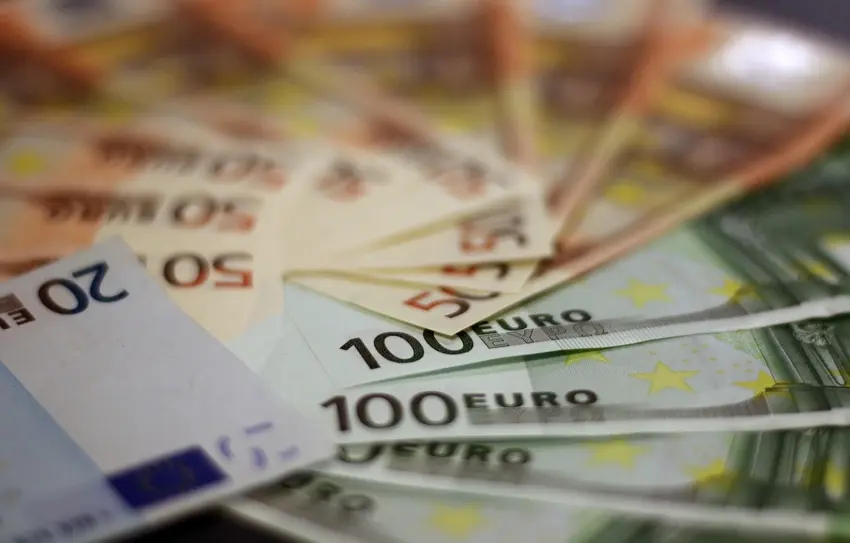
The CDU/CSU and SPD coalition wants to allow employers to pay their employees a tax-and contribution-free relief bonus known as the Entlastungsprämie of up to €1,000 in 2026.
The measure is part of a package designed to ease the burden on consumers due to rising energy and transport costs.
Does that mean all employees in Germany are entitled to the bonus?
No. According to the plans, there is no general entitlement. If the proposals get the green light as planned, employers will be able to pay the bonus – but they are not obliged to do so. The payment is voluntary.
Whether employees receive the money therefore depends on the company they work for.
What is guaranteed is that the payment will not be subject to tax or social security contributions – so workers who get it will receive the money in full.
The government says that the tax shortfall will likely be offset by a tobacco tax hike this year.
READ ALSO: What's getting more expensive in Germany as fuel crisis deepens?
Could lots of people miss out on the payment then?
Yes. Many sectors and companies are already under financial pressure so may say they can't afford to give their workers a cash boost.
Critics say the bonus is likely to be given out to staff by larger, profitable employers or those bound by collective bargaining agreements. It may serve as a gesture to show they are looking out for employees or may be used to supplement a smaller pay rise.
Small businesses struggling to survive are less likely to offer the bonus. Financial support will therefore be unequal across the board.
Economists such as DIW President Marcel Fratzscher and IAB labour market expert Enzo Weber warn this could mean that the very group of workers who need financial relief most urgently could end up empty-handed.
"Those who earn little will also receive little relief," said Weber.
It becomes even more skewed when you look at the self-employed. As the bonus depends on having an employer-employee relationship, people who are self-employed or freelance will miss out entirely.
Is it realistic for firms to pay it out in 2026?
There are doubts about this. This is because in many sectors, there aren't any ongoing collective bargaining negotiations in 2026.
This means there is no framework where a payment could still be agreed this year. Both the German Trade Union Confederation (DGB) and the employers’ association BDA therefore consider the planned timeframe to be too short and are calling for the offer to be extended into 2027.
Has Germany issued similar bonuses before?
Yes. Economists have been comparing this payment to the inflation adjustment bonus (Inflationsausgleichsprämie), which was available from 2022 to 2024.
IMK expert Jan Behringer gave a positive assessment in the summer of 2024, saying the special bonus had stabilised the economy, bolstered purchasing power and eased people’s financial worries.
According to IAB researcher Weber, 80 percent of all employees received a bonus at that time.
However, experience also shows that these types of payments are usually distributed unevenly across society.
Which sectors were more likely to miss out back then?
In the case of the inflation compensation bonus, people who worked in low-wage sectors typically missed out on the cash boost.
According to the IAB's Weber, the number of bonuses issued was particularly low in the hospitality sector where only 11.6 percent of employees received a payment. Comparatively few payments were also made in retail, construction, the transport sector and agriculture.
Which sectors benefited most at the time?
All employees in public administration, social security and the defence sector received the full bonus of €3,000 – however, these are sectors where salaries are already high in Germany.
Will people who miss out on the bonus be able to access any other relief?
For drivers, there should be some respite in the form of the cut in fuel taxes. But even then, critics are concerned the relief won't be passed onto consumers by the oil companies.
The government is also planning an overhaul of income tax that should reduce the burden on lower and middle-income households next year – but that is a long way off for people in need of relief this year.
READ ALSO: How to save money on fuel in Germany as prices hit all time high
Comments