

Friday's top story: Flight attendants paralyse Lufthansa
At the end of the Easter travel wave, Lufthansa's cabin crew went on strike on Friday, leading to hundreds of flight cancellations. Since midnight, approximately 20,000 Lufthansa flight attendants stopped working.
The cabin union Ufo called for the strike to bring movement to deadlocked wage disputes at Lufthansa's core company and its regional subsidiary Lufthansa Cityline.
Hundreds of departures are affected today until 10 pm. At the largest hub in Frankfurt, around 75 percent of almost 350 planned Lufthansa departures have been cancelled.
Officially, the strike is only in effect in Germany, including at Munich, Frankfurt, Leipzig/Halle, Berlin and Stuttgart. However, it's causing a lack of aircraft at foreign destinations as a result, which means numerous return flights by Easter holidaymakers are likely also cancelled.
READ ALSO: Passengers in Germany face disruptions on Friday due to Lufthansa strike
Lufthansa advises passengers to check on their flight ahead of departure.
Tickets can be rebooked or refunded. Passengers are entitled to compensation for delays of more than three hours, and the airline must also provide alternative transport, food and accommodation.
German cartel watchdog urges rapid fuel price cuts after oil slump
Germany’s chief competition watchdog has urged petrol stations to pass on falling oil prices to consumers quickly following a ceasefire between the US and Iran.
Andreas Mundt, president of the Federal Cartel Office, said declining crude prices should be “reflected at the pump in a timely manner” and warned that authorities would closely monitor price movements.
Mundt pointed to the so‑called “rocket and feather” effect, in which fuel prices tend to rise rapidly when costs increase but fall only slowly when they ease.
Since April 1st, petrol stations have been allowed to raise prices only once a day, ending the rapid fluctuations that previously saw dozens of changes daily.
While prices climbed sharply over the Easter period, Mundt said it was still too early to judge whether the rule had a long‑term price‑dampening effect.
Fuel prices dipped briefly on Wednesday, according to the ADAC, with Super E10 and diesel both becoming cheaper for the first time in nearly two weeks, before rising again on Thursday.
Oil prices fell sharply after the ceasefire announcement, although doubts about its durability have since pushed them slightly higher again.
Mundt rejected claims that the Cartel Office was acting too cautiously, stressing it cannot set prices but can intervene if competition rules are breached.
Meanwhile, the federal government is reportedly considering tax relief, including a higher commuter allowance and lower electricity taxes.
READ ALSO: How to save money on fuel in Germany as prices hit all time high
Israeli campaign in Lebanon 'could cause peace process to fail', says Merz
The continued Israeli military campaign in Lebanon could jeopardise peace talks expected between the United States and Iran over the war in the Middle East, German Chancellor Friedrich Merz said Thursday.
"We view the situation in southern Lebanon with particular concern," Merz said. "The severity with which Israel is waging war there could cause the peace process as a whole to fail, and that must not be allowed to happen."
President Donald Trump and Iranian leaders agreed a two-week truce to allow talks between negotiators.
But Netanyahu then said the ceasefire did not apply to Lebanon. Israel has invaded and staged air raids across Lebanon in a campaign that has killed more than 1,500 people since the war in the Middle East escalated, according to Lebanese authorities.
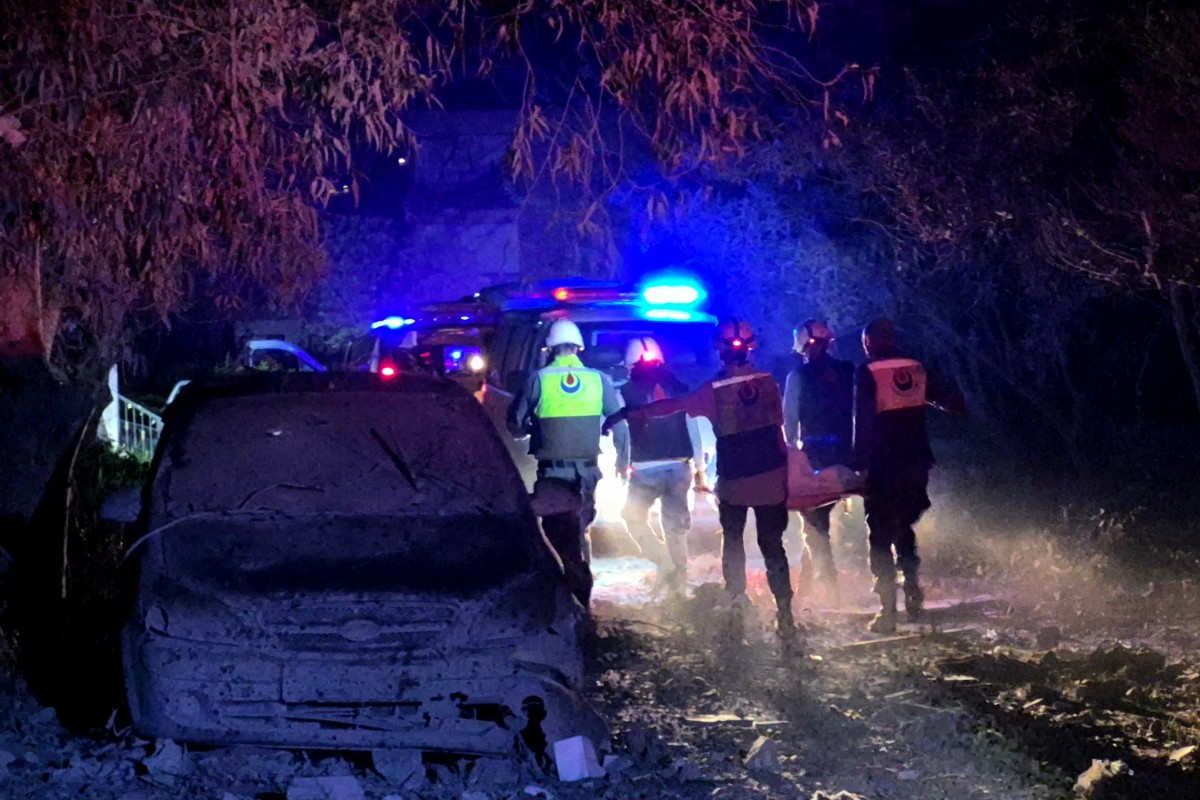
Merz said Germany wants to see "a swift end to a military escalation that is increasingly destabilising the Middle East".
He added that Germany has resumed talks with Iran "after a long period of silence, which we had serious reasons for".
Talks would be held "in coordination with the United States and our European partners", he said.
Germany misses UN target for development aid spending again
Germany once again failed to meet the United Nations target for development cooperation spending last year, according to figures released by the Federal Ministry for Economic Cooperation and Development.
Government spending on official development assistance (ODA) in 2025 reached 0.56 percent of gross national income, falling short of the UN goal of 0.7 percent for the second year in a row.
In total, Germany spent around €26 billion on development aid, roughly €5 billion less than in 2024. When domestic refugee costs are excluded, the ODA ratio drops further to 0.46 percent.
The ministry said about 17 percent of Germany’s development assistance in 2025 went toward housing and supporting refugees inside the country, which is counted as aid under international rules in the first year after arrival.
Germany had already missed the UN target in 2024, reaching 0.67 percent after several years above the benchmark. Based on preliminary OECD calculations, Germany ranked sixth internationally by share of economic output devoted to development aid, but remained the largest donor in absolute terms.
Development Minister Reem Alabali Radovan said Germany continued to act as a reliable global partner despite budget cuts.

Hesse officially opens asparagus season
Hesse’s asparagus season officially opened on Thursday with a ceremonial harvest and the coronation of the new Asparagus Queen, Elena I, at a farm near Darmstadt.
State premier Boris Rhein used the occasion to underline the importance of agriculture to the state, describing asparagus as Hesse’s most significant open‑field vegetable.
Although the first locally grown asparagus had already appeared in shops before Easter, the official launch traditionally marks the start of the main season.
Farmers in southern Hesse expect prices to remain stable this year, despite rising costs. According to Chantal Wendel, head of the South Hesse Asparagus Working Group, even premium asparagus is likely to stay below €20 per kilogram.
Weather conditions have so far been favourable, with a cold winter followed by an unusually mild March supporting good early growth. However, growers continue to face challenges, particularly higher costs for fuel, fertiliser and labour.
The German asparagus harvest typically runs until St John’s Day on June 24th, although sales often continue beyond that date.
German neo-Nazi in trans row arrested in Czech Republic
A German neo-Nazi provocateur who was accused of abusing the country's gender recognition laws to serve a jail sentence in a women's prison has been arrested in the Czech Republic, prosecutors said Thursday.
Marla-Svenja Liebich disappeared in August after failing to show up at a women's prison to serve an 18-month sentence for offences including incitement to racial hatred and slander.
Liebich used to go by the name of Sven and was a high-profile figure in eastern Germany's right-wing extremist scene for decades.
In late 2024, Liebich registered a new identity as a woman, exploiting a reform to make it easier for people to change their legal gender.
Liebich's gender transition was widely seen as intended to mock Germany's Self-Determination Act, introduced in November 2024 under the then centre-left government of chancellor Olaf Scholz.
The move meant that Liebich would have been sent to a women's prison, sparking a debate in Germany over abuses of the new law.
On Thursday, Dennis Cernota, the chief prosecutor in Halle (the jurisdiction responsible for the case) told AFP Liebich had been arrested in the Czech Republic.
Cernota added that Liebich had been held under a European arrest warrant and that an extradition process would now be started.
With reporting by AFP, DPA and Tom Pugh.
Comments