
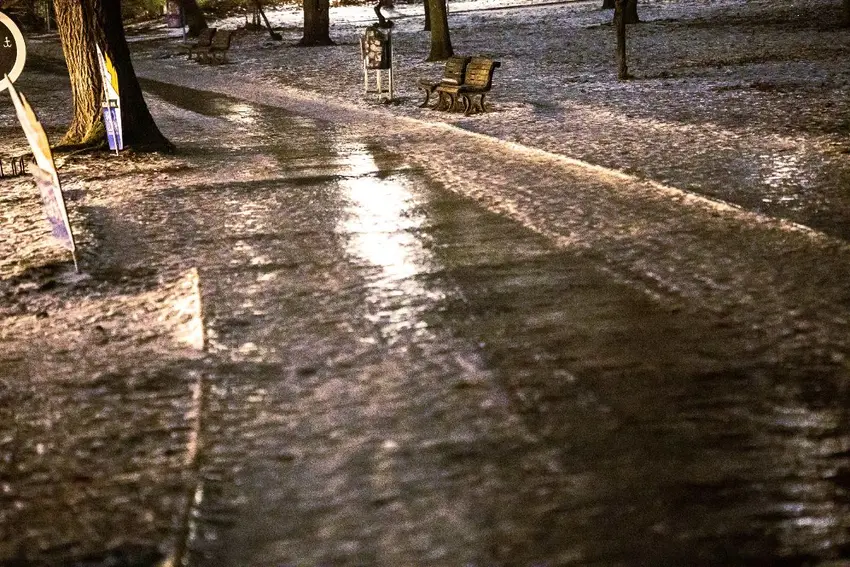
It's been a tough winter so far for many people in Germany. With temperatures falling to -10C in Berlin on Monday – along with treacherously icy sidewalks and zero sunshine – people have been struggling to go about their daily lives.
So what can we expect in the coming days?
Unfortunately, it appears that the cold snap will continue. Temperatures around Berlin are expected to rise slightly, but further snow and freezing temperatures are still on the horizon. Meanwhile, people in the west and south should also watch out for ice.
The German Weather Service (DWD) on Tuesday said it expects freezing rain to cause slippery conditions in large parts of Baden-Württemberg and Hesse, as well as southern Bavaria.
During the day, there could also be black ice due to freezing rain in the western mountainous regions and from Münsterland to the northwest. Forecasters warned of severe conditions in some areas.
READ ALSO: 'Eat for the season' - The verdict on how to survive the German winter
Frosty in the north, up to 11C in the southwest
Germany has seen a divide in weather conditions, with extremely low temperatures in the northeast and double-digit highs in the west and southwest.
On Tuesday, temperatures of between -7 and 0C are expected in the north-eastern half of the country. In contrast, highs of 11C are forecast in the Upper Rhine region and at the edge of the Alps. In the rest of the country, temperatures range from 0 to 8C.
While light winds are forecast for the south, it could be stormy on the coasts and in high altitudes. Otherwise, moderate and sometimes strong easterly winds are expected, which will make it feel even colder.
According to the DWD, the freezing rain will slowly move northwards by Wednesday. Parts of the east, including Berlin, may see snowfall and sleet.
"There is an increased risk of black ice in some areas from the northwest to the eastern centre," said DWD meteorologist Marcel Schmid.
De-icing salt can be used on pavements in Berlin
As the cold snap continues in Berlin, many people have been injured after falling on ice. Hospital waiting rooms have been packed full of people with broken bones or concussions.
Up until last week, the use of de-icing salt on pavements was forbidden due to environmental reasons. While salt is allowed on major roads, it is not permitted on pavements because it can damage trees. However, after an outcry, the city is now allowing the use of salt on sidewalks.
READ ALSO: Will the ice ever melt in Germany this winter?
Berlin Mayor Kai Wegner (CDU) tweeted on Friday: "Today, I instructed the Senator for Transport to issue a general ruling without delay, allowing private individuals and the BSR (the city's waste and cleaning department) to use road salt on pavements to remove ice.
"The safety and health of Berliners is my top priority. I am aware that this approach involves legal uncertainties. Nevertheless, I consider it necessary in this particular situation."
The situation was even worse for residents on Monday after a nationwide public transport strike saw buses, trams and underground trains come to a standstill.
Some locals have resorted to buying spiked footwear covers to get around safely on the ice.
READ ALSO: What drivers in Germany need to know about staying safe in snowy conditions
Comments