
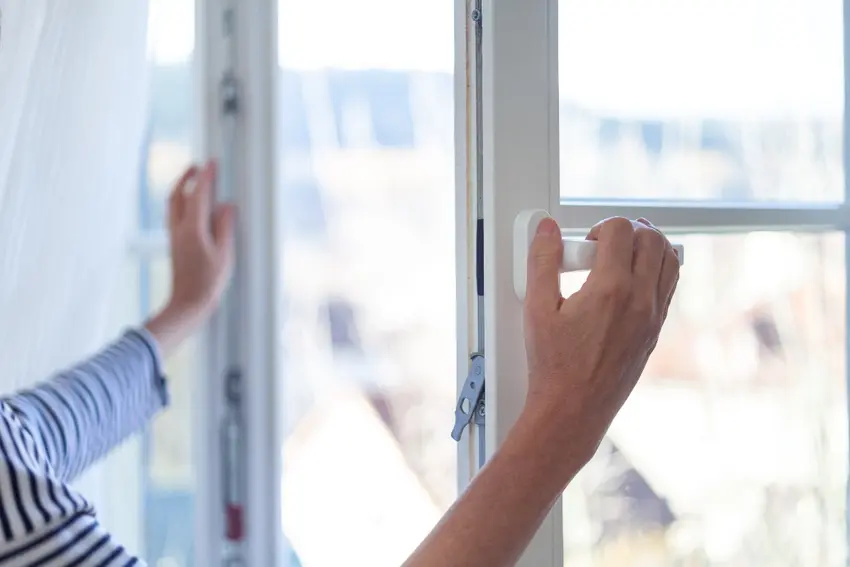
If you've spent time in Germany, you'll no doubt be familiar with the ritualistic practice Lüften: the airing out of rooms.
That's because it's not just a thing you do sometimes – it is deeply ingrained in Germany's cultural identity. And for good reason: ventilating regularly promotes good health, reduces humidity and helps avoid mould and damp growth in the home.
But what happens in winter when the temperatures are low – sometimes even well below zero? Are you still expected to ventilate frequently throughout the day?
Here's what the Germans say
100 percent yes: you still need to air out rooms regularly in the colder months.
For those of us not from a culture that's obsessed with opening windows, this can come as a bit of surprise. Because letting in the cold outside air means you lose a lot of heat, which isn't pleasant (and arguably not cheap).
However, that does not matter. Overall, ventilation is good for the home and general health so the benefits outweigh any negatives. If you rent, ventilating is probably written into your contract, which means it's legally binding.
So what exactly does regular ventilation in winter mean?
The Germans' favourite method is Stoßlüften or shock ventilation, which involves a short and intense 'shock' of air. While you might be tempted to tilt a window open for a long time instead, that is not ideal for energy-efficient heating and air exchange.
READ ALSO: Seven expert tips to reduce your heating bills in Germany
Instead, Stoßlüften – airing rooms with windows or doors fully open – is a better option. This is combined with Querlüften, or cross ventilation, which involves opening all the windows and letting the fresh air flow through.
You'll be glad to hear that in the winter, you don't have to open the windows wide for a long time.
Germany's Consumer Advice Centre says: "In winter, when outside temperatures are low or it is windy, three to five minutes is sufficient."
But when it gets less cold, you're encouraged to keep the fresh air coming in for a bit longer.
"In spring or autumn, complete air exchange can take 10 to 20 minutes," says the advice centre. "If you are concerned about fresh air for hygienic reasons, you should completely exchange the air at least three to four times a day.
"If you are away all day, it is important to ventilate at least in the morning and evening."
When ventilating, you should turn off your radiators (or turn your heating down) so that you're not wasting energy and money.
After you've closed the windows, you can turn on the heating again to warm up the room.
Other times to ventilate
As well as regular 'shock ventilation', you should open the windows after activities like showering or cooking.
It's estimated that showering produces up to 2,500 grams of moisture per hour, while cooking results in 600 to 1,000 grams, according to the Consumer Advice Centre. People engaged in light activity release 30 to 40 grams of moisture per hour into the environment, according to the Federal Environment Agency.
After a shower or bath, you should open the window wide, with the bathroom door closed. Water droplets on tiles are best removed with a squeegee.
If you live in a flat without a bathroom window, which can be the case in big cities, focus on ventilating with an extractor fan, dehumidifier or leaving the door open with a window open in the nearest room.
A dehumidifier is also useful when hanging up your clothes to dry indoors, which is a very common practice in Germany and other European countries (and is often a culture shock to Americans).
The same applies to the kitchen: it is best to let steam escape outside through an open window during and after cooking.
In the bedroom, ventilate throughly in the morning after waking up and in the evening before going to bed. Experts say we lose around half a litre of fluid every night while we sleep.
What happens if I don't ventilate?
Well, you won't fully integrate into the German way of life if you don't ventilate properly.
Jokes aside, is it worth getting this practice right. Without ventilation, humidity can cause mould spots or damp growth over time. Fresh air is also good for your health and reduces the spread of respiratory infections.
What happens if I notice mould growing in my flat?
If you are dealing with mould in your German home, keep in mind that it is not always caused by a lack of ventilation, even though landlords and property management may say it's the tenant's fault, and blame poor ventilation practices if they can.
If the mould is found to be caused by a problem due to the building, then the landlord has to deal with it.
If you're unsure how to approach this topic it's worth seeking advice from a tenants' rights group.
In general, small flecks of mould can usually be treated by the tenant with a homemade solution like tea tree oil mixed with water, or with a Schimmelentferner (mould remover), which can be purchased from a drugstore or online.
But when in doubt, check with an expert.
READ ALSO: How to get a rent reduction for problems with your German flat

Comments (1)