
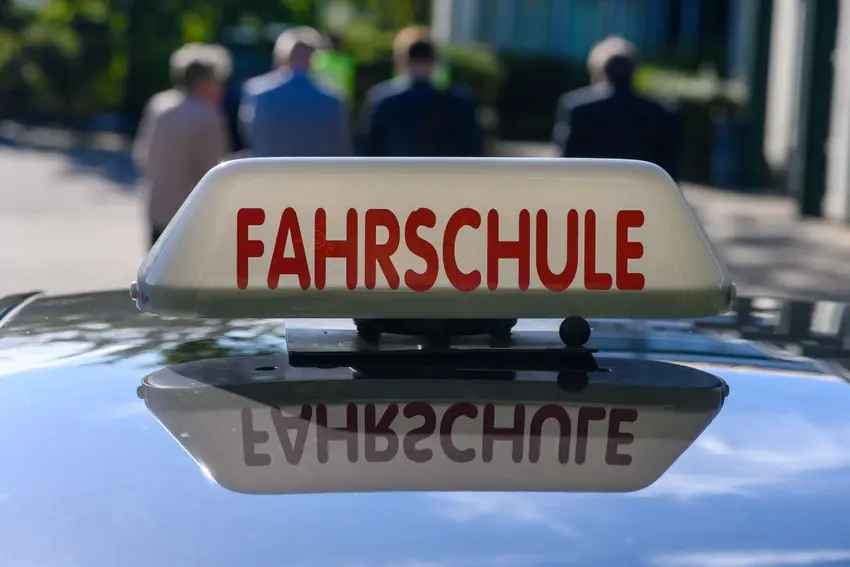
It’s no secret that the cost of learning to drive is too high in Germany. When forming their federal government coalition, the Union and Social Democrat parties even added a goal to make the process cheaper in their coalition agreement.
As The Local reported, a plan to deliver on this commitment was announced last autumn and included proposals such as reducing the number of questions in the theory test and cutting down on compulsory night and motorway driving lessons.
Other ideas included offering theory classes online and allowing learners to take test drives with family members.
But while the government is pursuing these reforms, the transport minister has cast doubt on whether they will actually deliver on their only real goal – that is making the process to get a driver's licence more affordable.
READ ALSO: Why German states want to make it cheaper to get a driver's licence
At the end of last year, Patrick Schnieder of the conservative Christian Democrats (CDU) provided some clarity on when these reforms are likely to come into effect.
But he appeared keen to downplay expectations the changes would have an immediate or significant impact on costs.
When will the planned reforms take effect?
Schnieder explained that the driving school course reform should come into effect “at the beginning of 2027”, provided “everything goes smoothly in coordination with the federal states.”
The goal is to finalise the key points by the spring 2026 transport ministers' conference and then introduce the reforms into the legislative process.
But, in interviews with the Funke Media Group, Schnieder warned that, "It is certainly not possible to name a fixed date..."
Will the reforms actually lower costs?
Schnieder reiterated his criticism of current costs at the weekend, stating, “I consider the current cost of a driver’s license, around €3,500, to be too expensive. In rural areas, a driver’s license is essential. And it cannot be that with two children the cost ends up being almost five figures. That does not meet people’s needs.”
But crucially, the minister added that even if the law comes into force as planned, learning to drive “won’t immediately become cheaper”.
“We are giving driving schools options and freedoms – the market will regulate how this specifically affects prices,” he said.
READ ALSO: LISTED - The non-EU countries that have drivers licence exchange agreements with Germany
While hopes remain that “the market” will lower prices in the fullness of time, Schnieder told people who were thinking of delaying that, “It’s not worth waiting”.
Those who start now will also avoid long waiting times and gain “mobility and independence” sooner, he added.
Comments