
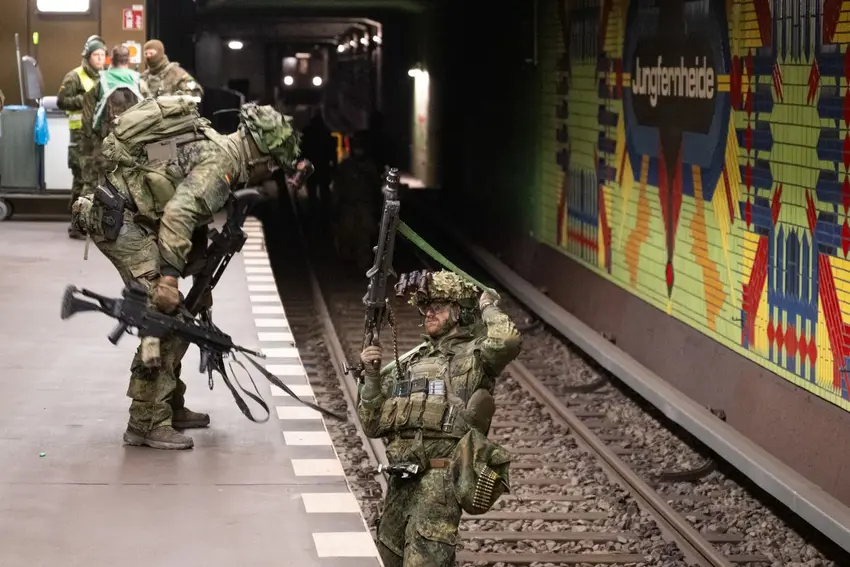
In Berlin soldiers engaged in a training exercise on Wednesday night in an unexpected location.
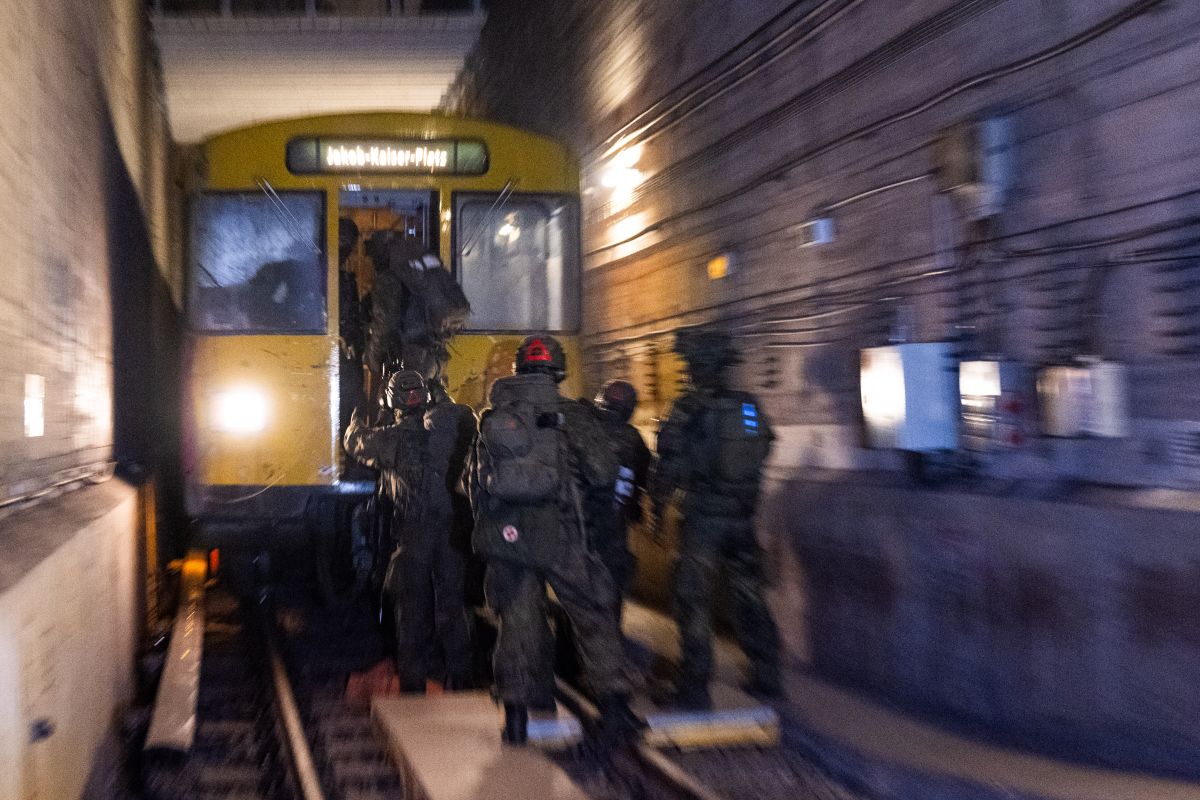
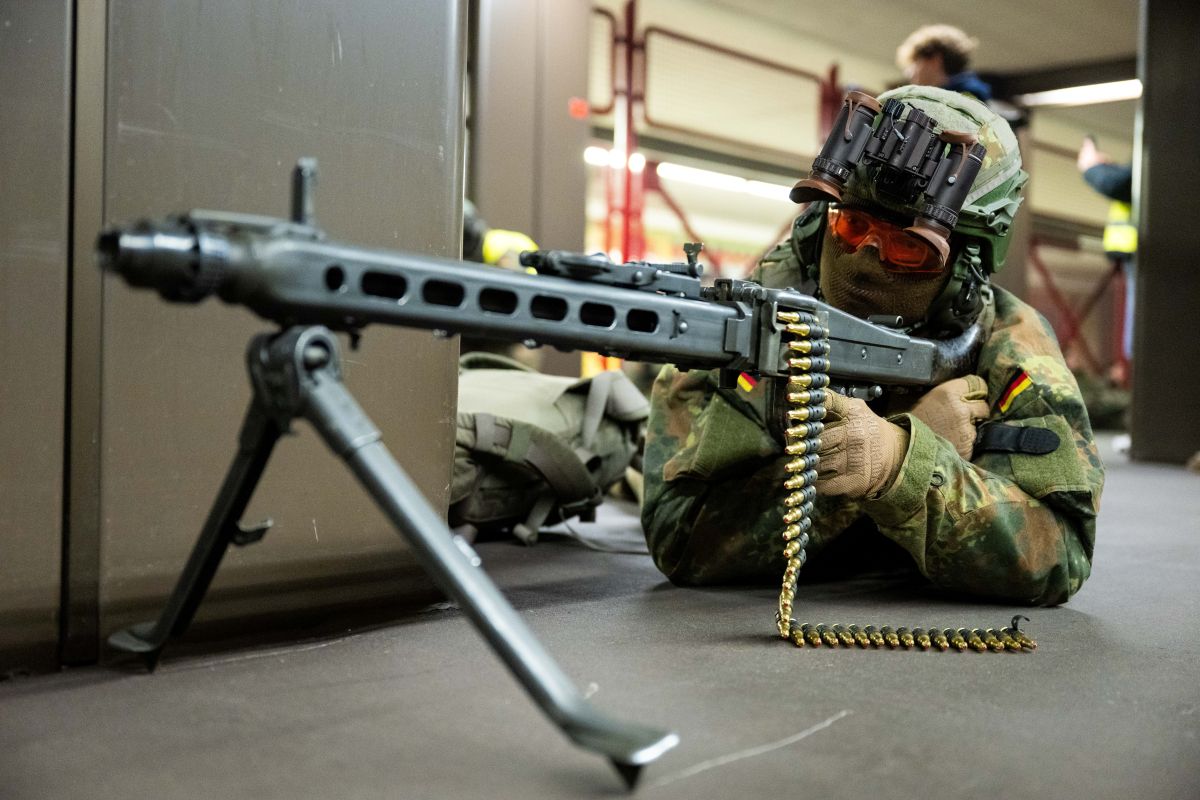
Photos and videos shared by German media outlets showed a group of soldiers from the German army in combat gear entering the Jungfernheide U-bahn station.
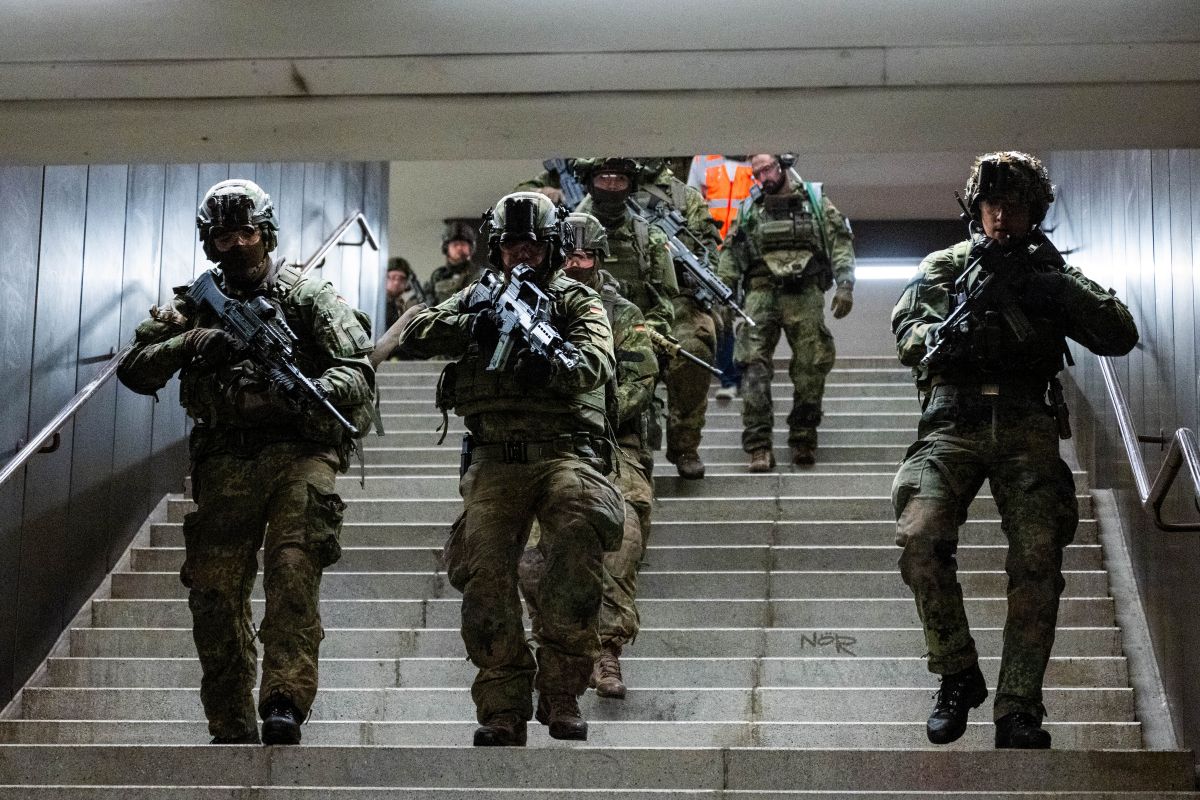
The soldiers then hopped down onto the tracks, and marched through the underground tunnels to approach a train that was stopped inside.
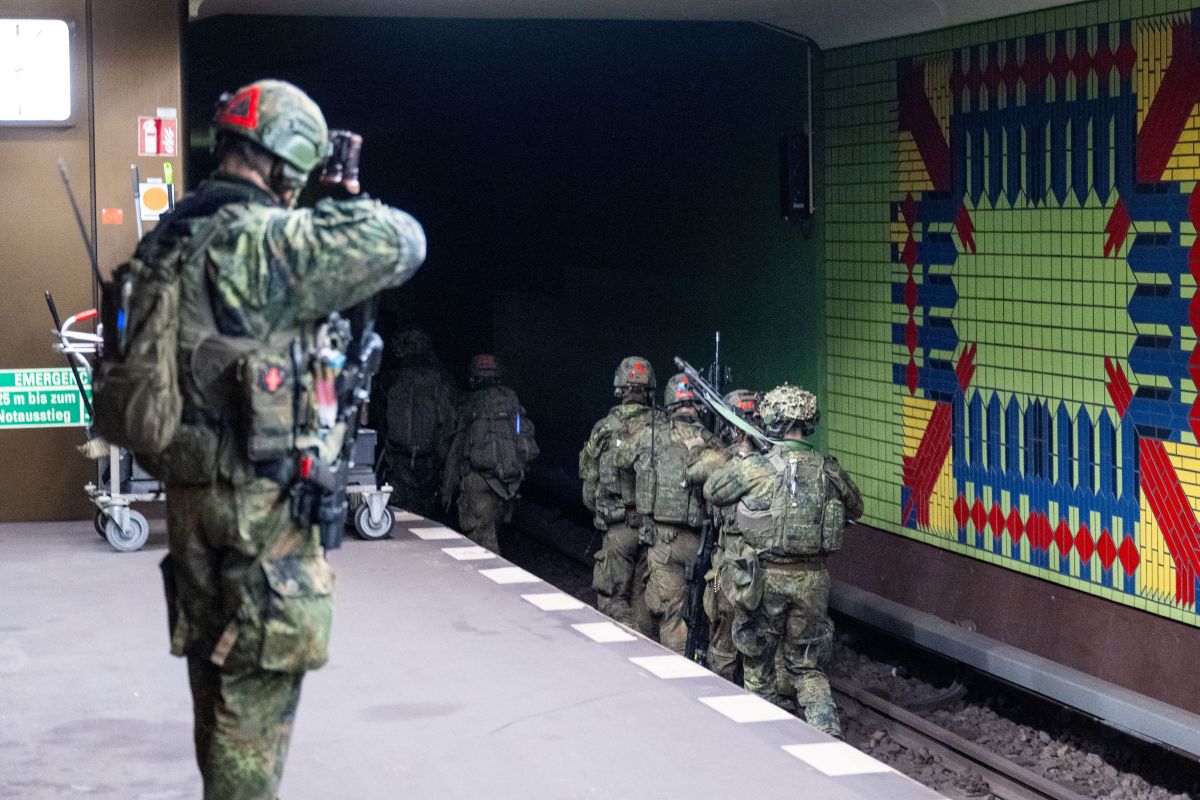
The exercise scenario involved soldiers 'fighting' an armed battle against forces that had taken control of an underground passenger train.
They then found an injured person and evacuated them to safety.
The commander of the guard battalion, Lieutenant Colonel Maik Teichgräber, told DPA, "It's about being ready for what could happen in the worst case."
He added that the scenario was "very realistic".
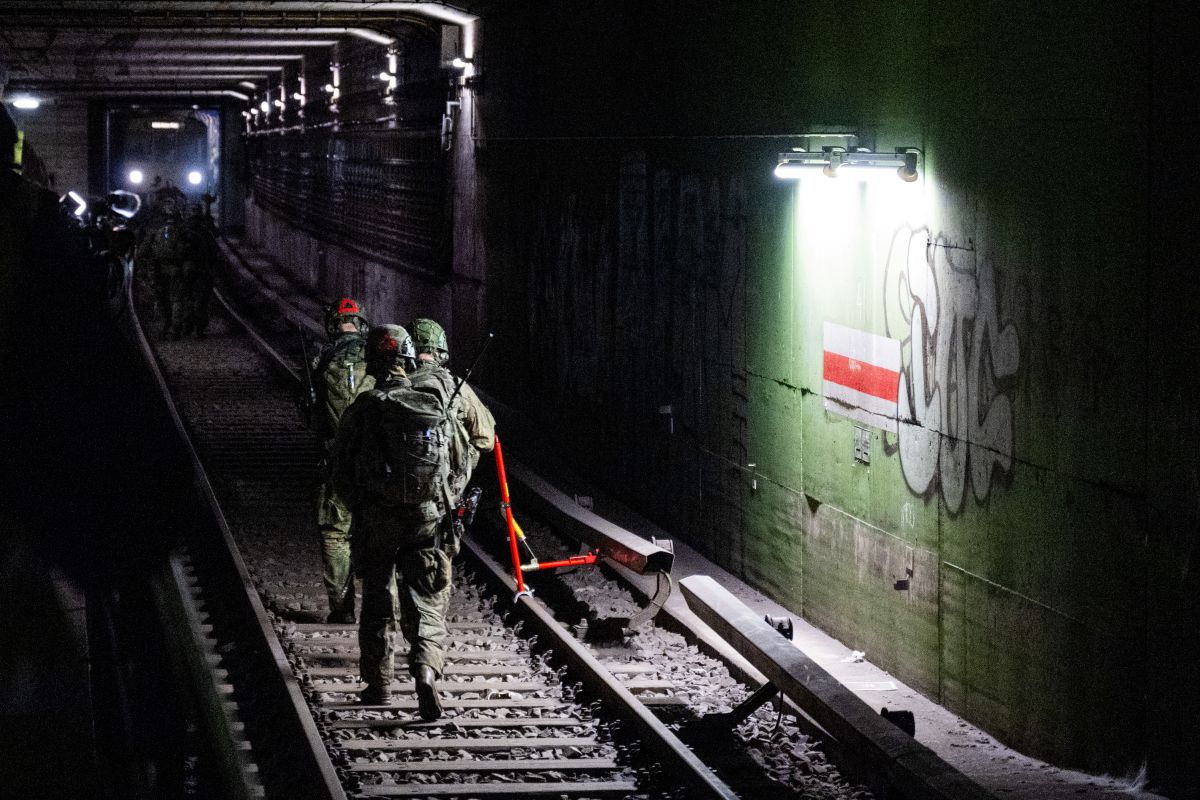
Men and women from the guard battalion, which numbers about 1,000 soldiers, usually appear in public at the reception of state guests, or to manage honorary escorts.
Berlin is the guard battalion's area of operation, and ultimately they too want to be ready for combat.
Citing the growing threat posed by Russian aggression in the east, Germany sees itself as being under a time crunch to expand its army, and get its troops ready to respond to conflict, be it at NATO's borders or closer to home.
Just hours before the exercise in the Jungfernheide station, Defence Minister Boris Pistorius (SPD) warned of sabotage attempts and hybrid attacks by Russia at the Berlin Security Conference.
He cited damaged submarine cables, airspace violations and drone overflights.
"We can no longer speak of coincidences here. It's strategy. They are harbingers," Pistorius said.
Earlier this week there was an explosion on a railway line in Poland leading to the Ukraine border that Poland's Prime Minister described as "an unprecedented act of sabotage".
The German government on Wednesday backed legislation that would allow the military to respond to unauthorised drones in domestic airspace, including by shooting them down.
Also Germany's top lawmakers have recently come to agreement on the terms of its new military service law, which will see the nation's young men undergo a medical screening in the coming year, and could pave the way for compulsory service if enough volunteers don't come forward.
READ ALSO: What will Germany's new conscription law mean for young Germans and dual nationals?
Active drills have also taken place in North Rhine-Westphalia (NRW), where some 500 vehicles drove to the Lower Rhine in June, and troops there built mobile bridges.
Comments