
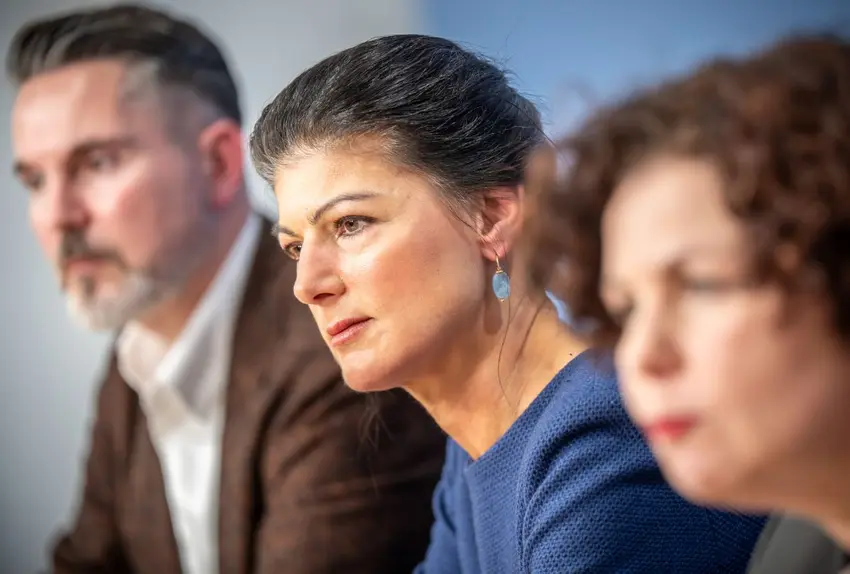
Sahra Wagenknecht, one of Germany’s prominent and polarising political figures, has announced that she is stepping down as chairwoman of the Germany's newest political party which bears her name, the Sahra Wagenknecht Alliance (Bündnis Sahra Wagenknecht - BSW).
Her decision marks a pivotal moment for the party she founded just last year.
But while Wagenknecht is relinquishing her formal leadership role, she is not retreating from the political stage.
Why is Wagenknecht stepping down?
In her statement, Wagenknecht cited the party’s disappointing result in the 2025 federal election – where BSW narrowly missed the five percent threshold for Bundestag representation – as a key reason for her decision.
READ ALSO: Far-left rebel seeking peace with Putin rocks German politics
She explained that the demands of day-to-day party management had worn her down and that she wished to “have her head free” for tasks that would truly help the BSW.
She emphasised her desire to focus on strategic, substantive, and programmatic work, which she will pursue as head of a new Core Values Commission within the party.
In addition, BSW is currently struggling with declining poll numbers and a number of internal disagreements, up to and including trouble agreeing on a new name for the party.
Earlier this month, the party’s state chair in Hesse, Oliver Jeschonnek, resigned over concerns about the party’s direction and internal style of debate. And in Brandenburg, internal clashes over media reforms threaten the stability of the coalition government of which it forms a part.
READ ALSO: What are the most important political issues for foreigners in Germany?
What is the German press saying?
Several German commentators and political analysts see Wagenknecht’s move as more than a simple step back and highlight the party’s electoral setbacks and loss of profile as central factors.
Wagenknecht herself admitted that BSW’s message had become “less clear”. The party’s initial momentum had faded, and the leadership change is widely seen as a response to this crisis.
Some analysts interpret her move as tactical. By stepping back from the front line, Wagenknecht sheds the burdens of management but retains strategic influence over the party’s direction.
A familiar pattern?
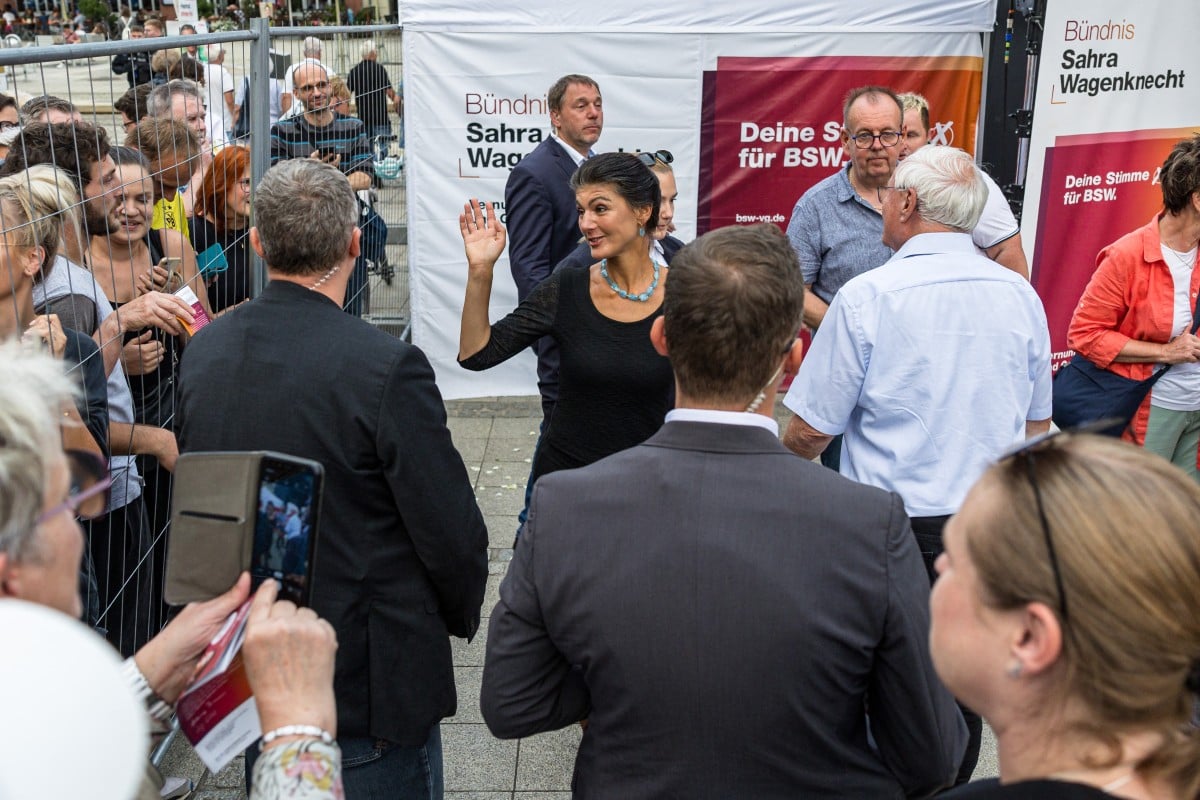
This is not the first time Wagenknecht has stepped back from a leadership role. In 2019, she resigned as co-leader of the Left Party’s parliamentary group, citing exhaustion and health issues caused by the intense workload and internal party conflicts.
Her more recent resignation from the BSW leadership echoes this pattern, referencing fatigue from organisational burdens and a desire to focus on substantive, strategic work.
After her 2019 resignation, Wagenknecht returned to politics in spectacular fashion. Her announced departure from the Left created something of a rift in the party, with Wagenknecht successfully convincing a number of former Left Party MPs to join with her in launching a new party that quickly made waves in German politics.
READ ALSO:
- How similar are Germany's AfD and BSW parties?
- What the new eastern state coalitions tell us about German politics
What happens next?
In Germany, parties are only eligible to sit in the Bundestag is they reach a five percent threshold in federal elections.
After narrowly missing out earlier this year (by less than 14,000 votes), BSW demanded a recount – citing misallocated votes and ballot confusion with similarly named parties. Official investigations did uncover some errors and partial recounts added thousands of votes for BSW, bringing the party to within 10,000 votes of the threshold.
The party continues to put pressure on Germany’s Constitutional Court for a nationwide recount.
If it succeeds – and if further recounts were to put BSW above the fiver percent threshold – the party would enter parliament, and effectively end to the ruling coalition’s majority.
If this were to happen, Wagenknecht has indicated that she would return to lead the party in parliament.
Comments