
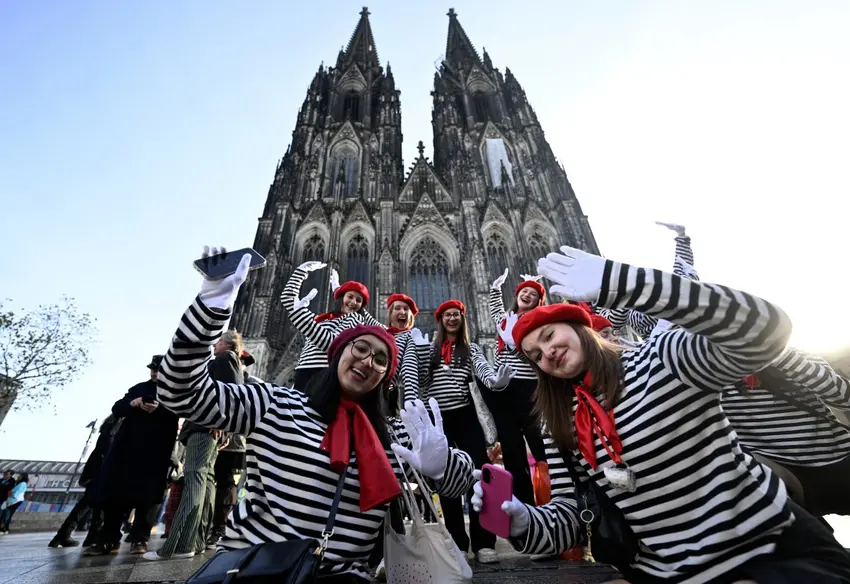
November 11th is a significant date across the world.
In many places it is Remembrance Day – a memorial day to commemorate the end of the First World War. At 11am, people pause to honour those who have died in wars and conflicts. Ceremonies also take place on the second Sunday in November.
It is also St Martin's Day, which is marked in Germany and other parts of Europe
November 11th has another significance in some parts of Germany. It is when the carnival season begins, specifically at 11 minutes past the 11th hour i.e. 11:11am.
Why does it start then?
It can be jarring for foreigners to see joyous celebrations in parts of Germany on November 11th while it is a sombre day of remembrance for many others.
There's no definitive answer for why carnival starts on this date but there are a few possible reasons. According to tradition, the number 11 is considered a lucky or foolish number. It lies between the significant numbers of ten (symbolising the ten commandments) and 12 (the number of Jesus' disciples and a symbol of new beginnings).
The start of carnival season is also linked to St Martin’s Day. Rooted in Catholic tradition, this day once marked the beginning of a fasting period that lasted until Christmas. Before the abstinence of Lent, people were expected to use up their remaining supplies of meat and other delicacies, often with feasts.
Carnival was said to offer a final opportunity for exuberant celebrations before Lent. This helps to explain why the carnival season is called Fasching in some regions of Germany. The term likely comes from the Middle High German vaschanc or vaschang, which refers to the 'last serving of alcohol before Lent'.
Meanwhile, the more familiar word carnival (or Karneval in German) is thought to come from the Latin phrase 'carne vale' which means 'farewell to meat.'
Another theory suggests that November 11th marked the end of the agricultural year for farmers. In this context, the celebrations can be viewed as a second harvest festival.
To this day the number 11 plays a major role in carnival celebrations. Sessions don't begin on the hour – they start 11 minutes later, and they are led by the Elferrat or Council of Eleven.
What happens on November 11th?
First thing to know is that carnival isn't celebrated everywhere and, it has different names depending on where you are.
People in the Rhineland use the term Karneval, while those in Bavaria or Saxony tend to opt for Fasching. People from Hesse, Saarland and Swabian regions call it Fastnacht, or variations of this word like Fasnet.
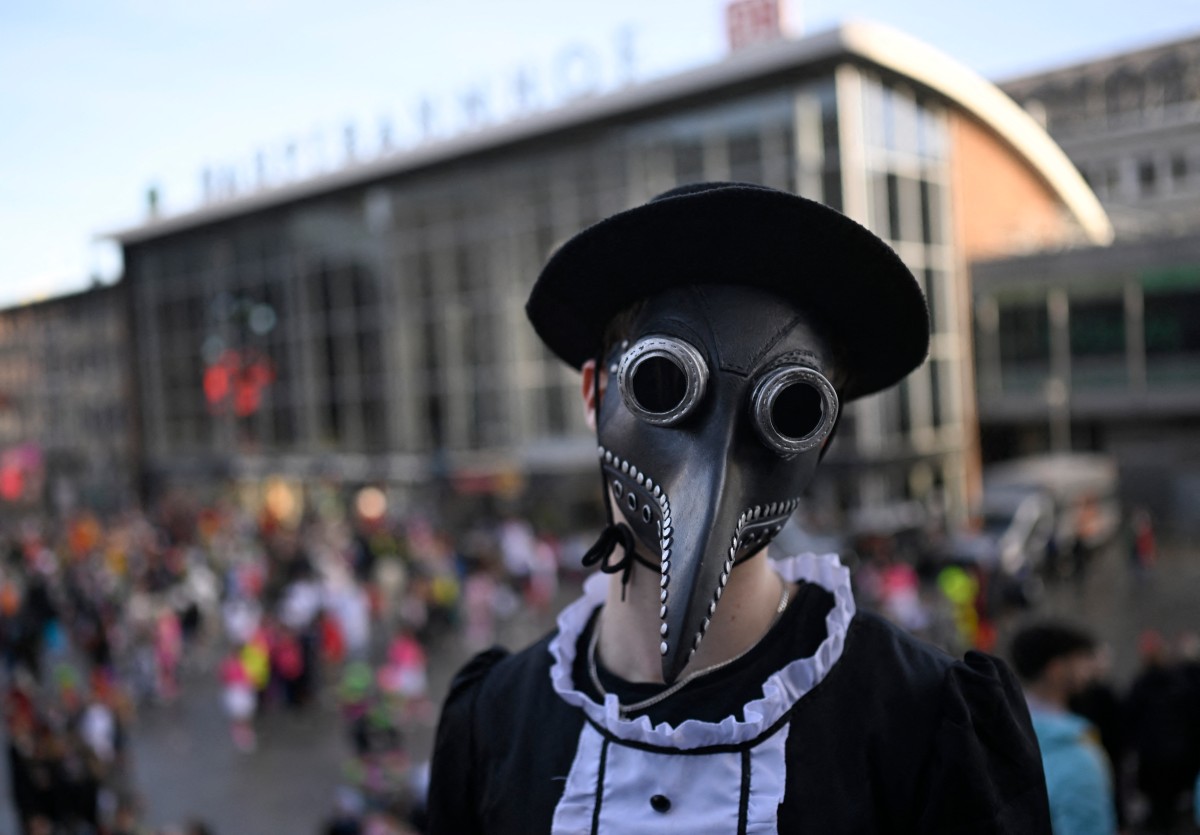
In some places, the November 11th start date is a really big deal.
In Cologne, tens of thousands of people – many of them dressed up in outlandish outfits and with their faces painted – take to the streets to mark the beginning of the event.
The focus is usually on the lively student district around Zülpicher Straße. Revellers drink, dance and listen to music.
READ ALSO: What you need to know about celebrating carnival in Germany
In Mainz, thousands of people attend the main event on November 11th where the carnival constitution is read aloud.
In many Franconian cities, town halls are stormed on this date, and mayors hand over the keys of the city to revellers. Many clubs also present their 'prince and princess'.
So Germany's carnival season, or the fifth season as it is nicknamed, begins at the 11th minute of the 11th hour on the 11th day of the 11th month.
But if you're unfamiliar, you might be surprised to hear that the longer and more lavish carnival celebrations actually begin in full swing in the new year. The biggest parties are held in February and sometimes early March. The famous Rosenmontag parades – the carnival highlight – will take place on February 16th, 2026.
In some carnival strongholds such as in Baden-Württemberg, November 11th doesn't play a significant role at all. A spokesperson for the Association of Swabian-Alemannic Carnival Guilds told Germany's DPA: "The Swabian-Alemannic Fasnet traditionally begins on Epiphany," which falls on January 6th.
READ ALSO: Düsseldorf Helau! How I embraced the Rhineland's carnival celebrations
Comments