
We updated this story on February 26th, 2025
What exactly is carnival and how do the Germans celebrate it?
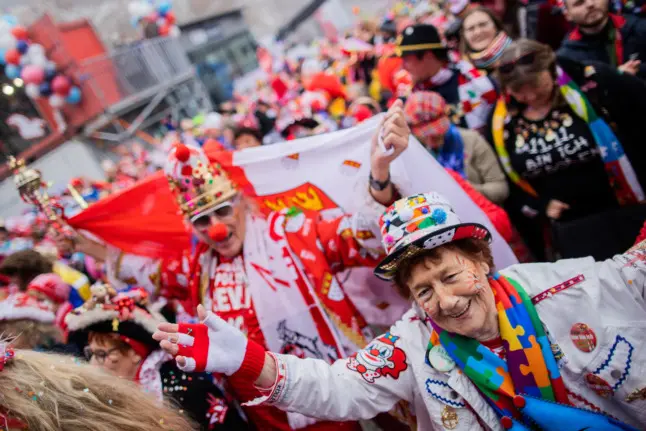
Germany's carnival season generally begins at the 11th minute of the 11th hour on the 11th day of the 11th month and lasts right through to Ash Wednesday the following year, with the biggest parties held in February and early March.
And though English speakers might simply know it as "carnival", there are actually several terms for the German carnival, depending on the region.
Those in the Rhineland use the term Karneval, while people in neighbouring Bavaria or Saxony tend to call it Fasching and people from Hesse or Saarland call it Fastnacht. Although none of the carnival dates are official public holidays, they are a big part of German culture.
READ ALSO: Fasching: Tracing the roots of southern Germany's 'dark carnival'
What's going on at carnival this year?
In Cologne - the largest and arguably the most famous of the German celebrations dating back to the Middle Ages - kicked off at Heumarkt, one of the city's largest squares, under the theme of "FasteLOVEnd – wenn Dräum widder blöhe" (Carnival – when dreams bloom again) last November.
In difficult times, Carnival provides "comfort, joy, community, and also a little hope", explained Christoph Kuckelhorn, president of the Cologne Carnival Festival Committee, adding that they wanted to invite people to immerse themselves in the "dream world" of Carnival.
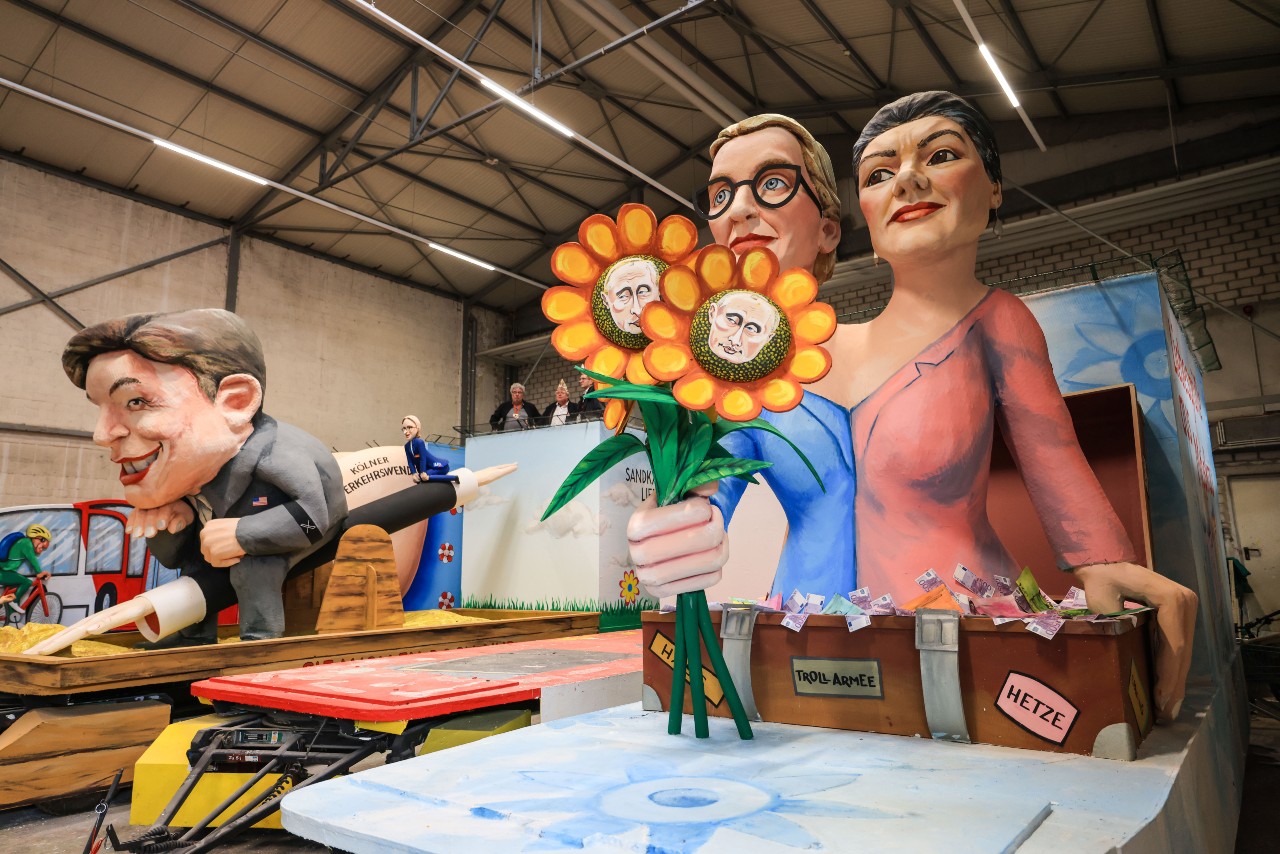
As this theme suggests, motifs of love, peace and flower-power are all set to feature heavily in the colourful costumes and floats on display this year.
This February, a ticketed street party will kick off at 9:30am at the Alter Markt on Thursday, February 27th for Weibernacht, or Women's Carnival Night. The grand opening will be followed by bands and music until 1pm, as well as spinoff parties at pubs around the city.
As usual, Zülpicher Straße will be the main 'party mile' where revellers gather, but this year the city is also opening the Uniwiese to partygoers. A carnival parade will take place as usual on Sunday, followed by the main event on Rosenmontag: a cacophonous street party with countless vibrant floats and parades.
In rivalling Düsseldorf, meanwhile, the custom of "the awakening of Hoppeditz'" - the arch-jester who presides over the city's festivities - kickstarted the revelries on November 11th last year.
READ ALSO: Düsseldorf Helau! How I embraced the Rhineland's carnival celebrations
Since the carnival is celebrating its 200th birthday, this year's motto is "200 Johr - Hütt on wie et wor", and the parties are expected to be extra raucous.
The street carnival in the old town centre starts with the traditional storming of the town hall by women. At 11.11am, the ‘Möhnen’ - local dialect for an older, married woman - take over the sceptre and occupy the market square on Carlsplatz. Afterwards, the celebrations will run on for many more hours in the surrounding pubs in the old town.
Celebrations reach their crescendo on Rosenmontag, where a big carnival parade will head from Cornieliusstraße along Königsallee, weaving through the Altstadt and past the Rhine river to its final destination on Elisabethstraße. The parade will start at 12:22pm.
Other areas celebrating carnival include Mainz, Munich, Aachen, Marne, Würzburg, Stuttgart, Frankfurt, Bremen, Nuremberg, and Cottbus.
Here are the key events of the carnival season:
Weiberfastnacht (women’s carnival night) falls on February 27th 2025 and constitutes a highlight of carnival celebrations. As the name suggests, this day is traditionally about reversing gender roles, with women taking power for a day.
Some traditions on this day include Dreigestirn, where three people take on the roles of Jungfrau (maiden, typically played by a man), Prinz (prince) and Bauer (peasant), dressing up accordingly, and Krawatten abschneiden (literally tie-cutting), where women cut off the men’s ties in a symbolic castration.
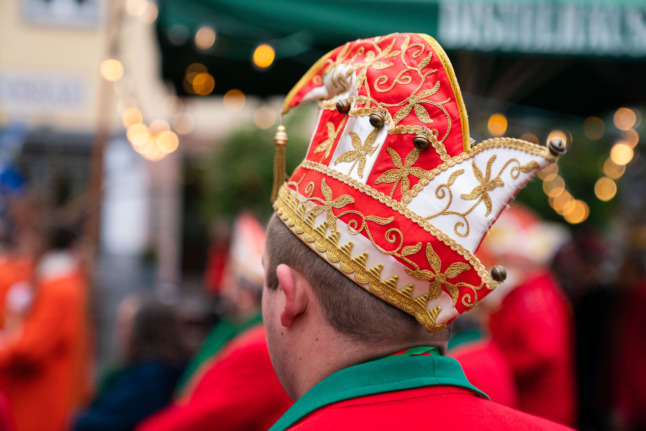
While there’s usually no official parade on this day, people still dress up and celebrate on the streets with further partying, carnival sessions and local association parades over the weekend.
Rosenmontag, the Monday after Weiberfastnacht, next year on the March 3rd, is the day of the Umzüge (parades). These huge parades are what you most likely associate with the German carnival, where people dress up in elaborate costumes, on board their Prunkwagen (floats).
The parades feature crowds singing carnival songs, dancing, throwing Kamelle (caramel flavoured sweets) and satirical, political messaging displayed on huge papier-mâché Schwellköpp – something Mainz’s carnival is especially known for.
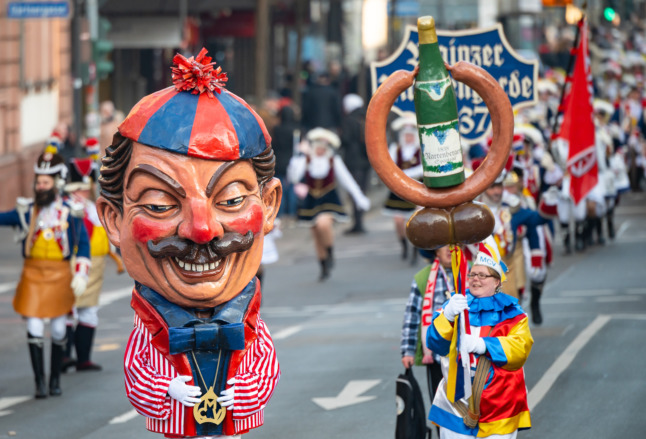
Karnevalsdienstag, Faschingsdienstag or Veilchendienstag (Violet Tuesday, in Cologne) on Tuesday March 4th is the second day of carnival in 2025.
In the Rhineland, this is when the Nubbelverbrennung takes place – a traditional, life-sized straw doll, known as a Nubbel, is set alight. The Nubbel stands for a scapegoat for all the misdemeanours of the carnival season – burning it ensures a prosperous year ahead.
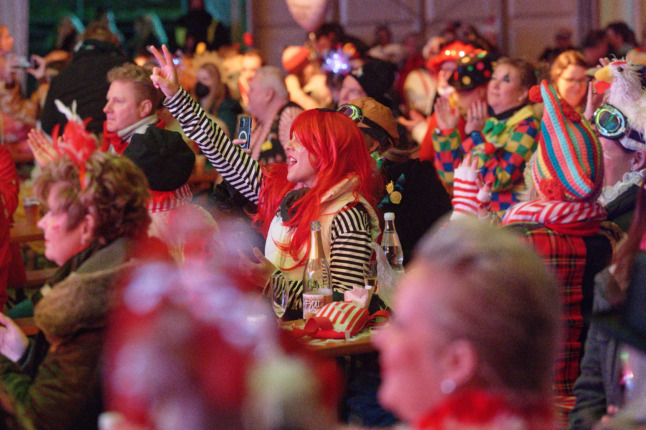
Aschermittwoch falls on March 5th 2025 and marks the end of carnival with a big Festessen (feast) – well deserved after long nights of singing, shouting and dancing. On this day, like Ash Wednesday in other countries, a period of fasting begins until Easter.
Some other carnival terms to know:
“Alaaf!” = traditional carnival greeting of Cologne
das Bützchen = a small kiss given to strangers
der Fastnachtskrapfe = jelly-filled carnival donuts
“Helau!” = traditional carnival greeting of Düsseldorf
der Jeck, der Narr = the jester / the fool (a popular costume idea)
die Kamelle = sweets thrown down from floats on Rosenmontag, traditionally caramel flavoured
der Prunkwagen = the float
der Umzug = the parade
With reporting by Imogen Goodman
Comments