
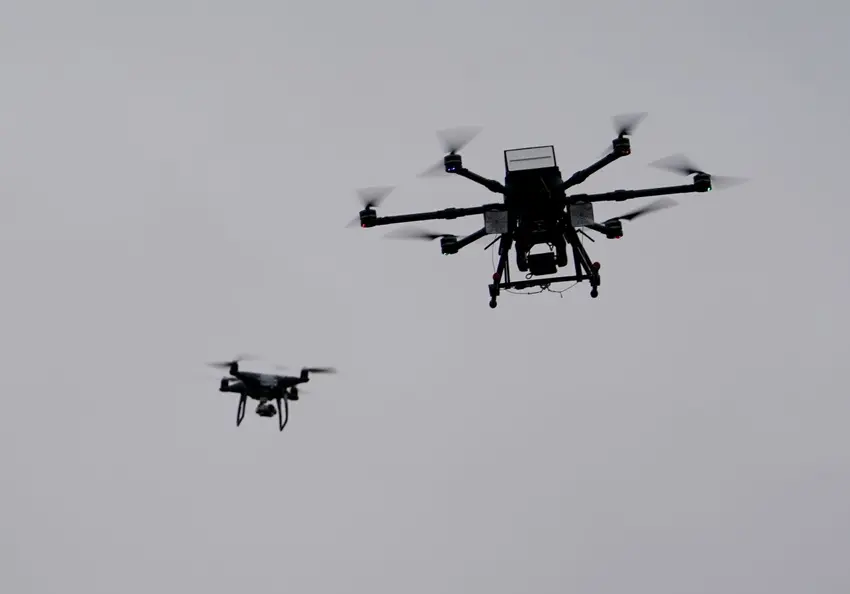
Friday's top story: Germany says Europe in 'drone arms race' with Russia
German Interior Minister Alexander Dobrindt warned Thursday that Europe was in a "drone arms race" while sounding the alarm about a hostile Russia.
While he spoke in parliament, the German armed forces launched a three-day exercise dubbed "Red Storm Bravo" in the northern port city of Hamburg meant to simulate NATO troop movements in case of conflict in a Baltic country.
Germany, a strong backer of Ukraine against Russia, has seen a rise in unidentified drone flights over military bases and critical infrastructure in recent months.
Citing hybrid threats and "aggression" from Russia, Dobrindt said Germany was strengthening its "operational capabilities by developing drone defence systems".
"We are engaged in an arms race between the threat posed by drones and the means to counter them," he said, citing recent incidents in Poland, Romania, Denmark and Norway.
Dobrindt said Germany would boost investment and change its aviation safety rules to allow it to better "detect, defend and intercept" unmanned aerial vehicles.
READ ALSO: Germany pledges €35 billion for space defence
On the same day, Chancellor Friedrich Merz proposed leveraging frozen Russian assets to unlock a €140-billion EU loan to help Ukraine defend itself.
Writing in the Financial Times, Merz said the European Union could make the money available to Kyiv as an interest-free loan "without intervening in property rights".
He added that the money would only be repaid "once Russia has compensated Ukraine for the damage it has caused during this war".
Germany must move quicker on reforms, say experts
Germany must move quicker with potentially painful reforms, experts warned Thursday, in the latest sign of unease at the government's efforts to turn the struggling economy around.
Merz has vowed to boost Europe's biggest economy with a debt-fuelled public spending bonanza, focusing on defence and infrastructure.
But Geraldine Dany-Knedlik of the German Institute for Economic Research said such plans by themselves would provide only a short-term boost.
"A renewal of the German economy remains elusive and prospects for growth are continuing to deteriorate," said Dany-Knedlik, as she presented updated growth projections conducted jointly by several institutes.
READ ALSO: Germany's massive infrastructure plans demand more foreign workers
"Structural problems are merely being masked," she said, warning that high costs, skills shortages and decreasing competitiveness all threaten growth.
The warning piles the pressure on Merz, who last week vowed an "autumn of reforms" and said the country needed "a new consensus" on how its welfare state should look.
The Bild newspaper also reported Tuesday that business associations had berated Merz behind closed doors for moving too slowly on reforms.
German states in new push to change organ donation rules
North Rhine-Westphalia (NRW) and seven other German states have launched a renewed effort to introduce an opt-out system for organ donation. The states have submitted a draft law which proposes that all adults in Germany are assumed to be potential organ donors unless they explicitly object.
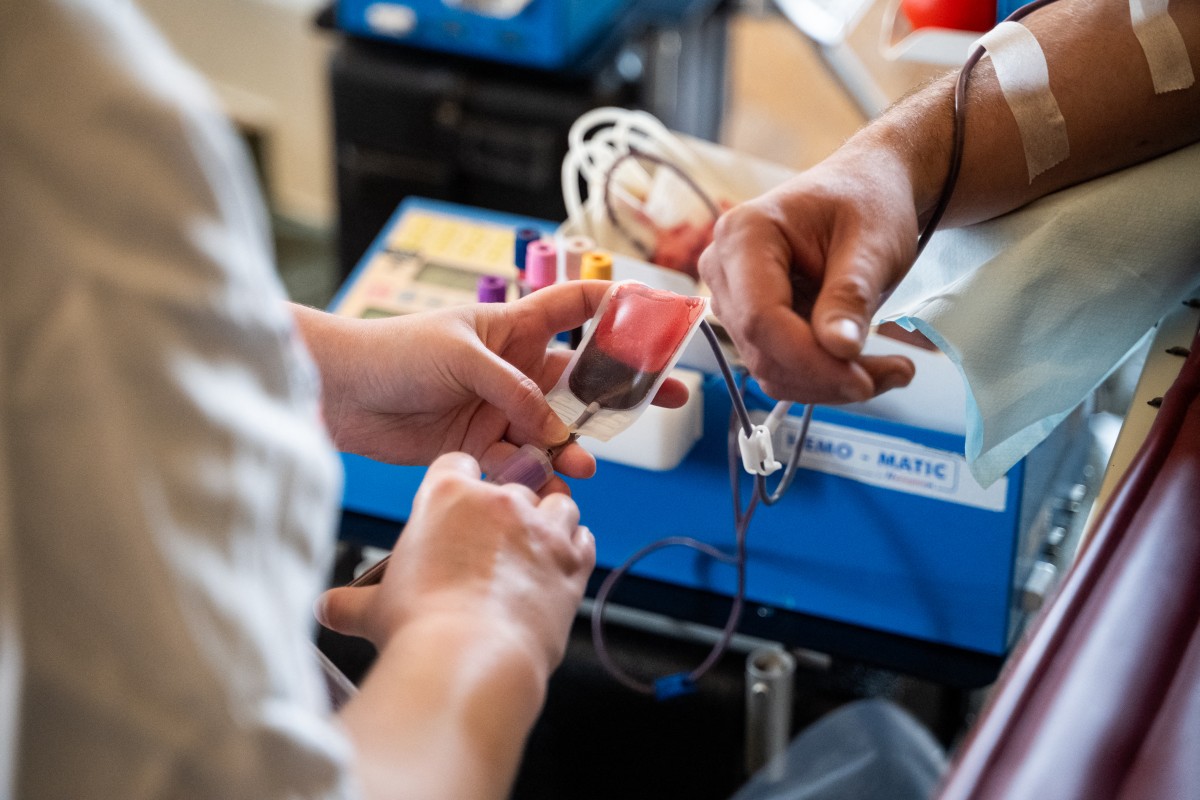
As of January 1, 2025, almost 8,300 patients nationwide were on organ waiting lists with over 1,700 in NRW alone, yet only about 2,850 organs were donated in Germany in 2024, with fewer than 500 coming from NRW.
The NRW Health Ministry announced that the new bill is supported by Baden-Württemberg, Hessen, Mecklenburg-Vorpommern, Rheinland-Pfalz, Saarland, Schleswig-Holstein, and Thüringen.
Similar proposals have failed in the past amid concerns over individual autonomy and family rights. The new draft clarifies that objections can be made at any time, including by relatives, and excludes those unable to provide informed consent. The law as drafted would come into effect two years after enactment, preceded by extensive public awareness campaigns.
READ ALSO: Who can donate blood in Germany?
New figures highlight gender divide among drivers
In 2024, fewer driving licences were revoked nationwide compared to the previous year, but men were disproportionately affected.
According to the traffic offender register, a total of 464,945 men had their driver’s licences taken away, while only 107,833 women faced the same penalty.
This means that 1.57 percent of all male licence holders lost their driving privileges, compared to just 0.44 percent of female licence holders. In other words, men were more than three times likelier to have their licences revoked than women – a pattern which has been consistent over several years.
The main reasons people have their licences taken away include speeding, driving under the influence of alcohol or drugs, reckless driving, and hit-and-run incidents. Temporary driving bans are commonly imposed for repeated or severe offenses, with permanent revocation following in the most serious cases.
READ ALSO: Car insurance premiums to increase for millions of drivers in Germany
Starfish and crabs make themselves at home in bomb casings
Despite toxic WWII munitions on the Baltic Sea floor, starfish and crabs have turned bomb fragments into thriving habitats, according to a new study in Germany’s Bay of Lübeck.

Researchers from the Senckenberg Institute, Geomar, and the Thünen Institute discovered that starfish, crabs, worms, and sea anemones colonise sunken V1 warhead fragments, sometimes with over 43,000 individual animals per square metre, which is much higher than the roughly 8,200 per square metre count found in the surrounding sediment.
Using high-res underwater video, the team only identified only eight species on the metal casings but noted the enormous animal density.
The munitions’ hard surfaces seem to offer a uniquely favourable environment compared to the softer sea floor. Yet nearby areas can be completely barren, probably as a result of contamination by TNT, ammonium nitrate, phosphorus, and other chemicals leaching from the rusting ordnance.
Germany is working on removing these underwater wartime relics – a complex task because disturbing the crusted, corroded bombs could release more toxins. With an estimated 1.6 million tons of old munitions in North and Baltic Seas, the federal government is investing €100 million in urgent clean-up and pilot recovery operations to address both environmental and safety risks.
With reporting by AFP and DPA.
Comments