
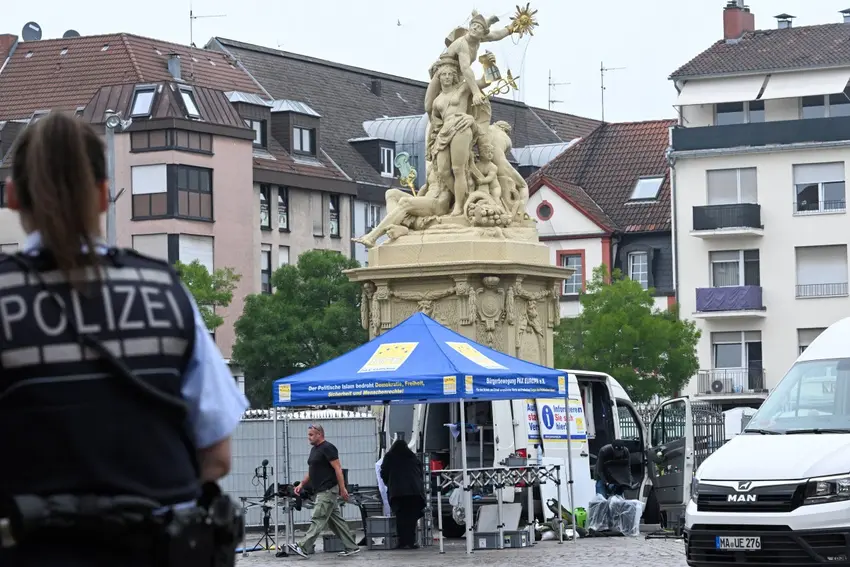
Tuesday's top story: Poland's President talks drone defence in Berlin
Poland's right-wing nationalist president Karol Nawrocki visits Paris and Berlin on Tuesday, seeking help to shore up his country's eastern defences in the wake of a major Russian drone incursion.
Nawrocki has often been a fierce critic of Germany but Poland is seeking the support of its EU and NATO partners after last week's incident, when at least 17 drones violated its airspace.
Russia has denied targeting Poland but Warsaw says the incursion was a deliberate attack and has raised fears that Moscow's confrontation with the West could escalate beyond the Ukrainian battlefield.
Germany now plans to extend its air defence mission in eastern Poland by three months while doubling the number of deployed Eurofighter combat jets to four.
European support is all the more important to Poland now that US President Donald Trump has played down the incursion, suggesting that the drones may have entered Polish territory by "mistake".
Nawrocki is a fervent admirer of Trump, but Poland insists Russia was deliberately testing NATO's defences and has called for allied support.
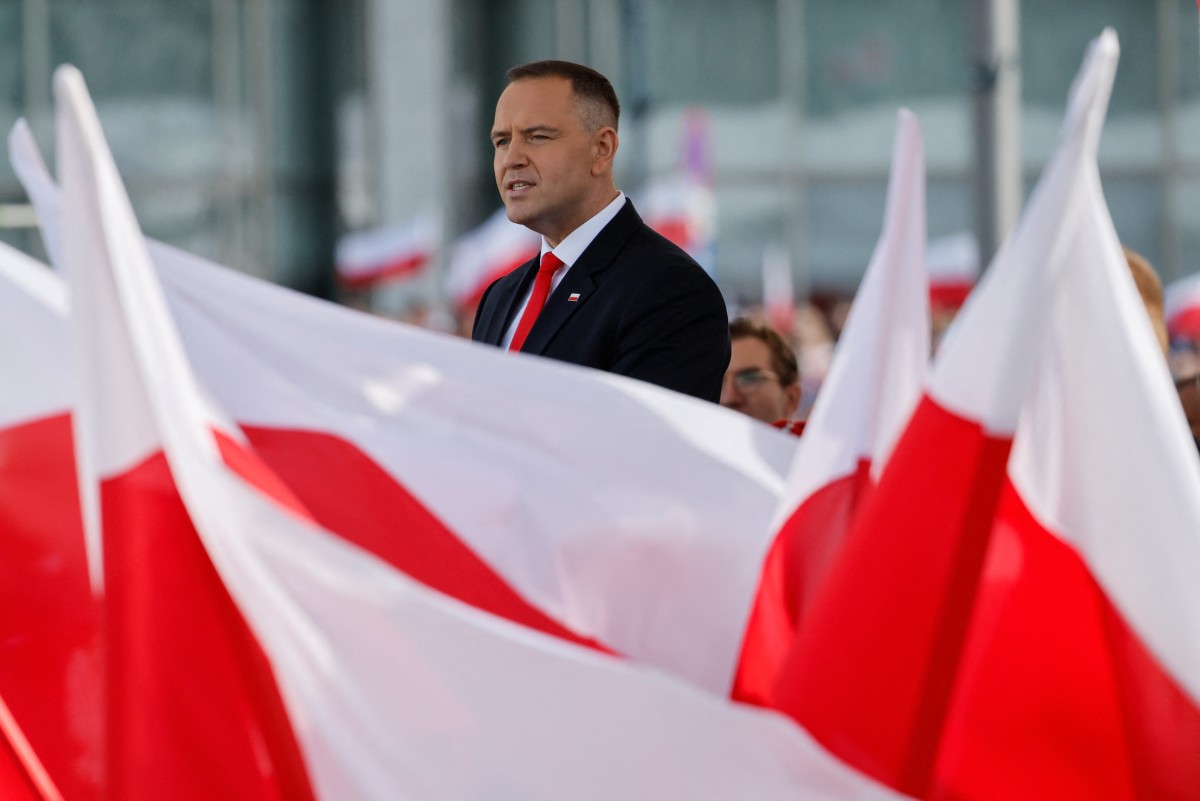
Poland and some of its European allies scrambled jets to down the drones.
READ ALSO: Military service and ravioli reserves - How Germany is stepping up preparations for war
Extreme weather has cost Europe billions this summer
Europe has just faced one of its costliest summers on record.
A new study found that the heatwaves, droughts and floods caused billions of euros worth of short-term macroeconomic losses in EU countries from June to August this year.
In total, severe weather damages are projected to amount to around €43 billion in Europe this year, and to climb to around €126 billion by 2029.
The study, led by Dr. Sehrish Usman from the University of Mannheim and two co-authors from the European Central Bank, was published on Monday.
Southern Europe was hit hardest by economic losses related to weather extremes this year, with Spain, France, and Italy each facing mid-term losses of over €30 billion.
But Germany is also facing significant losses, expected to be above €2 billion. The report also notes that "the frequency and magnitude of extreme weather events, especially floods – are increasing" across Germany and surrounding countries.
READ ALSO: MAP - Where in Germany residents have been forced to move by extreme weather
The study's authors note that this research shows extreme weather is already shaping Europe's economic development. They also call for increased investment in climate adaptation, such as heat protection in cities and improved water management as well as emissions reductions.
Meanwhile Germany's economy ministry proposed cutting renewable energy subsidies on Monday in a move that was criticised by environmental activists.
Verdict due in trial for deadly stabbing in Mannheim
An Afghan man accused of a deadly jihadist stabbing last year faces his verdict Tuesday for one of a string of attacks that have inflamed debate on migration in Germany.
The 26-year-old defendant, only partially named as Sulaiman A., has been on trial since February over the knife rampage in the western city of Mannheim in which a policeman was killed and five other people were wounded.
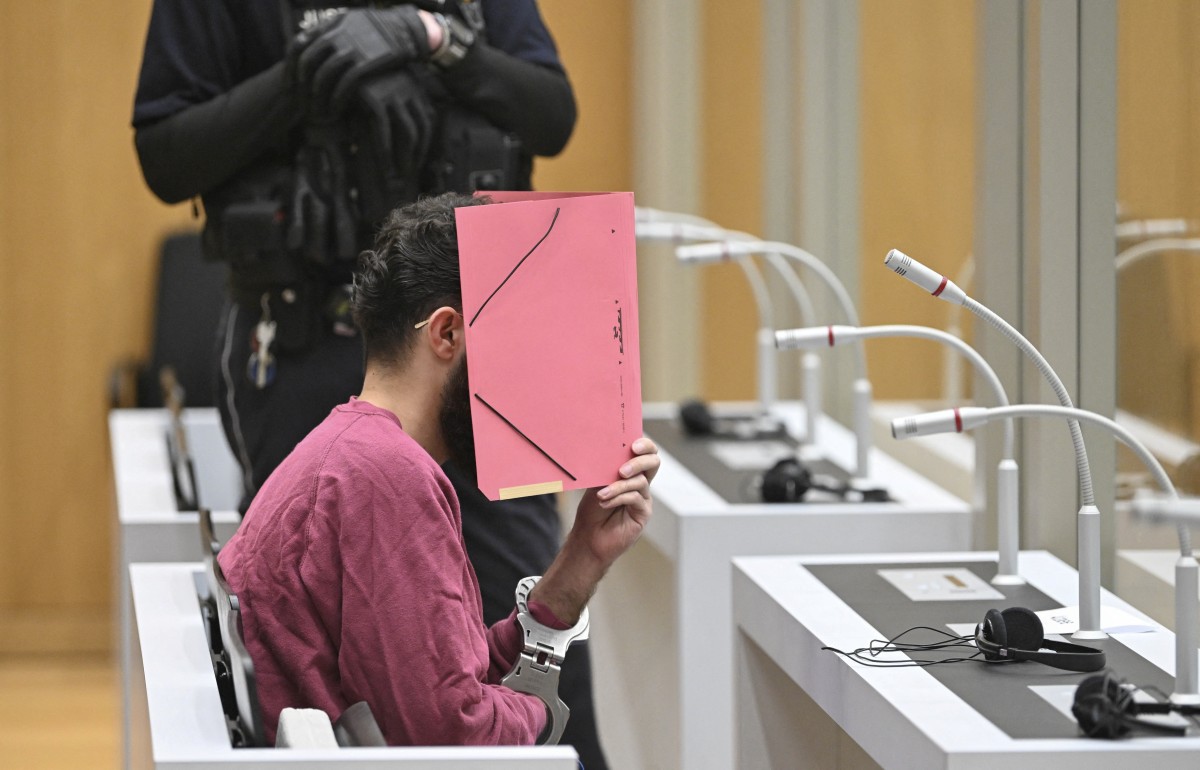
He is accused of using a large hunting knife in the attack last May which targeted a rally by Pax Europa, a group that campaigns against radical Islam.
The perpetrator initially attacked a speaker and other demonstrators, then stabbed a police officer who rushed in to help. The officer died two days later.
READ ALSO: Tensions high in Mannheim after knife attack claims life of policeman
Prosecutors have demanded a life sentence for Sulaiman A., who faces one count of murder and five counts of attempted murder and dangerous bodily harm.
Number of German companies using AI nearly doubles
Artificial intelligence (AI) usage has sharply increased among German companies, according to a recent survey by the digital industry association Bitkom which included 604 German companies with at least 20 employees.
About 36 percent of firms now employ AI technologies, nearly doubling the share from a year ago. AI is primarily used in customer interaction and marketing, followed by research and development, production processes, controlling, and accounting.
Almost half of companies (47 percent) plan or are currently discussing further AI implementation. Only 17 percent of firms view AI as irrelevant, down significantly from 41 percent a year ago.
Eighty-one percent of surveyed businesses now see AI as the most important technology for the future.
EXPLAINED: How German schools are including more and more AI
Two-thirds of companies expect AI to have little impact on employment levels, though some predict moderate workforce reductions or growth due to AI integration.
The school year begins in Bavaria
For almost 1.8 million children and young people in Bavaria, school starts again today - after six weeks of summer vacation.
This also marks the beginning of school for around 130,000 first-graders.
According to a report by radio station BR24, this year brings a number of key changes for students in Bavaria. One of which is an additional daily half hour of exercise, which is to be mandatory from the first to the fourth grade, in addition to physical education.
Also, in order to promote the media literacy of young people, the students are to take courses titled "tablet compass", "AI compass" and "social media compass" in the course of their school career.
READ ALSO: What do children actually learn at school in Germany?
In addition, a visit to a Nazi memorial will also be mandatory for secondary school students.
There had been recent discussions about abolishing unannounced performance tests - but the so-called "exes" remain.
With reporting by AFP and Tom Pugh.
Comments