
Employers prevent part-time workers increasing hours, says German Trade Union Confederation
Increasing the working hours of part-time employees often fails due to resistance from employers, according to the "Good Work" survey of over 4,000 employees published by the German Trade Union Confederation (DGB) on Sunday.
According to the DGB, 40 percent of respondents who wanted to work more stated that their superiors had rejected this while 51 percent said "rigid operational processes" were an obstacle.
This was followed by a lack of positions (31 percent) and a lack of childcare options (29 percent).
According to the DGB, around 2.5 million part-time workers would like to work more, but are thwarted by their employers.
READ ALSO: Which benefits am I entitled to as a part-time employee in Germany?
"The problem with structuring working hours is not the Working Hours Act, but very often the employers themselves," said DGB President Yasmin Fahimi.
Most Syrian refugees choosing to remain in Germany, despite fall of Bashar al-Assad
The number of Syrian refugees returning from Germany to their homeland remains low, despite the recent ousting of long-time ruler Bashar al-Assad, according to reports in the German press.
Currently, around 955,000 Syrians reside in Germany, and a mass return is seen as unlikely due to ongoing security concerns and severely damaged infrastructure.
According to federal figures, by the end of August, 1,867 Syrians had returned with government financial support, up from 804 by the end of May. Additional returns occur via state-level programs and through individuals who depart without official assistance.
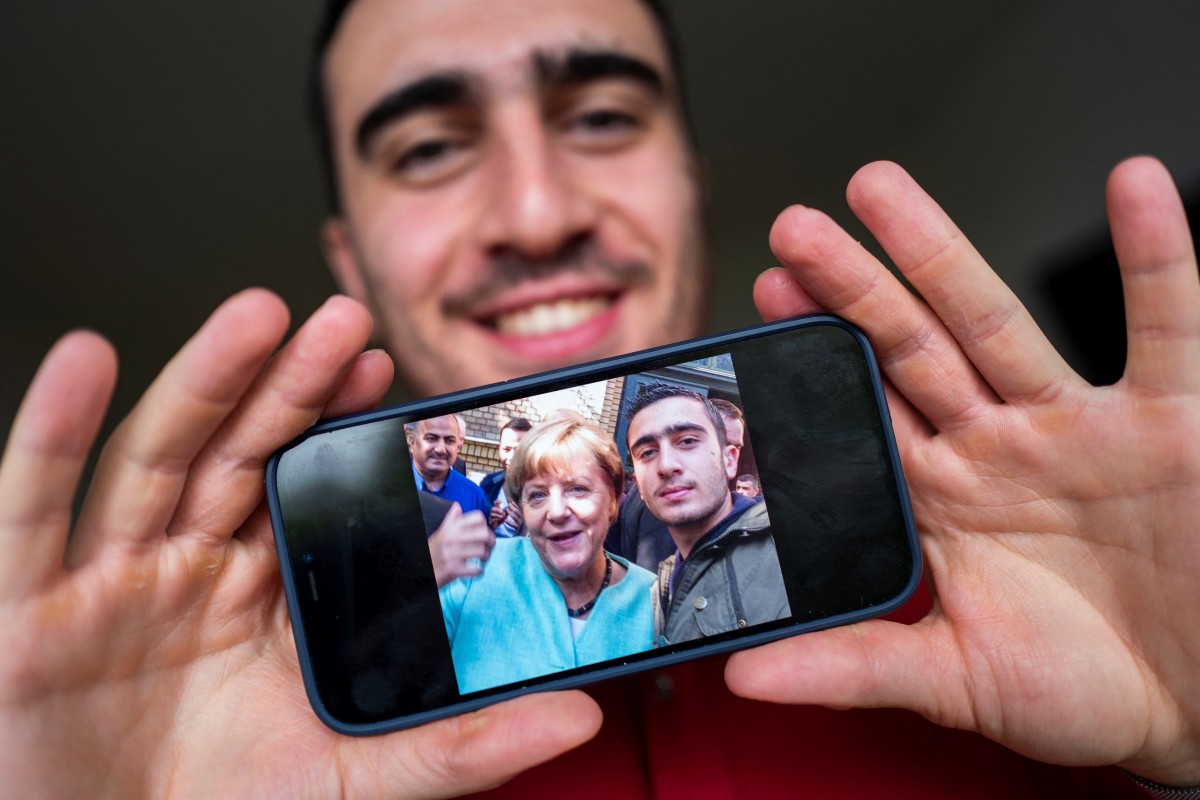
While the fall of Assad has prompted a wave of returns from neighbouring countries such as Lebanon, Turkey, Jordan, and Iraq, most families in Germany find moving back challenging. Aid organizations also highlight the contrast between relative normality in central Damascus and dire conditions elsewhere, making it difficult for returnees to resettle in their original hometowns.
READ ALSO: Angela Merkel looks back at refugee crisis and Russia ties
In 2024, over 83,000 former Syrian nationals were naturalized in Germany. Figures for 2025 are not yet available.
German woman sues Google for failing to remove intimate images
A German woman has filed a ground-breaking lawsuit against Google after the tech giant repeatedly failed to remove intimate and sexually explicit images of her from its search results, despite thousands of requests.
The images, stolen from her private cloud storage along with her identity information, surfaced widely on pornographic websites and could easily be found by searching for her name online.
Supported by the digital rights group HateAid, the woman reported over 2,000 offending links, but the content – often re-uploaded and sometimes manipulated with AI – continues to reappear in Google searches.
The woman, known as “Laura” for privacy reasons, has experienced severe personal consequences, including changing her job and residence, and reports suffering from post-traumatic stress disorder. Her legal action targets Google’s European headquarters in Ireland, aiming to force search engines to permanently delist reported images and substantially similar content, creating a legal precedent about the “right to be forgotten” under European data protection law.
Experts say the case could define search engines’ obligations around harmful content. HateAid is covering all costs, acknowledging the immense psychological burden on victims and expressing hope for a decision that improves digital protection for women and all internet users.
Dozens injured in crashes at German bike race
Dozens of people were injured at a bike race in southern Germany's Black Forest after two crashes occurred on the route, police said Sunday.
The first pile-up happened on a curve in the road between the towns of Bad Duerrheim and Biesingen during the RiderMan event.
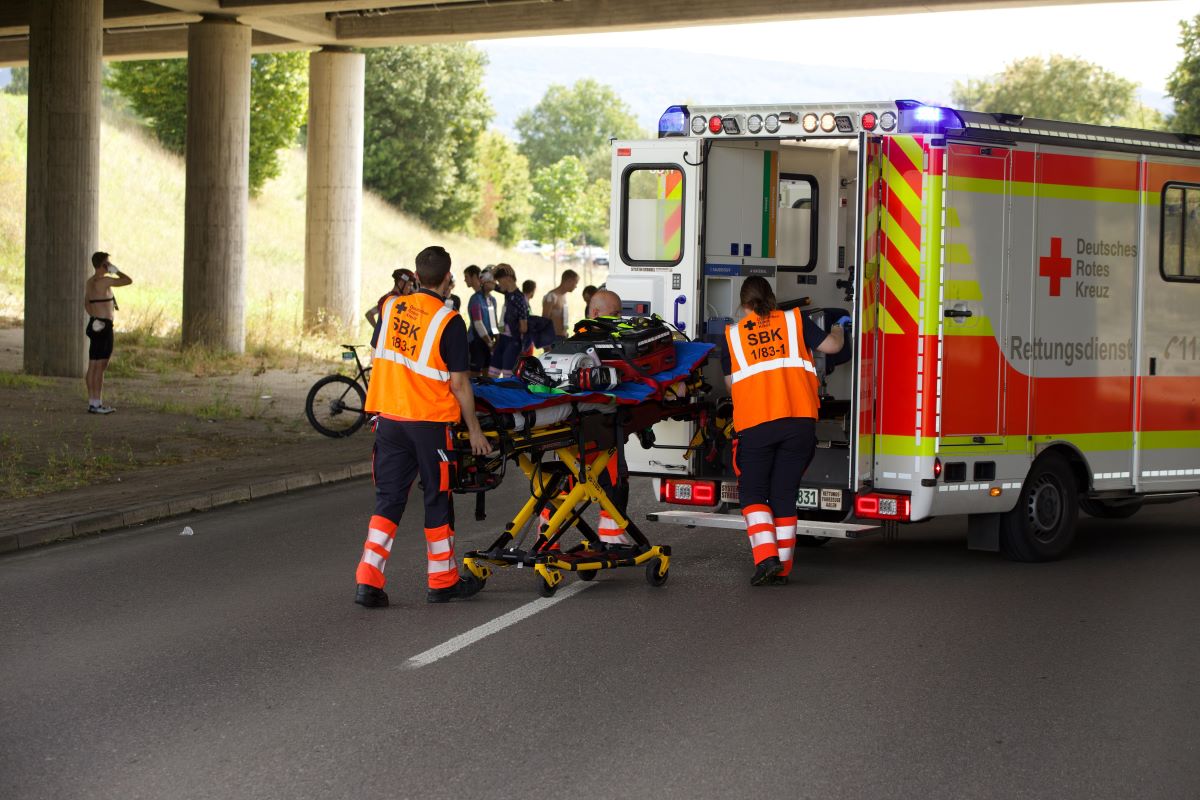 Emergency services from the German Red Cross treat cyclists after up to 70 participants were injured following crashes at "Riderman" near Bad Dürrheim, Germany. Photo: picture alliance/dpa / Andreas Maier
That caused congestion among the riders further back along the route, which lead to a second "mass crash", police said in a statement.
Between 15 and 20 people were seriously hurt and had to be taken to hospital, but none of them was in a life-threatening condition, a police spokesman told AFP.
Another 20-25 people were taken to hospital for less serious injuries, with a further 35 or so treated at the scene.
READ ALSO: 10 important rules and tips for cycling safely on German streets
Large numbers of emergency services and ambulances as well as four rescue helicopters were dispatched to the area in order to treat the wounded.
Police said that "an external cause can be ruled out".
The rest of the race was cancelled following the crashes.
The organisers of the RiderMan event had said that more than 1,200 people were taking part in the race on Sunday, which was scheduled to be the last stage of a three-day event.
CSU leader wants to scrap phase out of cars with combustion engines
CSU leader Markus Söder has used the opening of Munich's International Motor Show to announce a new 10-point plan entitled "Yes to the Car, Yes to Germany as a Car Country".
The Bavarian Minister-President called for the EU-wide ban on cars with combustion engines from 2035 to be overturned, arguing that the engine "has a future with e-fuels and new technologies", Bild am Sonntag reported.
READ ALSO: How Berlin's vote to make the capital car-free will work
The car is "the heart of our economy – without it, collapse threatens," he added, according to Bild.
According to Söder, Germany is experiencing a dangerous mix of the consequences of US tariffs, bureaucratic restrictions imposed by the EU, overregulation, and technological bias.
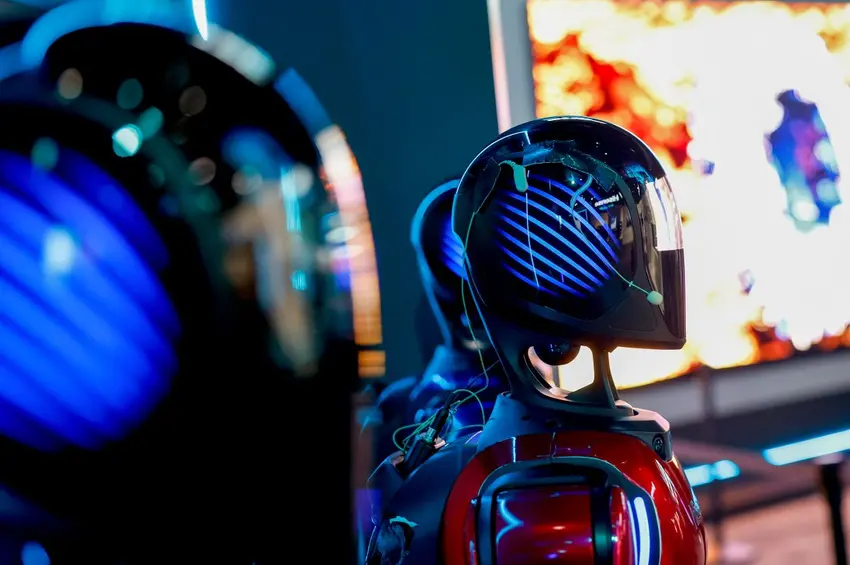
Robots arrive in Berlin for Europe's largest consumer electronics trade show
IFA, Europe’s premier consumer electronics show, is taking place in Berlin (until September 9th, 2025), and showcasing a number of new devices which have set the tech world talking.
In addition to a “twisty” laptop and the world’s first outdoor exoskeleton, a tennis playing robot called the AceMate is receiving plenty of attention.
SMART STORES: The new retail trend disrupting Germany's shop-free Sundays
Making use of dual cameras and algorithms for action tracking, the sporty robot is designed to simulate rally play and performance analysis for solo players.
Pet tech also seems to be taking a leap forward with the debut of a soft-bodied AI robot pet capable of recognizing family members and expressing emotions.
People are also talking about the upcoming Spot+Scrub robot with added mopping and “intelligent dirt detection”.
Retro also seems to be having a moment, with the launch of products designed to play cassettes and vinyl records.
With reporting by AFP.
Comments