

Wednesday's top story: Automotive industry cuts over 50,000 jobs in one year
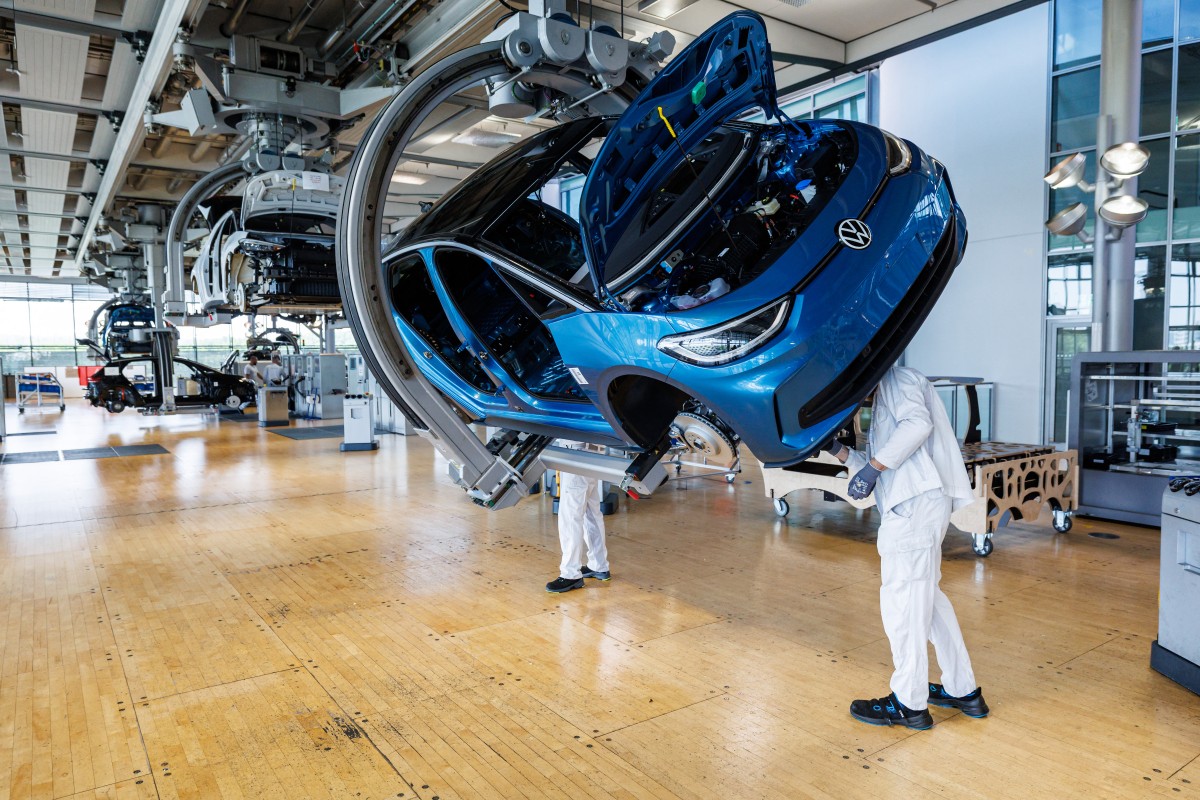
More and more jobs are being lost in German industry, specifically in the automotive industry.
Around 51,500 net jobs or almost seven percent of jobs in the industry were cut within a year, according to an analysis by the consulting firm EY, which was shared with the German Press Agency.
No other industrial sector was so badly affected.
Overall, the number of industrial employees as of June 30th was 5.42 million - 2.1 percent less than twelve months earlier.
Within a year, about 114,000 jobs were cut, according to the study, which is based on data from the Federal Statistical Office.
Since the pre-Covid year 2019, the number of employees has shrunk by around 245,000, a decline of 4.3 percent.
READ ALSO: Is Germany really on course to cut 140,000 auto industry jobs in a decade?
In the second quarter, industrial sales fell by 2.1 percent - the eighth consecutive decline. With the exception of the electrical industry, all sectors recorded declines. In the automotive industry, which is struggling with a slump in sales, competition from China and the transition to e-mobility, sales fell by 1.6 percent.
Germany to cooperate with Canada on key raw materials
Germany and Canada signed an agreement Tuesday on boosting cooperation in the field of critical raw materials, Chancellor Friedrich Merz said, as they seek to reduce heavy dependence on China.
China's dominance in supplying the world with such materials has been in the spotlight since Beijing this year introduced export curbs on some key rare earths, triggering jitters among businesses globally.
Rare earths are used in a wide variety of products from electric car batteries to wind turbines and computer hard drives.
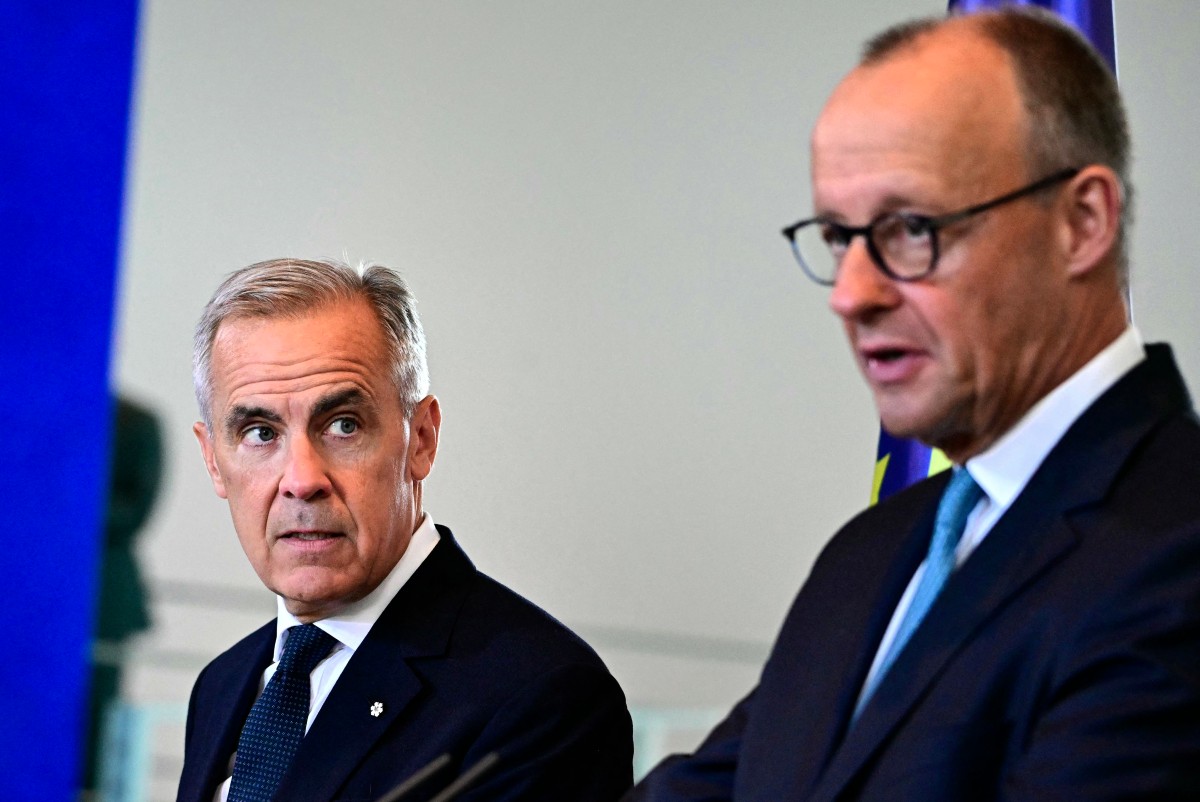
At a press conference in Berlin alongside Canadian Prime Minister Mark Carney, Merz said that Canadian and German ministers would sign a memorandum of understanding on raw materials.
"Germany has been amongst the leaders in beginning that diversification away from China... Canada can play a role in accelerating that diversification for Germany and for Europe," he said.
The leaders did not immediately reveal details of the agreement, which are expected to be released later.
News outlet Politico reported that the agreement will have five main objectives, with a focus on technologies related to raw material processing, refining and recycling.
There will be no recognition of a Palestinian state, says Merz
Chancellor Merz also used the meeting with Canada to emphasize a different point; that Germany will not recognize the state of Palestine for the time being.
"We will not join this initiative," Merz said in a joint press conference with the Canadian Prime Minister Carney. "We do not currently consider the requirements for state recognition to be met..."
Germany regards the recognition of a Palestinian state as one of the last points on the way to a two-state solution in which Israelis and Palestinians can live peacefully side by side.
Carney, on the other hand, announced at the end of July that his country would recognize Palestine as a state at the UN General Assembly in September. Canada is joined by France in doing so.
Merz's announcement follows more tragic news from the Gaza Strip. Most recently, an Israeli attack on the Nasser Hospital in the southern Gaza Strip, in which 19 people were killed, caused international criticism. Among the dead were five journalists.
Germany said it will stop exporting weapons to Israel for use in Gaza earlier this month.
Germany to begin admitting Afghans stranded in Pakistan
Germany is to begin the process of admitting some of the Afghans threatened with deportation from Pakistan to whom Berlin had previously offered sanctuary, a government source said Tuesday.
More than 2,000 Afghans were left stranded in Pakistan after the government of conservative Chancellor Friedrich Merz took office in May and froze a scheme meant to offer Afghans safe haven from the Taliban.
Pressure had mounted on the German government to reverse course in recent weeks as Pakistani authorities intensified a crackdown on Afghans living in the country without residency.
READ ALSO: Berlin urged to help stranded Afghans 'before it's too late'
Last week the German government said around 450 Afghans waiting to come to Germany had been detained, of whom more than 200 had been sent back to their Taliban-run homeland.
The government source said on Tuesday that Afghans for whom "courts have found that Germany is legally obliged to issue visas" will travel to Germany "in stages" once they have cleared security checks.
According to the Airbridge Kabul initiative set up to help those affected, only those who have mounted successful court challenges have now been approved for travel to Germany. They represent only a fraction of the total number stuck in Pakistan.
Apple banned from advertising Apple Watch as 'carbon-neutral'
Apple has been prohibited from advertising its Apple Watch as a “carbon-neutral product” in Germany following a court ruling on August 25, 2025.
The Frankfurt Regional Court sided with environmental group Deutsche Umwelthilfe (DUH), which brought the case against Apple alleging misleading “greenwashing” marketing.
The court found Apple’s claim unfounded and a violation of German competition law because the company based its carbon neutrality on offsetting emissions through a reforestation project in Paraguay, according to reporting in Der Spiegel.
READ ALSO: German court bans Lufthansa's alleged 'greenwashing' ads
However, only 25 percent of the land used for planting eucalyptus trees is securely owned long-term, while the majority is leased only until 2029, with no guarantee of renewal. The judge noted, “There is no secure future for the continuation of the forest project,” raising doubts about the ecological validity of Apple’s claims.
DUH praised the decision as a success in combating misleading environmental advertising.
Apple has not announced whether it will appeal but must stop using “CO2-neutral” descriptions for the watches in Germany for now, or face fines of up to €250,000 per violation.
Far-right convicted murderer accepted into rehabilitation program
Beate Zschäpe has been accepted into a rehabilitation program called Exit Germany, potentially leading to her early release from prison.
Zschäpe, a former member of the far-right extremist group National Socialist Underground (NSU), was convicted in 2018 for her role in a string of racially motivated murders, bombings, and arson attacks carried out between 2000 and 2007.
READ ALSO: NSU verdict approaches - who is woman at centre of neo-Nazi terror trial?
She received a life sentence after being found guilty of ten counts of murder among other charges. Zschäpe was the only surviving member of the NSU, which targeted mostly immigrants, and played a key logistical role in maintaining a façade of normalcy for the group.
The news that Zschäpe has been accepted into the rehabilitation program, potentially leading to early release, has sparked outrage among the victims’ relatives and wider communities, given the gravity of her crimes and the continuing impact on the families and society.
In Germany, initiatives such as Exit are designed to help people leave extremist groups, providing psychological support, counselling, legal advice, and assistance with social reintegration.
The programs aim to support deradicalization and help individuals rebuild their lives away from extremist ideologies.
With reporting by AFP, DPA and Paul Krantz.
Comments