

Germans are against cuts in social benefits or healthcare, survey
A survey shows that many people expect the government to make cuts to social benefits and in the health care system, but would not choose them.
The survey by the Allensbach Institute for Public Opinion Research on behalf of the Frankfurter Allgemeine Zeitung showed that only 23 percent of those surveyed find it acceptable to raise the retirement age.
Only seven percent would consider a lower pension to be acceptable.
Still, according to the report, 84 percent of those surveyed expect the retirement age to be raised in the future, and 78 percent assume that pensioners will receive a lower pension in the future.
The pollsters found a contrast between the widespread recognition that fundamental changes must be made in the economy and social systems and the willingness to accept these changes, according to the report.
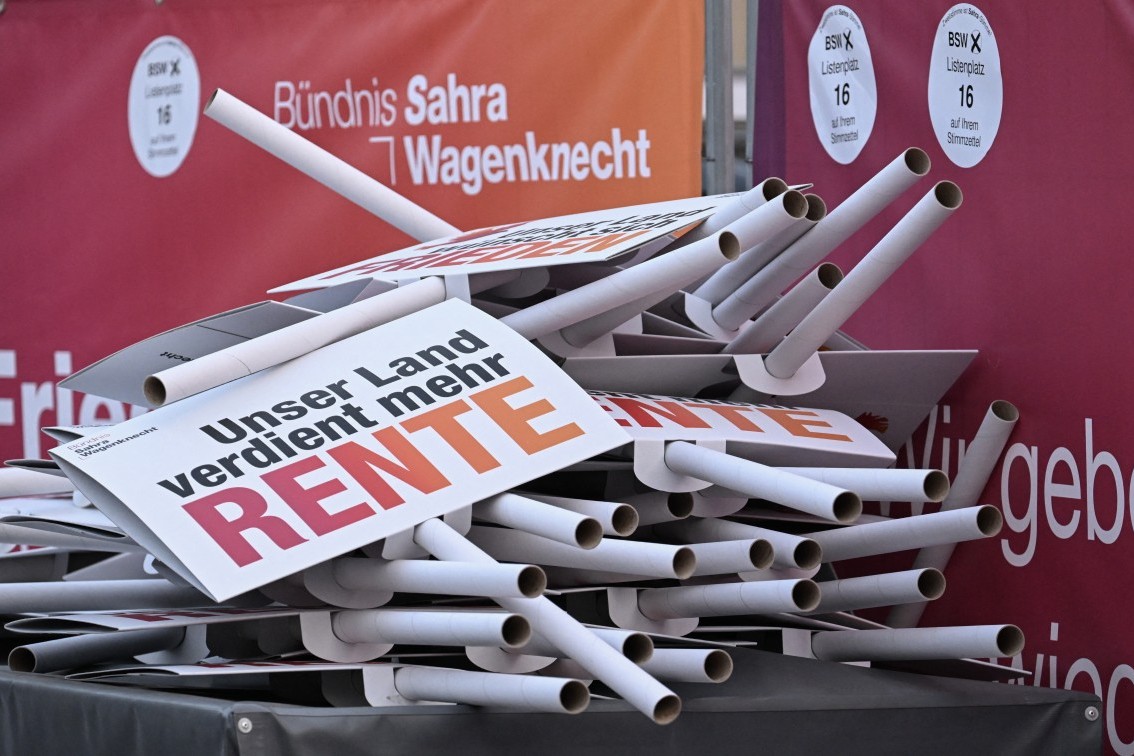
Germany's current black-red government has ruled out cuts to pension payments until at least 2030, but various leaders have floated ideas around cutting other benefits or raising the retirement age.
OPINION: Why Germany’s pensions problems will soon be your problem
Germany slams 'escalation' of Israel's Gaza military operation
The German government said Wednesday it "rejects the escalation" of Israel's campaign in Gaza after Israel approved a plan to conquer Gaza City and authorised calling up around 60,000 reservists.
Germany finds it "increasingly difficult to understand how these actions will lead to the freeing of all the hostages, or to a ceasefire," government spokesman Steffen Meyer told reporters.
Top politicians' official vehicles don't meet EU emissions targets, study finds
The German non-profit Environmental Action Germany (DUH) evaluated top politicians' work vehicles and found that the majority of them would not meet the EU's CO2 emissions targets.
The fleet as a whole exceeds its carbon budget, the climate group said on Tuesday.
In total, DUH estimated that 151 of 238 cars it evaluated exceeded the EU's average emissions target for the car industry of 93.6 grams of CO2 per kilometre driven.
In total, DUH estimated that 151 of 238 cars it evaluated (or 63 percent) exceeded the EU's average emissions target for the car industry of 93.6 grams of CO2 per kilometre driven.
A green card was awarded to any vehicle at or below the target, a yellow card to any exceeding it by less than 20 grams per kilometre, and a red card for anything above that.
Seven of the 11 federal government ministers included in the study used vehicles earning them a red card, compared to seven of nine in 2024.
IN PICTURES: How the climate crisis is visibly changing Germany
DUH suggested that the finding is illustrative of the bigger issue with Germany's car industry.
DUH's executive director Barbara Metz said the finding was "emblematic of the entire auto sector, which is lagging behind massively in climate protection..."
She added: "Instead of seriously pursuing the switch to futuristic electric power, the federal government is concentrating on pollutant petrol and diesel limousines."
Restaurants in crisis as people eat out less
Eating out is becoming a luxury for more people in Germany – and restaurants are in crisis.
According to new figures, the German hospitality industry is generating less money, and losing customers at the same time.
Adjusted for price changes, revenue in the first half of the year fell by 3.7 percent compared to the weak same period last year, according to the Federal Statistical Office.
Only significant price hikes have secured revenues for restaurateurs and hoteliers to some extent. In nominal terms – i.e., without taking inflation into account – revenues were only 0.1 percent lower than a year earlier.
With a real decline of 4.1 percent, restaurants were hit harder than hotels and other accommodation providers, which had to cope with a decline of 2.6 percent.
According to the German Hotel and Restaurant Association (Dehoga), customers have become more frugal.
"Price sensitivity and consumer restraint are noticeably increasing," said Dehoga President Guido Zöllick.
"Many guests are eating out less often, choosing cheaper dishes, and foregoing extras such as appetisers or a second drink."
Zöllick said increased costs are weighing particularly heavily on small and medium-sized family businesses. "The situation in the industry is tense, and the outlook for the second half of the year is subdued," he said.
Court rules Holocaust memorial can bar people wearing keffiyehs
A German court said Wednesday that a Nazi concentration camp memorial has the right to refuse entry to those wearing the Palestinian keffiyeh scarf.
The higher administrative court in the eastern state of Thuringia rejected a request from a woman to be allowed entry to the Buchenwald concentration camp memorial while wearing a keffiyeh.
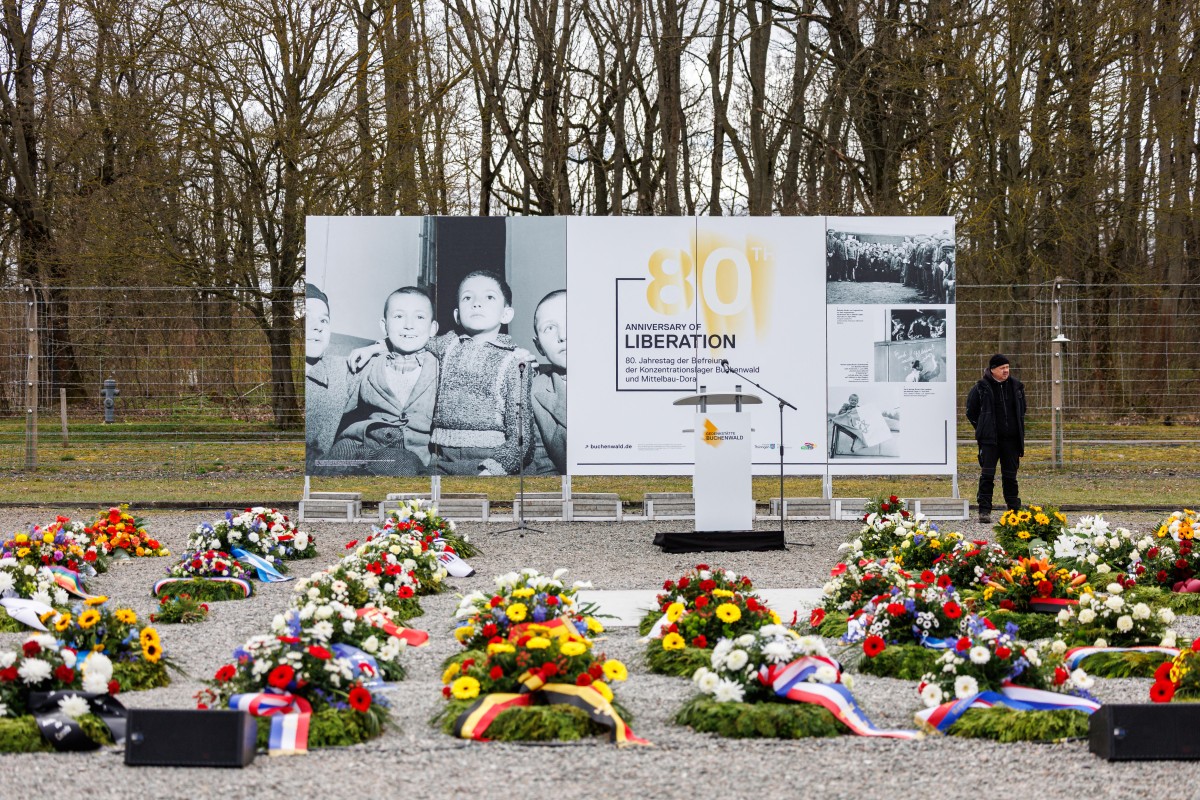
According to local media reports, the woman was turned away when she attempted to attend a commemorative event marking the 80th anniversary of the camp's liberation in April while wearing the scarf.
She then petitioned the courts to allow her to return to the memorial for another commemorative event this week while wearing a keffiyeh.
The court found that the memorial was within its rights to deny her entry, pointing to the woman's declared aim of "sending a political message against what she saw as the (memorial's) one-sided support for the policies of the Israeli government".
The court said the woman's right to freedom of expression was outweighed in this case by the memorial's "interest in upholding the purpose of the institution".
With reporting by AFP, DPA and Rachel Loxton.
Comments