
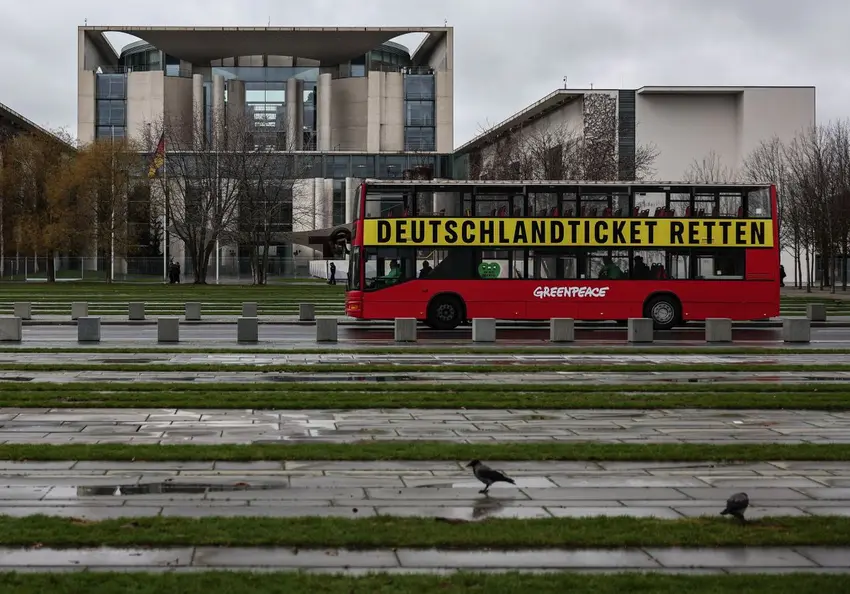
Wednesday's top story: Deutschlandticket not guaranteed for 2026
Germany’s much-loved Deutchlandticket remains in jeopardy, according to the German Association of Cities (the country’s largest municipal umbrella organisation).
“If the regionalization law remains as it is … we are facing weeks and months of uncertainty,” association CEO Christian Schuchardt told the Funke Media Group.
This year, the federal and state governments are each providing €1.5 billion for the ticket to compensate for lost revenue for transport companies. The federal cabinet plans to pass a resolution to this effect on Wednesday.
But the compensation required actually amounts to at least €3.6 billion per year.
READ ALSO: 9 of the best day trips from Frankfurt with the 'Deutschlandticket'
“The €1.5 billion euros that the federal and state governments have been contributing each year, together with ticket revenues, do not cover the costs incurred by transport operators,” said Schuchardt.
The federal government has approved the ticket but does not want to cover the additional costs. The states have also rejected additional expenditure, according to Schuchardt. In addition, federal funds for the Germany ticket are not included in the 2026 draft budget.
“This means that the ticket is in no way guaranteed for 2026,” said the representative of the municipalities. They want to continue the “success story of the Germany ticket, but the threat of another stalemate already exists.”
Car sales jump in July but market still weak
New car sales in Germany posted a big rise in July, official data showed Tuesday, but analysts warned against sounding the all-clear for Europe's top auto market.
A total of 264,802 new cars were registered, up 11.1 percent year-on-year, the KBA federal transport authority said.
Across a less volatile six-month comparison, however, new car registrations were down 2.5 percent, underlining Germany's sluggish market for new vehicles.
READ ALSO: The rules around children's car seats in Germany
"Demand is still weak, individuals and companies are delaying purchases amid a weak economy and very uncertain prospects," said Constantin M. Gall, an automotive analyst at consultancy EY.
New car sales were particularly weak in July 2024 after customers had rushed to buy cars the previous month, hoping to avoid pricier vehicles before a new EU regulation mandating driver-assistance systems took effect.
Germany's car industry is already struggling with high production costs at home as well as a costly transition to electric vehicles and ferocious competition in key market China, where local competitors like electric carmaker BYD have stolen a march.
READ ALSO: As EU targets Chinese cars, French and German rivals sputter
BYD sold 1,126 cars in Germany in July 2025, the KBA figures showed, a rise of almost 400 percent year-on-year and more than the 1,110 that Elon Musk's Tesla managed.
Tesla's sales were down 55 percent, the latest drop for the carmaker which has suffered worldwide due to intensifying competition and as Musk faces a backlash for having worked as an adviser to US President Donald Trump.
Vodafone warning system reports 15 million fraudulent calls
Mobile phone provider Vodafone has issued about 15 million warnings about potential scam calls to mobile phone users in Germany in the last three months, using a new anti-spam system.
On average, the new security service warned 150,000 mobile phone users a day about possible fraud. On one day, more than 650,000 spam calls were registered.
READ ALSO: What is Palantir's Gotham software and why do German police want it?
If a Vodafone customer receives a call from a dubious number, the message “Caution: possible fraud!” appears on their smartphone display.
The warning service is independent of the cell phone model. Other major mobile phone operators such as Deutsche Telekom and O2 Telefónica are working on their own anti-spam solutions.
Vodafone Germany CEO Marcel de Groot said that every warning helps to raise awareness among mobile phone users and protect them from costly damage. “The danger on the internet and on the phone is increasing … We all need to look closely at who is on the other end of the line in our everyday lives.”
Users should be aware that Vodafone's fraud number database is not exhaustive. As fraudsters often change their numbers, it’s possible that a fraudulent call won’t always trigger an alert.
German club backs out of signing Israel striker after fan backlash
Bundesliga 2 side Fortuna Düsseldorf has pulled out of signing Israel striker Shon Weissman in response to fan anger about his social media posts on the Gaza war, German tabloid Bild reported Tuesday.
Fan furore erupted online on Monday when news emerged Weissman was on the cusp of joining Düsseldorf from Spanish side Granada FC.
READ ALSO: City of Düsseldorf to ban swimming in the Rhine
On Tuesday, the club tweeted: "We looked into Shon Weissman intensively, but ultimately decided not to sign him".
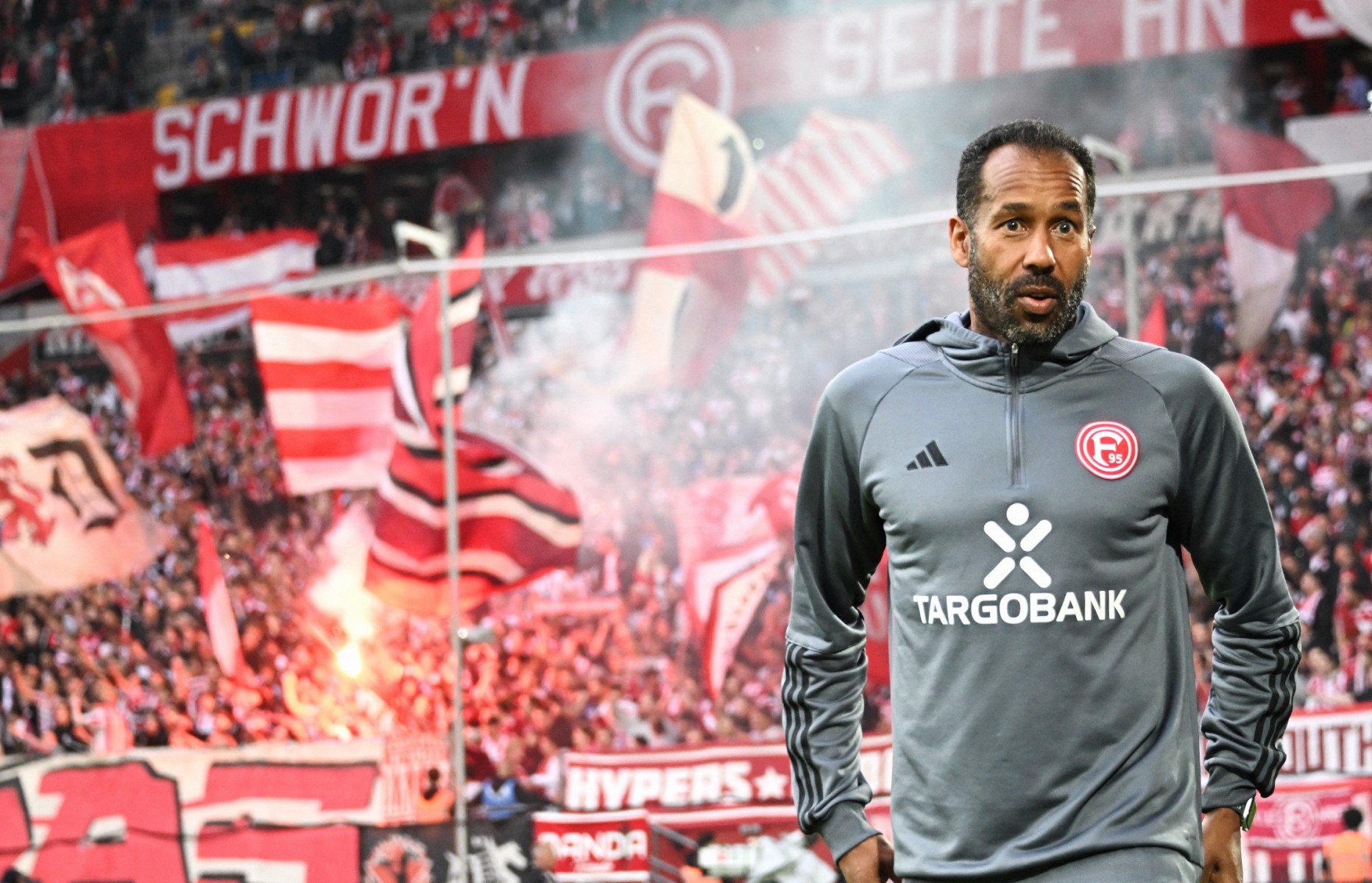
The club did not reveal the reasons for the decision, but Bild reported the club reacted to fan anger about social media statements from Weissman, who was already in Düsseldorf and had completed a medical.
The centre-forward, who has 33 Israel caps, made several social media posts after the October 7th, 2023 Hamas attack on Israel that set off the Gaza war.
Bild reported Weissman called for Israel to "wipe Gaza off the map" and to "drop 200 tons of bombs on it".
Weissman, who deleted the posts soon after making them, has since said he made a mistake and was acting in the heat of the moment.
Düsseldorf fans launched an online petition on Monday saying Weissman's "disrespectful and discriminatory" comments "are in stark contrast to the principles Fortuna stand for and try to promote".
Social welfare association criticizes delay in reforming the Disability Equality Act
The German Social Association (Sozialverband Deutschland) has sharply criticized the delay in reforming the Disability Equality Act (BGG), which was originally planned for this summer.
“This is a slap in the face for 13 million people,” said association chairwoman Michaela Engelmeier to the Augsburger Allgemeine newspaper on Wednesday. "The years of political stalling tactics make us angry."
“Millions of older people and families with children would also benefit from a well-drafted Disability Equality Act,” Engelmeier emphasized. “It is also a bitter disappointment for them because they have been hoping for greater accessibility and thus more opportunities to participate for a long time."
The federal government has set itself the goal of improving accessibility in Germany. To this end, the CDU/CSU and SPD wanted to place greater responsibility on companies to make their buildings accessible to people with disabilities—for example, by installing elevators.
READ ALSO: Germany 'should be ashamed of itself' for failing disabled pupils
According to the Ministry of Labor, a reform of the Disability Equality Act was to be decided by the cabinet in the summer. However, this has been delayed because the Ministry of Economics is critical of the new requirements for companies.
The Disability Equality Act, passed more than 20 years ago, obliges public authorities to ensure a certain level of accessibility. However, the private sector has been left out of this so far. This was to be changed with the reform already planned by the traffic light coalition government.
With reporting by DPA and AFP.
Comments (1)