
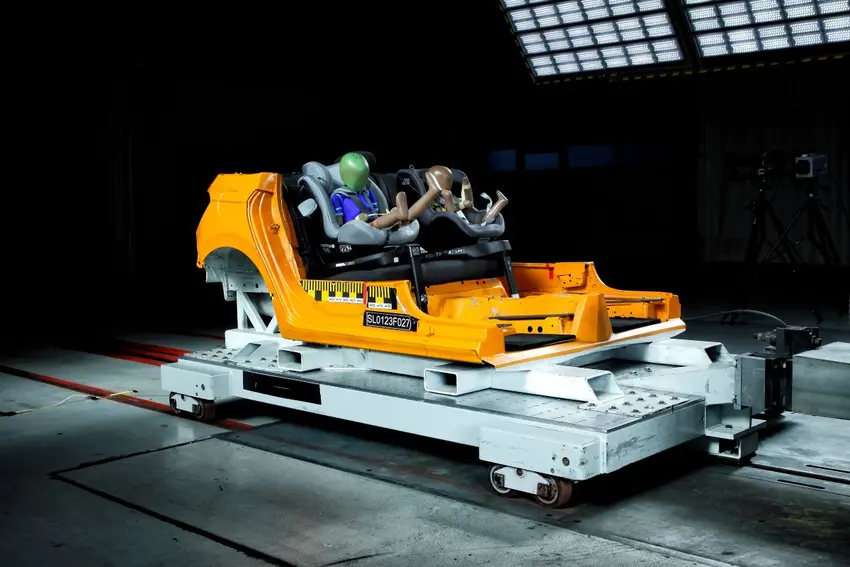
In Germany, children have to use an appropriate child seat (Kindersitz) until they are either 12 years old or reach a height of 150 cm (approximately 4 feet 11 inches). This law applies to all vehicles where seat belts are fitted.
Children start in a rear-facing infant seat (Babyschale), designed for newborns and babies. Experts strongly recommend keeping children rear-facing for as long as possible, ideally until 15 months or later, as this provides better protection for the head and neck in the event of a crash.
Once children outgrow the rear-facing seat according to the height or weight limits set by the manufacturer, they move to a forward-facing child seat equipped with a harness (Gurtsystem). This usually happens from around 15 months, depending on the size of the child.
Children then switch to a booster seat (Sitzerhöhung). Again, the timing depends on the make and model of the seat and the size of the child, but rarely happens before the age of four or five. Booster seats are designed to lift children up so that the car's seat belt fits correctly over the shoulder and pelvis.
Booster seats are legally required for children in Germany until 12 years of age, or until the child reaches 150 cm in height, whichever happens first.
Using the correct seat is essential not just for safety but to avoid penalties.
Drivers and adults responsible for children can be hit with points on their driving licences if they fail to use the appropriate seat, as well as fines starting from €60.
What to look for when you’re buying a car seat
In Germany, child seats have to meet European safety standards; either the older UN Regulation 44/04 (or ECE R44/04) or the newer i-Size standard (UN Regulation 129).
If you’re buying a new car seat, it should display an official approval label – an orange sticker usually found on the base or the side of the seat – which says: ECE R129 (i-Size).
READ ALSO: What are the rules around driving a friend or relative's car in Germany?
The i-Size system places more emphasis on height as opposed to weight, as well as improved side-impact protection. Seats with ISOFIX connectors (ISOFIX-Befestigung) are recommended for easier and more secure installation.
If you’re thinking about buying a second-hand seat, make sure it has a certification label either for UN R44/04 or i-Size (UN R129).
It’s also important to make sure the seat hasn’t been involved in an accident, shows no visible damage or excessive wear, and is still within the manufacturer’s use-by date (typically six to ten years).
Seats with missing certification labels aren’t legal for use.
Do the same rules apply in car shares and taxis?
Yes, the legal requirement to use an appropriate child seat applies equally to private cars, carsharing vehicles, and taxis. But there are some differences in how responsibility is allocated.
In both private and carsharing vehicles, the driver is responsible for providing and correctly installing the child seat. Carsharing services may or may not supply child seats, so it is recommended that you bring your own to ensure safety and legal compliance.
READ ALSO: The essential vocab you need for driving in Germany
The same rule does not apply to taxi drivers, who are not required by law to provide or install child seats. While the law mandates children travel restrained appropriately, it places the responsibility on the parent or guardian to provide the child seat.
Transporting children without an appropriate child seat in a taxi can lead to fines for the parent(s) or guardian. While taxi drivers may also face consequences if they knowingly allow unrestrained children to travel, policing tends to focus on guardians' responsibility.
Anecdotally, the police will occasionally show leniency for very short or urgent trips, but this is far from guaranteed and not in any way a legal exemption.
For more advice, see the ADAC’s child seat guide.
Comments (1)