
Wednesday's top story: Alleged spy for Iran handed over to Germany
Denmark has extradited to Germany a man accused of spying on Jewish institutions in Berlin on behalf of Iran, German prosecutors said Tuesday.
Germany's Federal Court of Justice formally ordered the Danish national's detention on Tuesday, the prosecutor's office said in a statement.
The suspect, identified only as Ali S., was extradited to Germany on Monday, nearly three weeks after his arrest in the Danish city of Aarhus, the office said.
Prosecutors allege that Ali S. in June gathered intelligence on three Jewish sites in Berlin, possibly in preparation for future attacks.
Suspected of acting on behalf of Iranian intelligence, Ali S. could face up to 10 years in prison if convicted.
His arrest followed intelligence provided by Germany’s domestic security agency, the Federal Office for the Protection of the Constitution. Germany's Federal Criminal Police Office was also involved in the investigation.
News magazine Der Spiegel and public broadcaster ARD reported that the suspect is 53, has Afghan roots and might have been acting on behalf of Iran's Revolutionary Guard Corps.
They also reported that he had monitored the headquarters of the German-Israeli Society.
German investors shrug off Trump's latest tariff threats
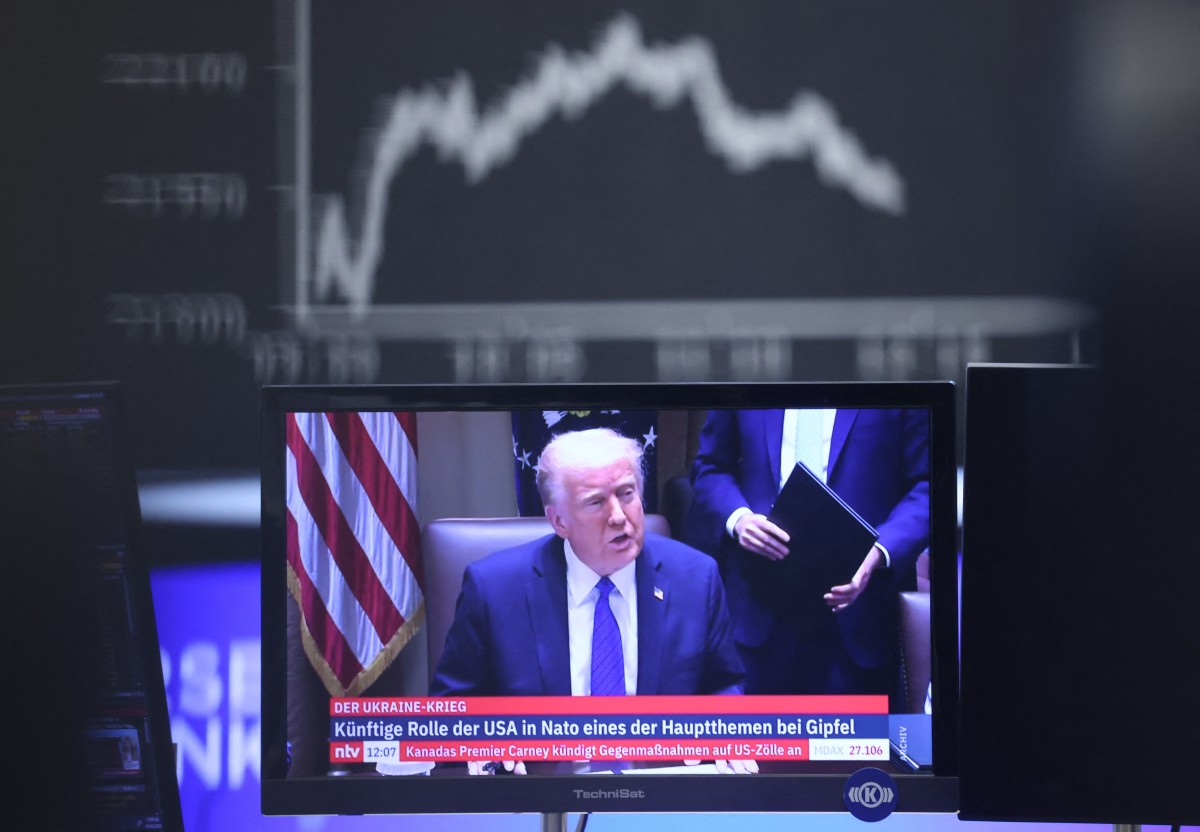
When it comes to Donald Trump's repeated tariff threats and financial markets, it looks like "TACO" is the dish investors are dining on, analysts said.
The acronym -- coined by a Financial Times columnist and standing for "Trump Always Chickens Out" -- has become a lodestar for equities, currencies and commodities traders, resulting in diminishing reactions to the US president's warnings.
To be sure, Trump's vows of future tariff hikes still weigh on markets -- just not to the extent they used to.
When his "Liberation Day" protectionist offensive was unveiled in April, the reaction was panic. Now, said analysts, traders take his tariff announcements in their stride. Early this week, stock markets largely shrugged off Trump's weekend threat to impose 30-percent tariffs on the EU.
READ ALSO: Positive outlook shared by German investors as tariff fears subside
US stock indices are hitting record highs, while European equities are also proving attractive to buyers.
Germany's DAX index has risen more than 20 percent since the beginning of this year, despite the export-dependent country being among the more exposed to Trump's levies.
More school leavers would rather work than study
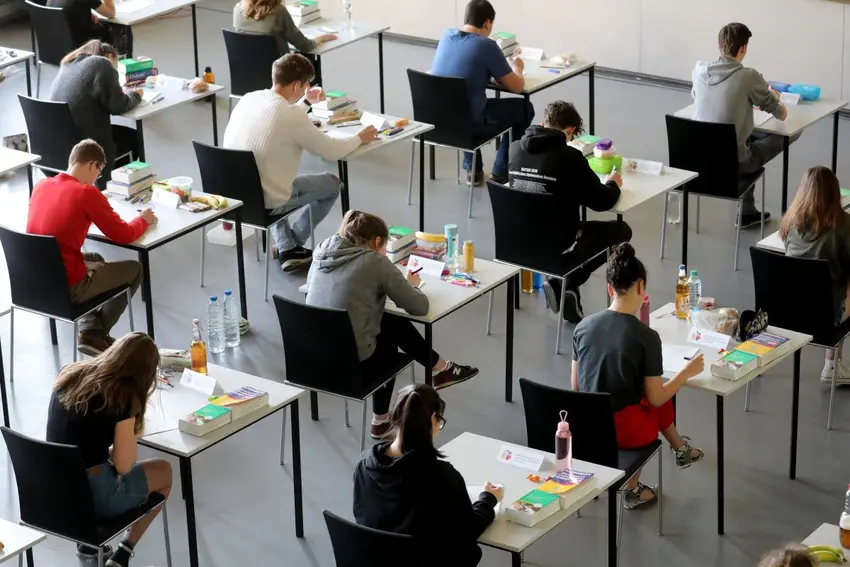
One in five school pupils in Germany wants to get a job after leaving school rather than continue their education, according to a recent survey by the Bertelsmann Foundation.
The authors fear this could further reinforce the trend towards an increasing number of unskilled young people in the German workforce.
Overall, according to the survey, dual vocational training remains the most popular educational path after leaving school, followed by university studies. Forty-three percent of students surveyed said they definitely wanted to pursue vocational training, while 40 percent definitely wanted to go to university.
READ ALSO:
- Germany's skilled labour shortage intensifies across industries
- 'Don't lose hope' - How to navigate Germany's painful job market
Many were also undecided. More than half can imagine going straight to work after school and 19 percent are determined to do so.
The authors of the study consider the findings worrying, especially against the backdrop of a shortage of skilled workers.
‘Without regular training, the risk of becoming unemployed or remaining in the low-wage sector increases,’ warns Helen Renk, an expert on vocational training at the Bertelsmann Foundation. 'This is difficult for those affected...It also means that a lot of potential for the labour market is lost.’
Volkswagen restarts electric minivan exports to US
German auto giant Volkswagen said Tuesday it had resumed shipments of its electric minivan ID. Buzz to the United States after a temporary pause due to a technical issue.
"A cargo ship carrying electric ID. Buzz vehicles left the port of Emden (Germany) on Saturday bound for the United States," Volkswagen commercial vehicles spokesman Tobias Riepe told AFP.
Volkswagen halted exports of the battery-powered camper to North America last week due to a recall by US officials.
The rear seats in the vehicle, which is manufactured in the German city of Hanover, were too wide for the automotive authorities in the United States.
The latest shipment of minivans would be brought in line with US specifications on arrival before being delivered to dealerships, Riepe said.
Volkswagen harboured high hopes in the US market for the ID. Buzz, inspired by the carmaker's iconic campers of the 60s and 70s.
Since the electric model launched in 2024, some 3,800 units have been sold in the North American market.
German media had speculated that auto tariffs imposed by US President Donald Trump were also behind the decision to pause deliveries of the ID. Buzz.
READ ALSO: Volkswagen floats making Audis in US to swerve Trump tariffs
With reporting by AFP.
Comments