
All countries have their tics and quirks. Germany is no different in this respect – except that here locals are prone to insisting that the 'German way' of doing things is somehow evidence-based and justifiable on scientific grounds.
After years of being asked to remove his shoes and close the windows (and having the science behind these requests explained in exhausting detail), I finally decided to conduct my own research.
Here's what I learned about a few of Germany's favourite hygiene standards.
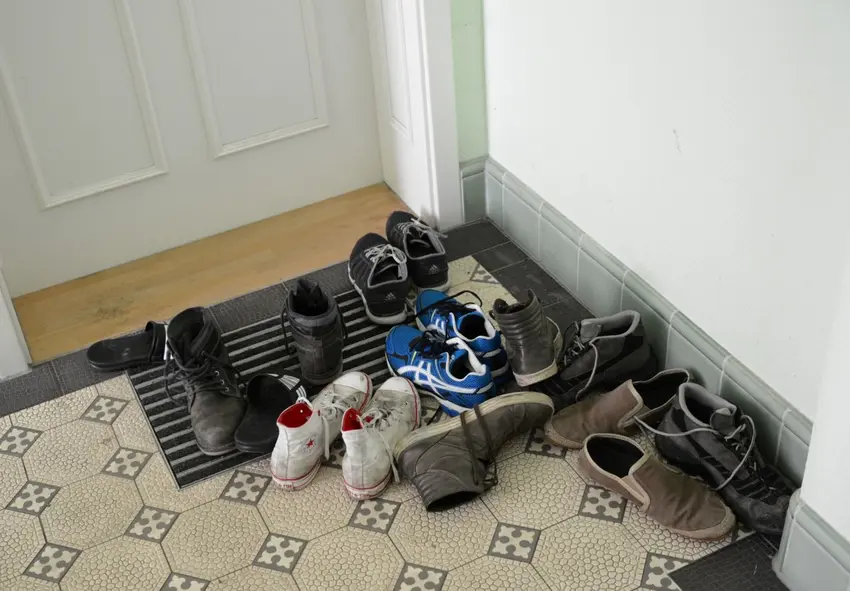
Will people die if I keep my shoes on indoors?
Germany isn’t the only country to insist that shoes have no place beyond the threshold of a home.
In Japan, for example, most homes have a sort of foyer where outdoor shoes are replaced with slippers. And, taking shoe swapping to the another level, house slippers are often also replaced with bathroom slippers at the entrance to the loo.
But the endless business of taking shoes off and putting them on again feels like less of a chore in Asia than it does in Germany.
Perhaps this is because you’re less likely to find yourself wearing heavy, lace-up shoes in Asia. Or perhaps it’s that in Asia it feels like a gesture of respect and cultural sensitivity, whereas in Germany leaving your shoes on will likely prompt a lecture on health and safety.
So is the argument against shoes in the household really backed up by science?
A study conducted at the University of Arizona found more than 421,000 bacteria on the soles of a single pair of shoes, including strains that can cause diarrhoea, meningitis and pneumonia.
Other studies have shown that shoes can also track pollen, mould, and harmful industrial chemicals into your home.
Common sense of cultural quirk?
It’s hard to argue with the science on this one. And, in truth, I’d become a convert even before I spent an hour looking at photos of various different strains of bacteria.
I like being able to wiggle my toes and I like knowing who’s at home from a quick glance at the pile of shoes by the door.
READ ALSO: From nudity to sandwiches - The biggest culture shocks for foreigners in Germany
Should men sit down to pee?
Not once in my life had anyone ever suggested I sit down to pee before I moved to Germany.
I remember my mum used to put little plastic battleships in the loo when I was a child, in a hopeful (hopeless?) attempt to persuade me, my father, and my brother to at least aim for the middle of the bowl – but I don't think it ever occurred to her to ask us to sit.
Not much seems to have changed since then in the UK. A 2023 YouGov poll conducted across 13 countries, found that British men (along with Polish men) were the most likely to stand, whereas German men were the most likely to sit.
Accordingly, the German language has by far the best word for people who sit down to whiz: Sitzpinklers (literally, sitting wee-ers).
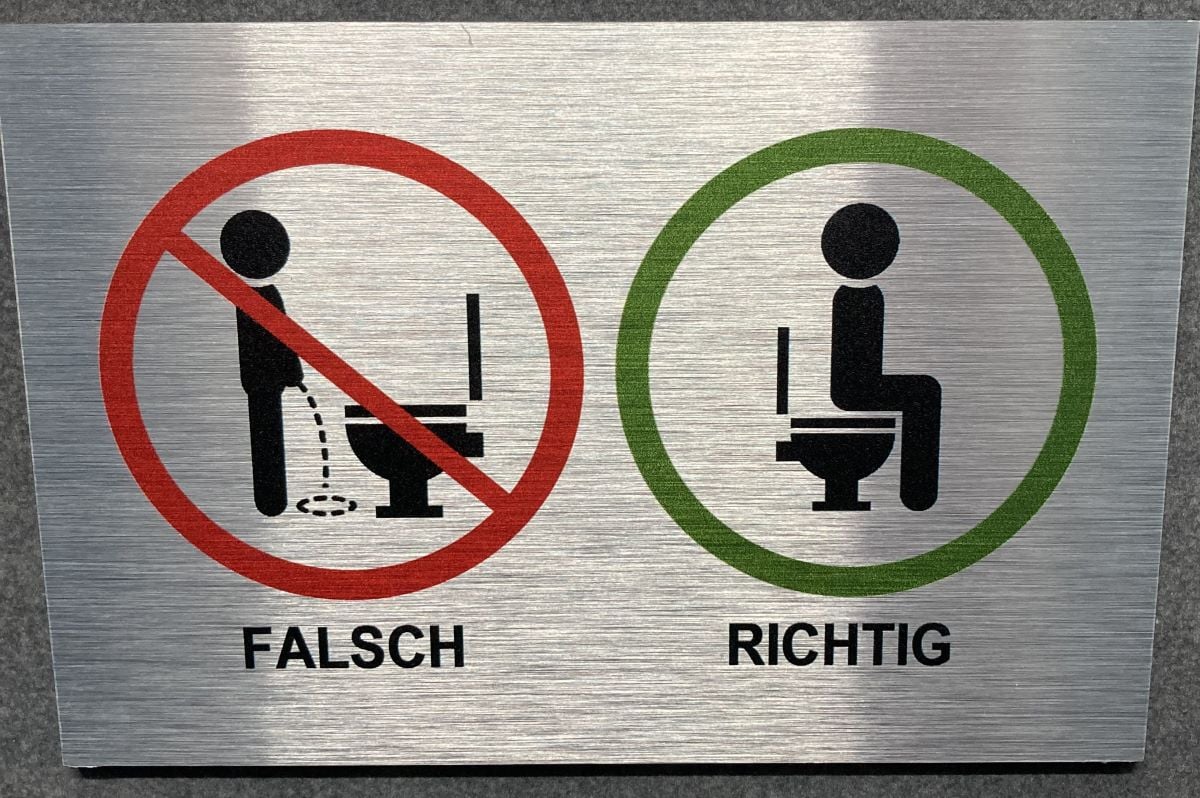
So, does the science support the Sitzpinklers?
Multiple experiments have repeatedly shown that men can’t be trusted to shoot straight. And among those who can, urine inevitably hits the floor in the form of “satellite droplets” (or toilet bowl splatter) that risk careering off towards sinks and toothbrushes.
As an added bonus for Sitzpinklers, a 2014 study at Leiden University Medical Centre showed that sitting down helps men with lower urinary tract problems or enlarged prostates because it helps to empty the bladder more completely.
Claims have also been made for mental health benefits, thanks to the amount of additional time spent enjoying “moments of uninterrupted reflection.”
Common sense of cultural quirk?
I’m sceptical about the claims of a boost to mental health. Also, urine is (generally) sterile, so this isn’t quite a matter of life and death.
That said, given the proven existence of poor aim and “satellite droplets”, and the fact that loos tend to be shared, it does feel as if Sitzpinklers are in the right on this one.
On a related note, it turns out to be equally important that we all start closing the lid on the loo before we flush!
Will I spark the next pandemic if I wear a bathing suit in the sauna?
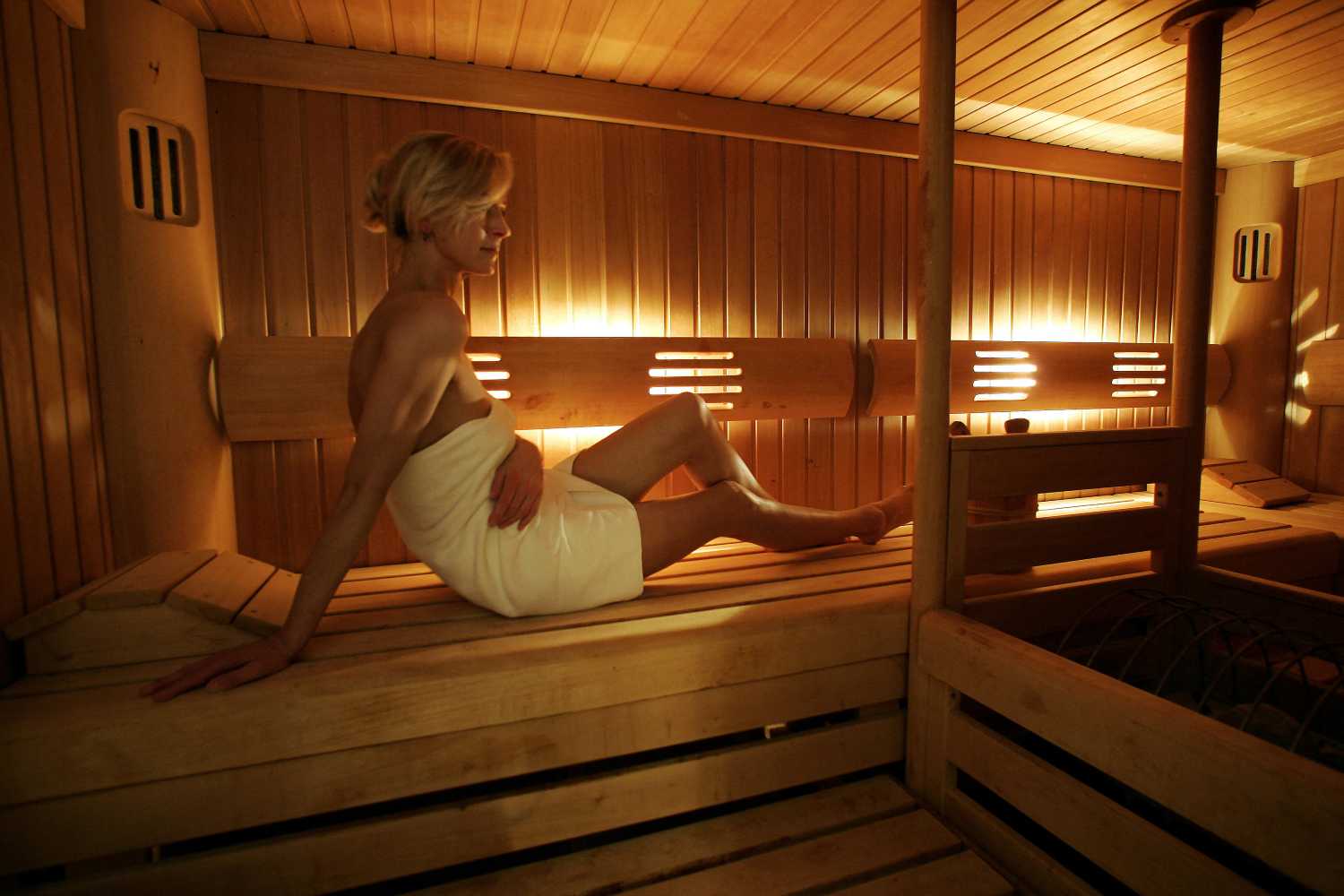
Saunas in Germany tend to be naked and unisex, which can come as a shock to newcomers.
The rules in Germany are simple: Kein Textil (“no clothes”) and Kein Schweiß aufs Holz (“no sweat on the wood”), which in practice means sitting or lying naked on a towel.
Germans often cite hygiene rules as reason for this, suggesting that textiles brought into in a steamy sauna room create a breeding ground for germs.
Saunas are hot and sweaty but emphatically not sexy, and the discomfort of being naked in front of strangers tends to wear off quickly – but can the rule be justified on scientific grounds?
The first saunas (in Scandinavia) were pits dug into the earth and covered with animal skins, which seems to break the Kein Textil rule.
There’s a mountain of evidence that their modern-day equivalents are good for your health; removing toxins from the body, improving cardiovascular performance, and even reducing the chance of developing dementia.
In addition, if you’re brave enough to plunge into the ice-pool afterwards, the sudden change in temperature will help improve your circulation.
But the argument for banning swimsuits in saunas are a good deal weaker.
Common sense of cultural quirk?
It’s hard to see how a clean swimming costume poses any more of a risk than a clean towel.
Furthermore we all carry around plenty of germs and pathogens on our bodies, whether swimsuit clad or not.
On balance, this feels more like an attempt to protect a cherished national tradition than a legitimate scientific argument.
READ ALSO: Undressing at a Berlin sauna wasn’t the moment of liberation I’d hoped for
How deadly are drafts, really?
If you’ve spent any time in Germany, you’ll have seen people frantically closing windows and muttering the words: es zieht! (There’s a draft).
Huge swathes of the population are apparently convinced that drafts cause colds, the flu, pneumonia, and clogged arteries – and there’s nothing that will provoke a sharp reaction as reliably as opening a window on a moving train.
Common sense of cultural quirk?
Colds and other infections are caused by microorganisms, or germs such as bacteria, viruses, or parasites – and emphatically not by air in motion in an enclosed space.
There is some evidence that exposure to a cold draft might affect a person’s immune system and make them marginally more likely to catch a cold – but the operative word here is “cold”.
In other words, opening the window of a moving car or train on a summer’s day, or sitting next to an open window when a light and temperate breeze is blowing, poses absolutely no risk to your health.
In addition (and in my humble opinion) it is also objectively pleasant and should be encouraged rather than prohibited!
Comments (2)