
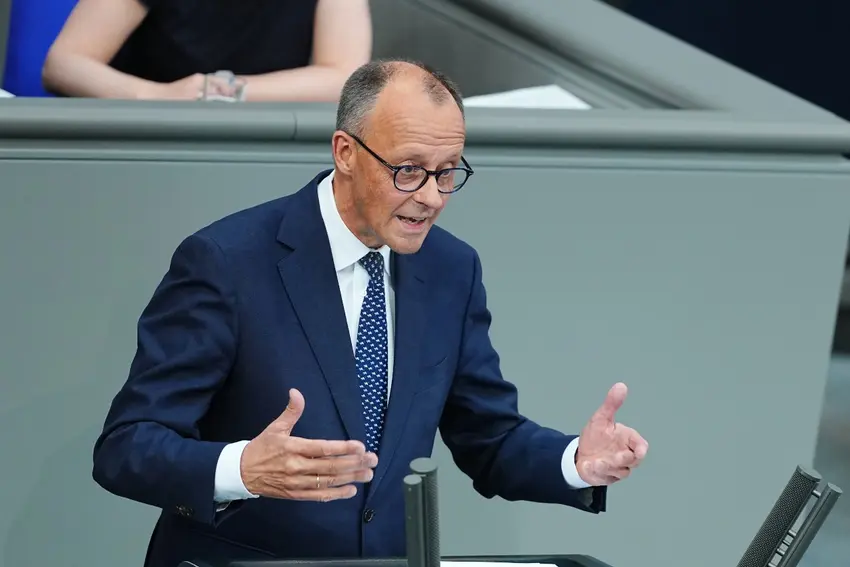
It was an inauspicious start for the new Bundeskanzler -- having scrambled to get his new coalition of the CDU/CSU and SPD together in record time, dozens of his own MPs voted against him in a secret ballot when he sought election as Germany's top official last Tuesday.
The chaos of the vote - which Merz managed to win on his second attempt - prompted a media storm, with commentators claiming it had caused irrevocable damage to his authority.
This week, however, the Chancellor returned to the Bundestag with a new air of self-assurance to set out his plans for the coming months.
While much of his 45-minute speech was simply a recap of the points set out in the parties' coalition agreement, there were a few revelatory moments, shedding insight on the government's plans for the army, taxation and wages - among other things.
Here are five key insights we garnered from the speech.
Tax relief for middle incomes... but only if we can afford it
As a dyed-in-the-wool conservative, Merz wants to give the economy a shot in the arm primarily by lowering taxes. In the coming years, he's hoping to start reducing rates of corporation tax, cutting energy levies and slashing bureaucracy, while offering tax breaks for companies to help them invest.
For the ordinary worker, however, the outlook is a little less clear. While the black-red coalition has promised tax relief for lower and middle earners, Merz emphasised on Wednesday that this wasn't set in stone.
The government will review their finances and try and offer more tax relief for people on middle incomes at some point, he said. In other words, don't expect to see a boost to your take-home packet in the very near future.
Instead, the first tax cuts for employees will be targeted at people who decided to take on overtime at work or stay in work for longer after pension age.
This is all part of Merz's goal to get people in Germany working more - a key factor in boosting growth and productivity.
"We need to work more and, above all, more efficiently in this country," the Chancellor said on Tuesday in a brief preview to Wednesday's speech. "We will not be able to maintain this country's prosperity with a four-day week and a work-life balance."
READ ALSO: Will employees in Germany be working longer shifts in the future?
No guarantees on the €15 minimum wage
For those on the lowest incomes, there was hope that the government would aim to push through another hike in the minimum wage - this time to €15 per hour - by 2026.
In the coalition agreement, the parties state that a minimum wage of €15 is "achievable" by next year, adding that the Minimum Wage Commission will likely orientate itself by looking at wage development more generally.

Since the pact was published, however, there have been mixed messages from the CDU/CSU alliance and their SPD coalition partners. The conservatives have generally suggested that the minimum wage target is out of their control, while SPD politicians have suggested parliament could step into enforce the hike.
On Wednesday, Merz's message was clear: "We consider a minimum wage of €15 in 2026 to be achievable and desirable in view of the development of collective bargaining, but we will not enshrine it in law," he said. That means the decision on whether to raise the minimum wage - and if so, by how much - will be entirely in the hands of the minimum wage commission.
READ ALSO: How Germany's new coalition will affect your bank balance
A slightly softer tone on migration
In the run-up to the elections, Merz put anti-migration messages at the forefront of his campaign, even accepting votes from the far-right AfD to push through a crackdown on illegal border crossings in parliament.
A further controversial bill titled the "Influx Limitation Act" (Zustrombegrenzungsgesetz), borrowing imagery from the hard right of migrants "streaming" across the border.
On Wednesday, however, Merz struck a far more balanced and foreigner-friendly tone.
"Germany is a country of migration," he said. "That was the case, that is the case and that will remain the case."
The Chancellor went on to talk about the contribution that legal migration made to the country.
READ ALSO: How is Germany's future government planning to shake up immigration?
"We want to remain a friendly and respectful country, particularly towards those people who have come to us, who live with us, who work with us, who have become German citizens, and who are an integral and indispensable part of our country and society," he explained.
However, he added, Germany has allowed too much unskilled immigration into the welfare system for far too many years. Instead, the country should align itself more closely with its Europe neighbours.
Coalition to step up focus on digitalisation and centralisation
Though we've all heard the promises before, there are signs that the new coalition is taking the project of digitalisation more seriously than its predecessors.
Most encouragingly, Merz said the government would place its focus on offering digital administration around the country - eschewing in-person trips to the various Ämter and Behörden.
"Administrative services should be made possible simply and digitally via a central platform - without having to go to the authorities," the CDU leader declared. "We will modernise and consistently digitalise public administration."
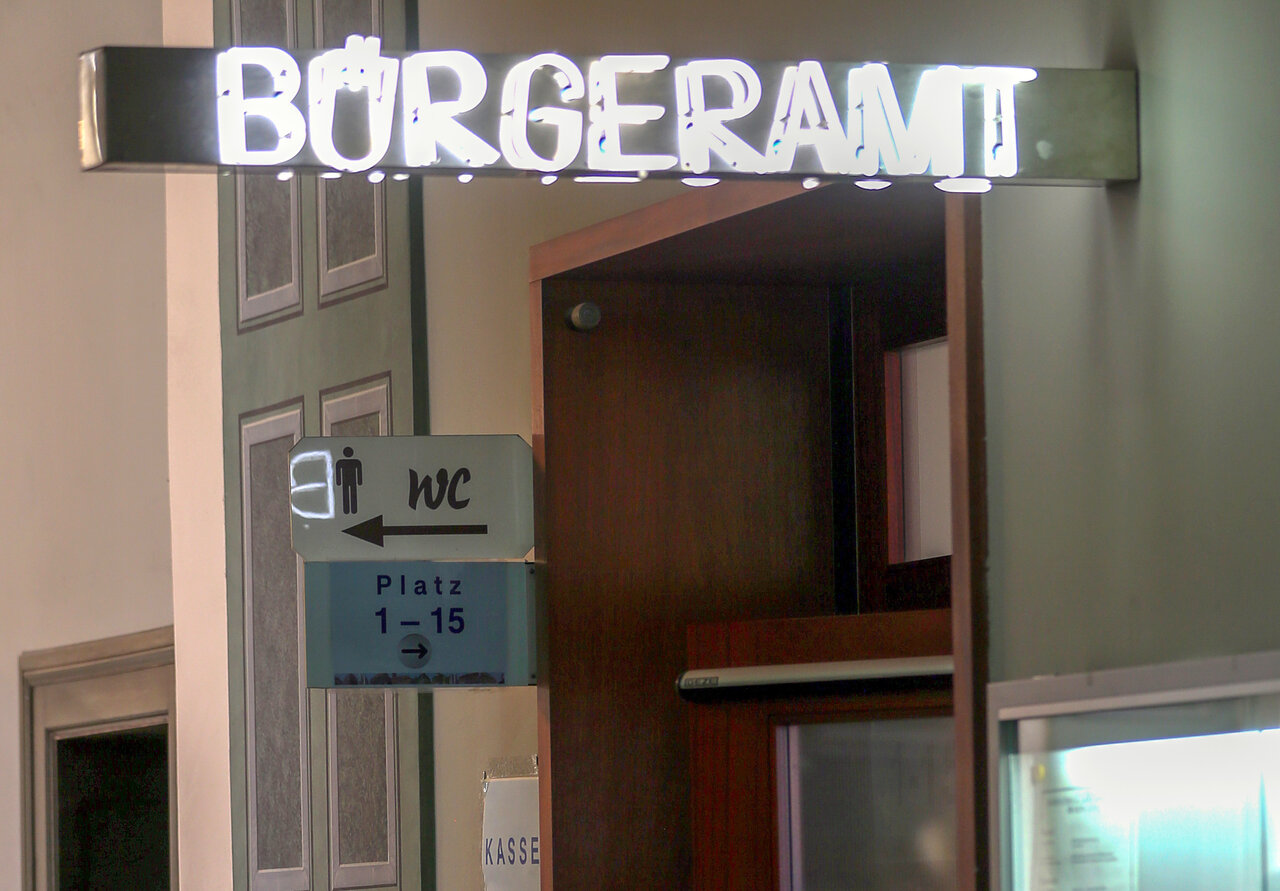
To make some concrete progress in this area, the new coalition has even set up a new ministry with a focus on digitalisation and the modernisation of the state. All the necessary tasks and competences related to digitalising Germany's services will be bundled there.
READ ALSO: Germany starts next phase of digitalisation for ID and residence cards
"We are investing in a modern state and a digital administration that does not bully and harass citizens, but supports and advances them," the Chancellor pledged.
We shall wait and see.
Merz wants the biggest military in Europe
Speaking in the Bundestag on Wednesday, Merz said he wanted Germany to have "the strongest conventional army in Europe" - particularly in light of Russian aggression in Ukraine.
"This is appropriate for Europe's most populous and economically powerful country," Merz told parliament. "Our friends and partners also expect this from us. Indeed, they practically demand it."
Even before the new coalition pact was agreed, the CDU/CSU and SPD paved the way for a massive hike in military spending. Back in March, the parties - with support from the Greens - passed a carve-out to the constitutional debt brake allowing for unlimited borrowing to boost defence.
This, along with plans to increase recruits with a new voluntary service system, looks set to be a key focus in the coming months.
"Strengthening the Bundeswehr (armed forces) is our top priority," Merz said. "The German government will provide all the financial resources the Bundeswehr needs to become Europe's strongest conventional army."
"Strength deters aggressors, while weakness invites aggression," he added.
READ ALSO: Germany's Merz urges Europe-US unity on Ukraine war
Comments