
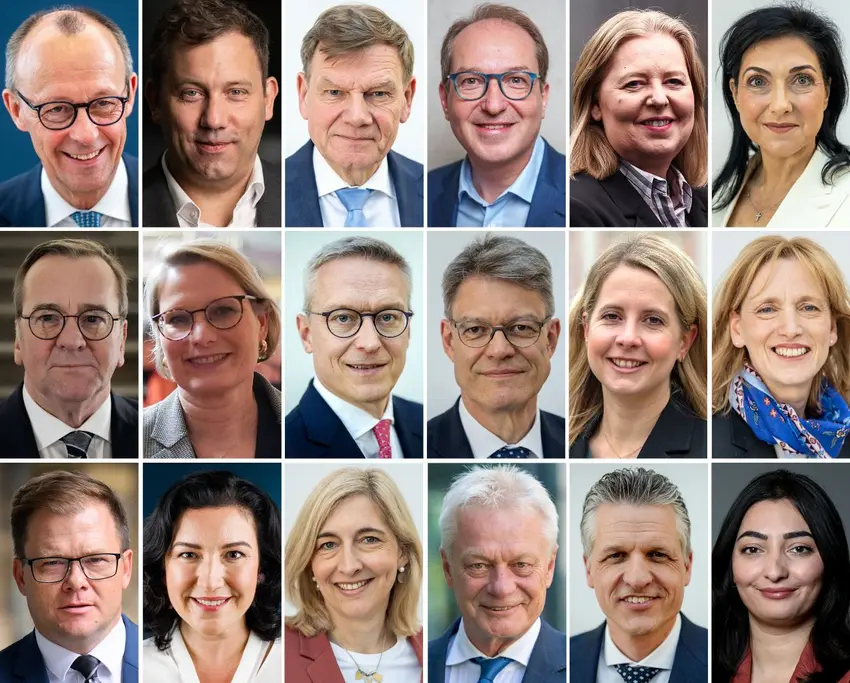
After a shaky start in the Bundestag, Friedrich Merz was sworn in as Chancellor on Tuesday afternoon, marking the start of a new CDU/CSU and SPD coalition in Berlin.
As work begins on Wednesday, the new cabinet faces numerous challenges, including an ailing economy, sluggish digitalisation efforts and a desperate search for skilled workers - not to mention the rise of the far right.
Here are Merz's key picks to help steer Germany into the modern age:
Finance: Lars Klingbeil
Lars Klingbeil, 47, has long worked behind the scenes in the Social Democratic Party (SPD) of outgoing Chancellor Olaf Scholz and is partly responsible for the campaign that saw it sink to its lowest result for 80 years.
Described as "impassive, unassuming, inoffensive, almost boring" by Der Spiegel magazine, Klingbeil is nevertheless the new leader of Germany's oldest party now that Scholz has stepped back.
Klingbeil will take over the finance ministry of Europe's largest economy and also serve as vice chancellor.
He will have significant fiscal firepower after parliament approved Merz's proposals in March to spend hundreds of billions of euros on defence and infrastructure in a "bazooka" spending package.
READ ALSO: Germany’s new finance minister, ‘bridge-builder’ Lars Klingbeil
Interior: Alexander Dobrindt
Alexander Dobrindt, 54, of the Bavarian CSU has called for a harder line on asylum seekers and irregular migration and will now be under pressure to deliver results as the hard-right AfD strengthens in the polls.
He has also been a prominent sceptic of attempts to liberalise immigration rules more generally, standing in fierce opposition to the former government's dual nationality law. More recently, he has also praised US President Donald Trump's habit of governing by decree and said that Merz should do the same on immigration.
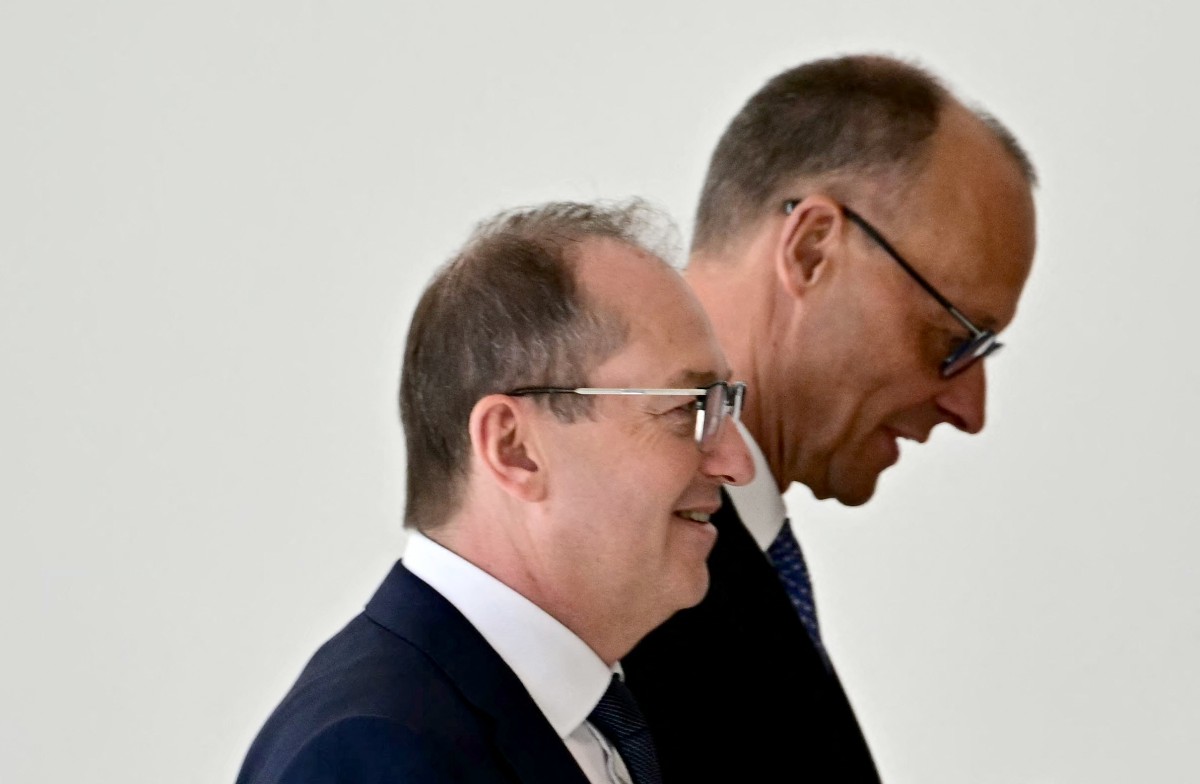
Though the black-red coalition is set to keep some reforms of the outgoing traffic-light coalition in place - most notably, the right to dual nationality - foreigners should expect to hear a very different tone from Dobrindt than outgoing Interior Minister Nancy Faeser.
A practicing catholic, Dobrindt has advocated traditional family values and been critical of same-sex marriage, voting against its legalisation in Germany in 2017.
As transport minister under Merkel, the trained sociologist drew controversy for trying to introduce road tolls for foreign drivers, which was ruled contrary to EU law. He was also slammed by consumer rights and environmental activists for his handling of the BMW 'Dieselgate' scandal back in 2016.
READ ALSO:
- How is Germany’s future government planning to shake up immigration?
- Who is the new German minister in charge of immigration?
Foreign Office: Johann Wadephul
Former soldier Johann Wadephul, 62, was a low-profile politician but became known as a strong supporter of sending military aid to Ukraine and as a stern critic of Russian President Vladimir Putin.
In April, Wadephul told a Berlin conference that Russia was the most "acute threat" to Europeans, after some politicians from the SPD and CDU floated the idea of resuming energy and trade ties with Moscow.
A member of the Bundestag since 2009, Wadephul wants Berlin to give Kyiv longer-range Taurus missiles that would allow it to hit targets deeper inside Russia.
Like Merz, he wants to reboot the Franco-German relationship at the heart of the EU.
A key challenge for Merz and his top diplomat will be forging a response after US President Donald Trump has urged European allies to step up defence spending while also threatening transatlantic trade.
READ ALSO: Putin critic Johann Wadephul, Germany’s new foreign minister
Defence: Boris Pistorius
Boris Pistorius, 65, of the SPD will stay on as defence minister under Merz, having become popular in the role under Scholz -- no mean feat in a country whose dark Nazi past has fostered a strongly pacifist tradition.
Seen as dynamic and straight-talking, Pistorius has a hard road ahead of him.
Germany's armed forces are undermanned and undersupplied, with most of a €100 billion special fund established in 2022 spent on sending help to Ukraine.
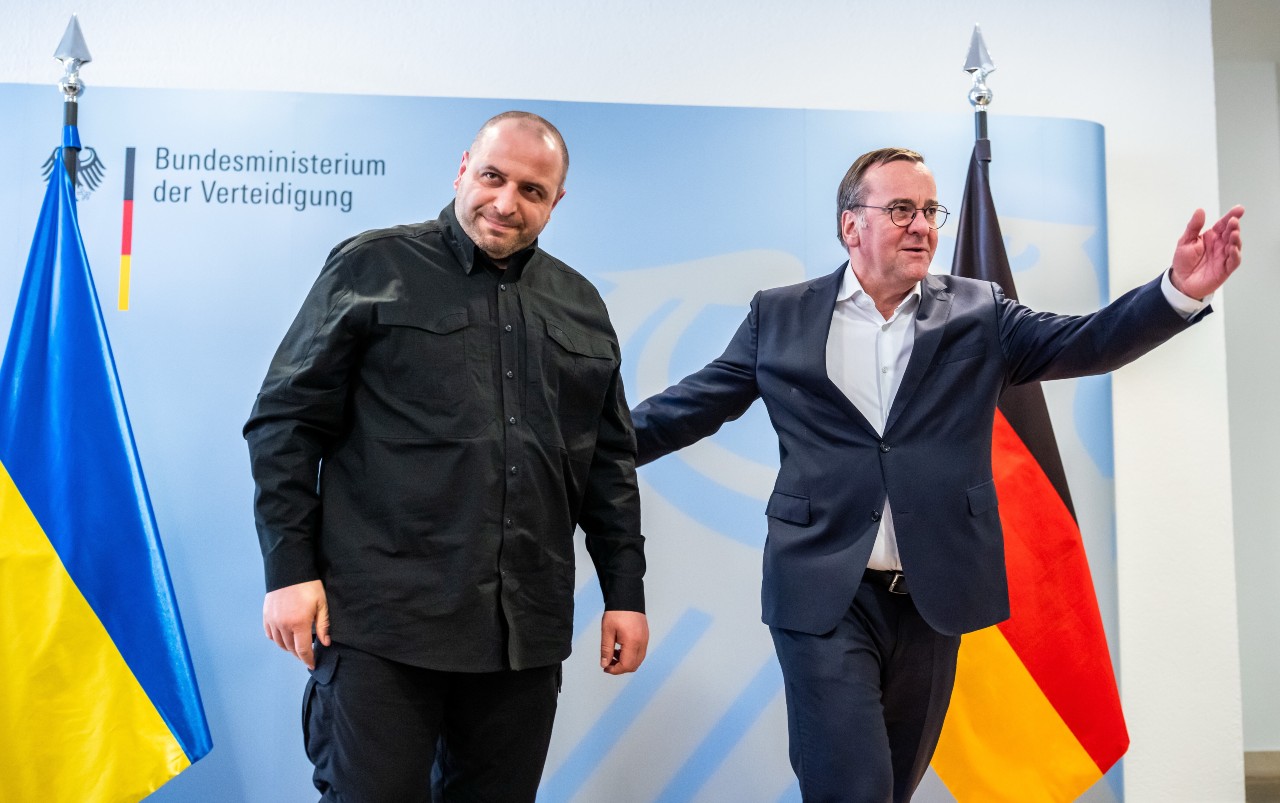
Pistorius will have more money at his disposal after the Bundestag voted to exempt much defence spending from Germany's strict borrowing limits.
Pistorius shocked many in his own party when he told the Bundestag last year that Germany's military had to be "war-ready" by 2029 in order to scare off potential adversaries.
"We must establish deterrence to make sure that it does not come to the worst-case scenario," he said.
READ ALSO: Boris Pistorius, party soldier in charge of Germany's defence
Economy: Katherina Reiche
Katherina Reiche, 51, of the CDU is returning to politics after a stint as an energy executive at Westenergie, a subsidiary of utility E.ON.
She grew up in East Germany and studied chemistry, inviting comparisons to her party's ex-chancellor Angela Merkel, under whom Reiche held roles in the environment and transport ministries before quitting politics in 2015.
In 2012, Reiche sparked controversy after linking gay marriage to declining birth rates, removing her Facebook page after it was inundated with abuse.
"Our future lies in the hands of families, not in same-sex partnerships," she told Bild at the time. "Next to the euro crisis, demographic development is the greatest threat to our prosperity."
Patrick Schnieder, CDU: Transport
Nicknamed the 'Eifel tower' for his prominent stature and place of birth, CDU politician Patrick Schneider is set to have a towering inbox from his first day in office.
As the conservative pick for the Transport Ministry, Schneider will be in charge of an ambitious overhaul in Germany's infrastructure, spanning from crumbling bridges to creaking railways.
To help him with the task, a major proportion of the government's €500 billion investment fund will be at his disposal, putting the new minister under massive pressure to perform.
Though he has never held a ministerial post before, the 57-year-old was a member of the Bundestag transport committee from 2009 to 2021. He has said little about gaps in the rail network in his home region of Rhineland-Palatinate, but has been a vocal advocate of plans to expand the A100 motorway.
READ ALSO: What drivers in Germany should know about government's plans
Bärbel Bas, SPD: Labour and Social Affairs
Set to be the most powerful woman within the SPD-led ministries, Bärbel Bas is both a well-known figure in the party and a newcomer to life as a cabinet minister, having mostly served in administrative roles until now.
Bas has been a member of the Bundestag since 2009 and served as deputy chairwoman for health, education and research in the SPD parliamentary group. Until recently, she served as president of the Bundestag, responsible for keeping order and enforcing the rules in the debating chamber.
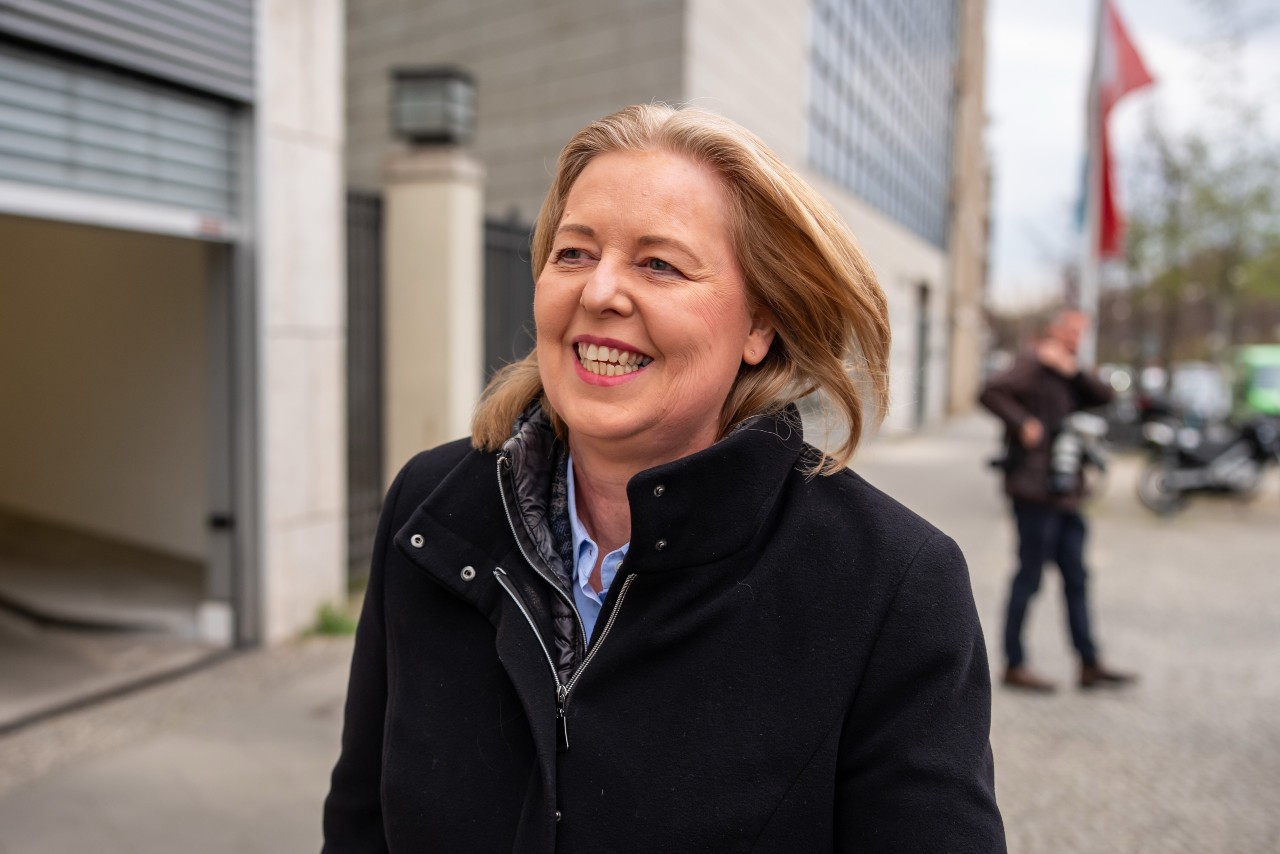
Stemming from the leftist wing of the Social Democrats, Bas has taken over the labour and social affairs brief from previous SPD minister Hubertus Heil.
The role looks set to be a tricky tightrope walk: as minister, Bas will have to balance the social principles of her party and the coalition pact's pledge to toughen up the welfare state by overhauling Bürgergeld unemployment benefits.
READ ALSO: What Germany's new coalition pact means for foreign residents
Nina Warken, CDU: Health
A self-professed "generalist", 45-year-old Nina Warken is set to take over from Harvard-trained doctor Karl Lauterbach (SPD) in the role of Health Minister.
Despite her lack of experience in health policy, the Baden-Württemberg politician told SWR she felt confident in the role and would tackle the challenges of the brief in a "dialogue-oriented way".
A major issue Warken will have to deal with is the gaping black hole in the health and social care funds, which the coalition wants to tackle without raising social contributions.
She will also be tasked with ironing out some of the trickier details of Lauterbach's Hospital Care Quality Act, which aimed to make care in clinics more transparent.
Digital and State Modernisation: Karsten Wildberger, CDU
Karsten Wildberger is one of a number of a private-sector picks to enter Merz's cabinet, taking on the freshly created role of Digital Minister.
The 55-year-old will enter political life after leading energy giant Uniper and serving as a top executive at E.ON, Vodafone, and T-Mobile. Trained as a physicist, he is seen as a technocrat who can navigate Germany’s notoriously sluggish digital bureaucracy.
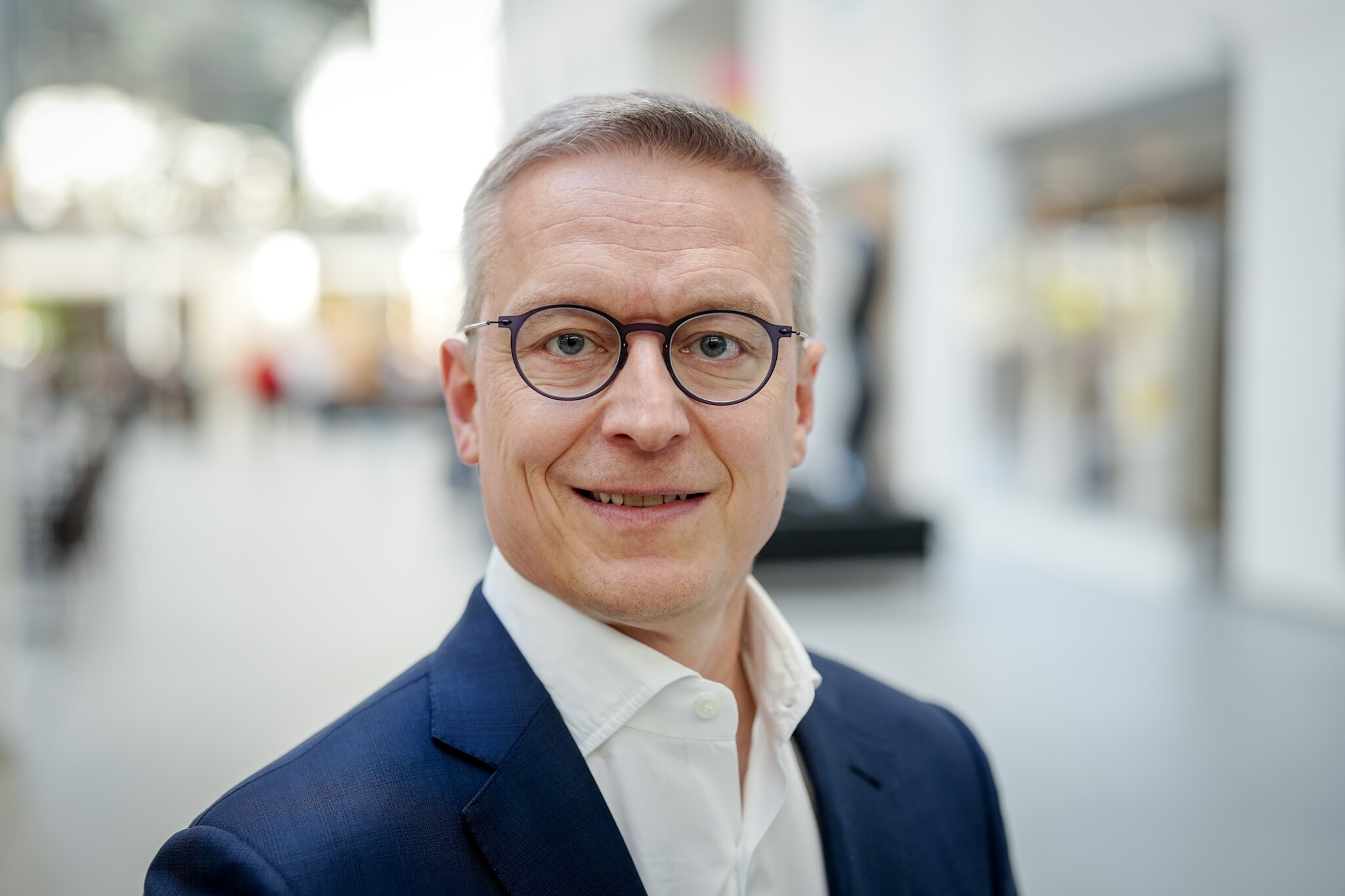
Despite lacking political experience, Wildberger will be responsible for some of the most politically sensitive reforms in the black-red coalition, including digitising public services, cutting red tape for businesses, and upgrading Germany’s patchy broadband and mobile networks.
The coalition deal calls for a “comprehensive reboot” of state IT infrastructure and the consolidation of digital services under a central federal agency. Wildberger's mandate also includes expanding digital IDs and residence permits.
Analysts say he may face pushback from powerful state bureaucracies and entrenched interests, but his corporate background could help him make key strides forward in digitalisation.
READ ALSO: Germany starts next phase of digitalisation for ID and residence cards
Housing: Verena Hubertz, SPD
At 37, Verena Hubertz is one of the youngest members of the cabinet and represents a new generation within the SPD.
A former startup founder, Hubertz headed up her own meal-kit company Kitchen Stories before entering politics in 2021. Since then, she’s become a key figure in the SPD’s economic wing and was involved in shaping the party’s housing platform.
Hubertz takes over the housing ministry at a time of mounting pressure: rents are soaring, building permits have plummeted, and a post-pandemic construction slump has worsened the country’s chronic housing shortage.
Under the coalition pact, Hubertz is tasked with stepping up building efforts, streamlining planning laws and cracking down on landlords who aim to subvert the country's rent controls.
READ ALSO: The five big challenges facing Germany’s next chancellor Friedrich Merz
Other Ministers
Wolfram Weimer, CDU: Culture and Media
Karin Prien, CDU: Education
Dorothee Bär, CDU: Research, Technology and Space Travel
Alois Rainer, CSU: Food and Agriculture
Reem Alabali-Radovan, SPD: Economic Cooperation and Development
Stefanie Hubig, SPD: Justice
Carsten Schneider, SPD: Climate
Thorsten Frei, CDU: Head of the Chancellor's Office
With reporting by AFP
Comments