
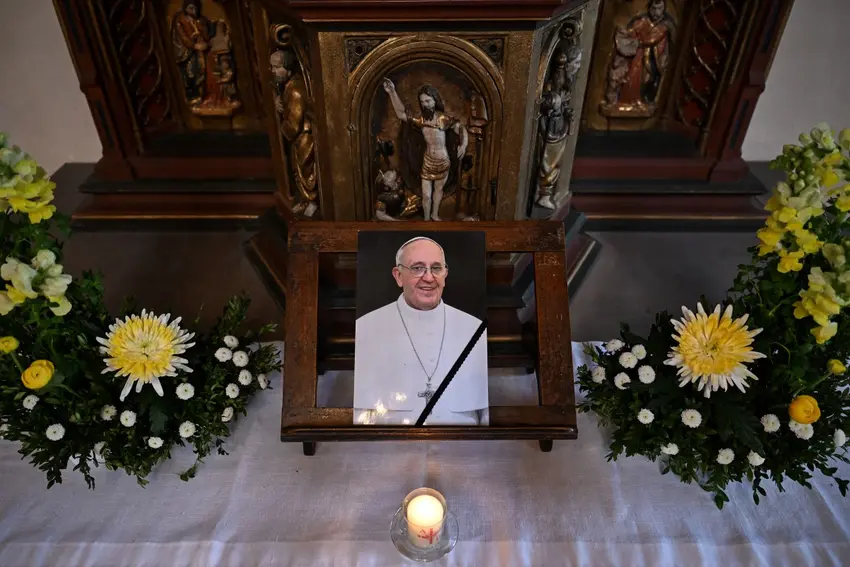
German leaders set to attend Pope Francis's funeral
A number of global leaders have announced they will travel to Rome for Pope Francis's funeral on Saturday, which is likely to draw huge crowds in the square in front of St Peter's Basilica at the Vatican.
Among them will be German Chancellor Olaf Scholz who, along with President Frank-Walter Steinmeier, will lead Germany's delegation.
Incoming chancellor Friedrich Merz, who expressed "great sorrow" at Francis's death, but will not attend.
EU Commission chief Ursula von der Leyen and Antonio Costa, head of the European Council, will also both travel to Rome, officials said.
SPD and Greens set to finalise coalition in Hamburg
Following their win in the Hamburg state elections last month, the SPD are expected to conclude their coalition negotiations with the Greens on Wednesday. While it's still unclear when the results will be presented to the public, Thursday and Friday are being considered, though Wednesday remains a possibility.
The SPD is scheduled to vote on the coalition agreement at a party congress on Saturday, while the Greens will hold a members' assembly on Monday evening. If both parties approve the deal, the coalition agreement could be signed soon after, paving the way for Peter Tschentscher (SPD) to be re-elected as Mayor by the Hamburg Parliament on May 7th.
Negotiations began on March 27th. The parties previously agreed to accelerate planning procedures, reduce bureaucracy, maintain free student transport passes, and approve 10,000 new housing units annually.
READ ALSO: Which German cities are the most in need of new housing?
In Wednesday’s final round, discussions will likely focus on cabinet appointments and departmental responsibilities. The Greens must nominate a new environment senator, while the SPD hopes to expand its influence, potentially taking over energy policy and district administration responsibilities.
The SPD and Greens have governed Hamburg together for a decade.
German intelligence services do not have to share Covid information with the media
Germany’s Federal Intelligence Service (BND) is not required to disclose its findings on the origins of the Covid-19 pandemic to the media, the Federal Administrative Court in Leipzig has ruled.
The court rejected an urgent request from the Axel Springer publishing house, which publishes Bild and Welt, citing the potential threat to national interests.
While press freedom includes a right to information, the court said this could be overridden by public or private interests. The BND successfully argued that releasing the requested information could compromise its operational capabilities and Germany’s foreign relations - particularly with China.
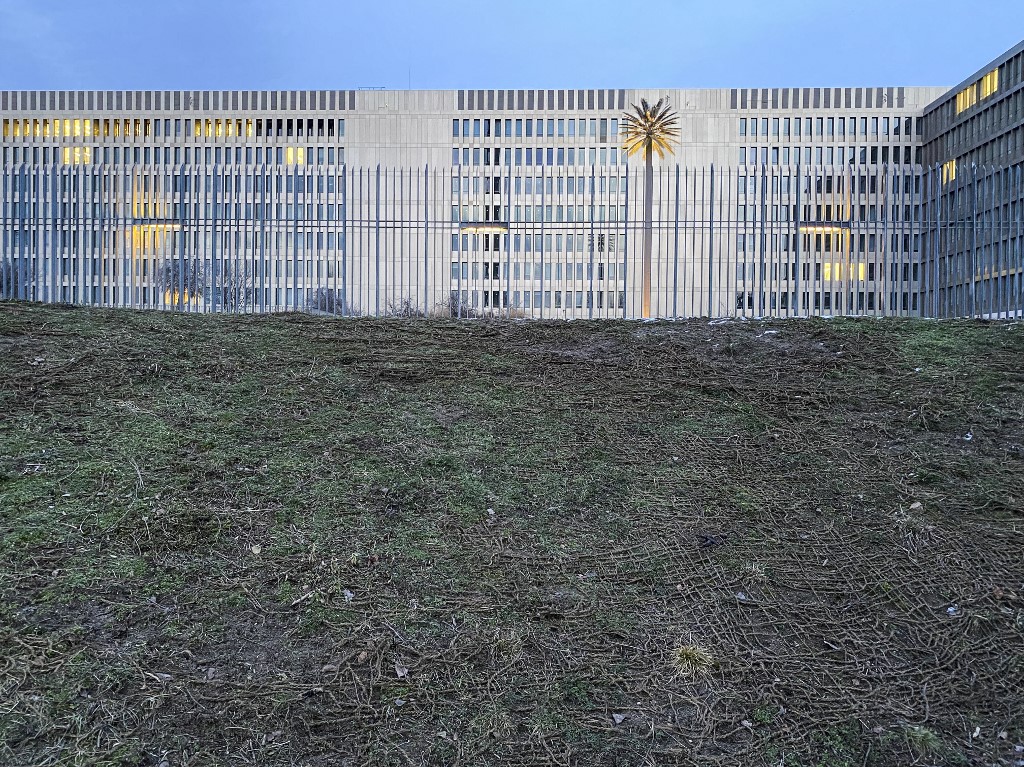
According to investigative reports by ZEIT and the regional Süddeutsche Zeitung, the BND possesses credible evidence supporting the lab-leak theory, suggesting the virus may have originated from a lab in Wuhan.
However, these findings have reportedly been withheld from the public by the German Chancellery for the past five years.
IMF cuts German growth outlook
In view of US President Donald Trump's aggressive tariff policy, the International Monetary Fund expects a global growth slump and is also lowering its forecast for Germany.
The Washington-based fund expects zero growth for the Federal Republic of Germany this year, which is 0.3 percentage points less than assumed in January.
The IMF's central forecast sees Germany once again bringing up the rear among the G7 industrialized nations in terms of growth this year.
READ ALSO: How many German companies are planning to cut jobs in 2025?
Other leading German economic research institutes had forecast minimal growth, around 0.1 percent of gross domestic product (GDP). The caretaker federal government has also lowered its economic forecast, expecting further stagnation this year.
The IMF cites uncertainty and tariffs as the main economic challenges at present.
However, the IMF does predict the German economy to find an upswing next year. According to the study, rising consumption through real wage increases and more fiscal policy leeway in Germany with a view to easing the debt brake for defence could help turn the stagnating economy around.
Outgoing Transport Minister rejects offer to join SPD
Volker Wissing, who served as Transport Minister in Germany's last coalition government, does not want to join the SPD "at the moment", as reported by the Tagesspiegel newspaper on Monday.
Wissing was previously a member of the economically liberal Free Democrat party (FDP), which lost its place in the Bundestag following the election in February.
Wissing had already renounced his membership in the FDP when he decided to stay on as Transport Minister following the collapse of the former traffic light government.
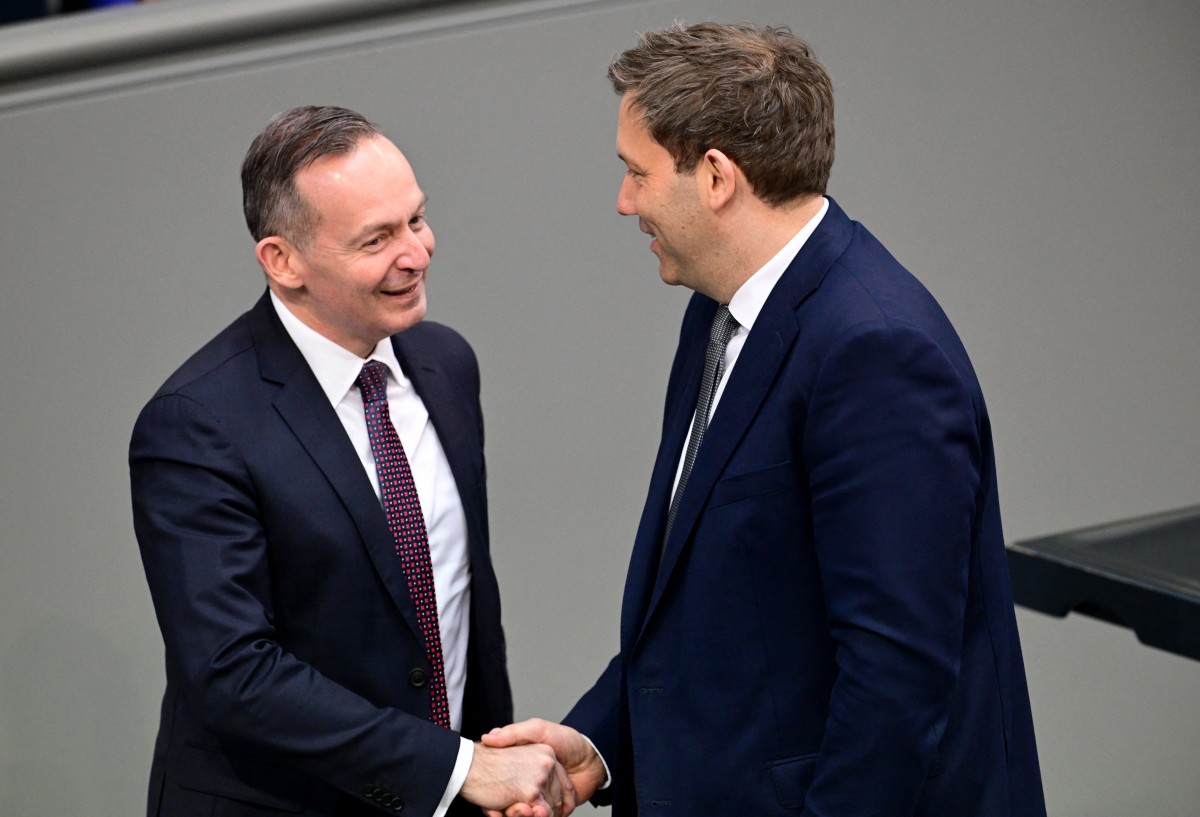
Now SPD chairman Lars Klingbeil offered Wissing to join his party of Social Democrats, noting that the former transport minister had shown himself to be "a classic social liberal."
But Wissing seems to have politely declined.
"He is not currently planning to join a political party," a spokesperson for Wissing told Tagesspiegel.
As Germany's last Transport Minster, Wissing had opposed climate protections such as speed limits on Germany's freeways or strictly enforcing emissions reductions in the auto industry.
READ ALSO: German minister threatens to introduce weekend 'driving ban'
But he had also advocated for building out better public transport connections in Germany's rural areas.
With reporting by DPA, AFP and Imogen Goodman.
Comments