
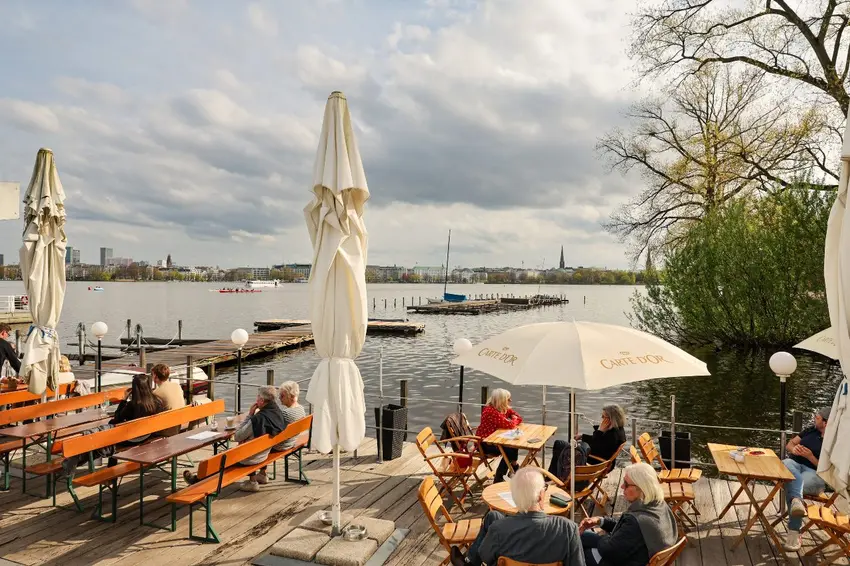
When most people think of Hamburg, a wide range of images come to mind. Sports fans might think of St. Pauli, the city's legendary football club, while nightlife hawks may dream of packed-out nightclubs and bars on the famous Reeperbahn party mile.
For those who are fascinated by architecture and culture, the city's breathtaking Elbphilarmonie concert hall is bound to tease the imagination. History buffs, meanwhile, may revel in the romance of the city's medieval waterways and mercantile, seafaring past.
But while all of those associations can tell you something about the city, you can only truly dig below the surface by speaking to local residents. We decided to ask our readers about their experiences of living in Germany's lively Hansastadt - and whether they'd recommend it to newcomers.
Here's what they had to say.
Scenic, small and full of culture
Asked whether they would recommend Hamburg, a majority - or 60 percent - of respondents said yes. Meanwhile, a quarter of respondents said they wouldn't recommend the city, and 15 percent were on the fence.
For those who were fans of the port city, the main attractions were the beautiful architecture, great infrastructure and facilities, and the high quality of life to be found there.
READ ALSO: Four places in Germany experts say you should visit in 2025
Julie, a 42-year-old American living in Hamburg, praised the fact that the city is "very walkable" with "excellent public transport" and "an incredible amount of green space and trees, especially for a large city".
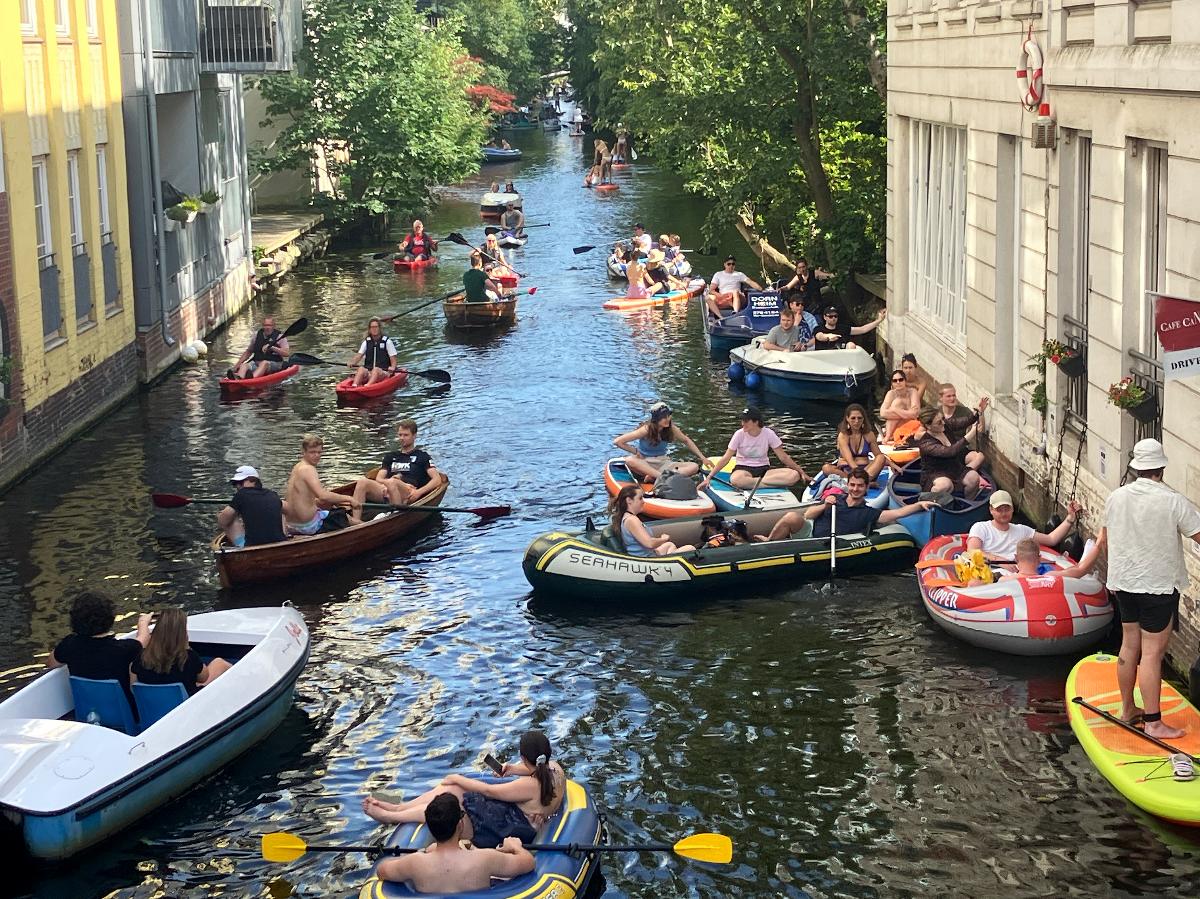
Before having kids, Julie said her favourite aspect of life in the city was being able to go paddle-boarding in the hidden canals and waterways. These days, it's the abundance of places she can take her children, from local parks and playgrounds to museums and Kindercafes (child-friendly cafes).
Another major upside of living in the city is the fact that all these amenities tend to be nearby - even if you live in the suburbs.
"We moved a bit outside the city centre in Altona district when our twins were born so we could afford more space," said Julie. "We don’t feel like we’ve sacrificed anything."
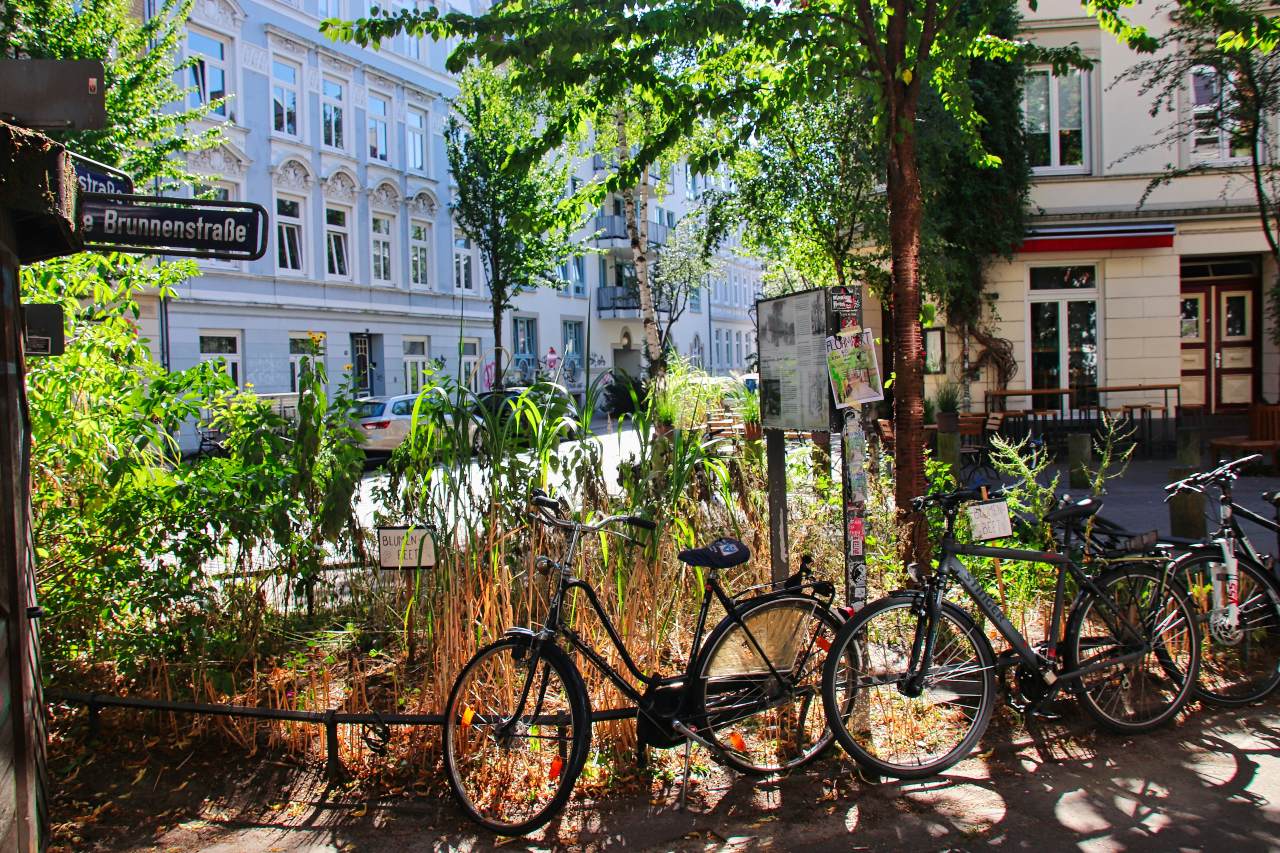
For families in particular, affordable rents, access to the great outdoors and plentiful nurseries and Kitas all made it attractive to live in Hamburg.
Jithendra, 55, who is originally from India but has lived in the city's Harburg district for two decades, said Hamburg was a "beautiful city with parks and lakes" that offered a cheaper alternative to places like Berlin, Munich and Frankfurt.
'People are not welcoming'
When it came to the downsides of Hamburg, several readers told us how difficult it was to break down the cold, northern German exterior of the locals.
“Although it is a beautiful city with many cultural sites and business opportunities, the people are not welcoming," said Jay, who recently moved from Hamburg to Berlin. "The language is not easy to learn and there is very little to no consideration when one attempts to talk in the earlier stages of learning. Very dismissive.”
Another respondent, originally from the USA, said Hamburg was a "beautiful city with unfriendly people" and described the impolite locals as their least favourite aspect of life in the town.
Even for native-born Germans, we learned, it seems that social life in Hamburg can be a struggle.
“It is hard to enter social circles and make friends with locals," said 43-year-old Dennis, who was born in Hamburg and grew up in the city, but now lives abroad. "Even in pubs and bars it is hard to get into a conversation with other patrons. Almost everyone stays within their established closed social circles."
For those who enjoy plenty of social time and often arrange to meet up with friends on a whim, Hamburg could be something of a disappointment, Dennis warned.
READ ALSO: The foods you have to try while visiting Hamburg
"Meetings of all kinds need to be planned well in advance," he explained. "Spontaneity is usually not a thing."
Not all of our readers were averse to the attitude of homegrown Hamburgers, however. In fact, some specifically mentioned the laid-back, liberal vibes of the city as a major attraction of living there.

"When I lived there, I was accepted - no questions asked," said 68-year-old Stephanie Hedley, who lived in Hamburg from 1978 to 1990 but ultimately left due a lack of accommodation after the fall of the Berlin Wall (or German reunification).
"I was unmarried when my daughter was born in 1980 but was not stigmatised at all. Totally different attitude to the small town I came from in the UK."
According to Stephanie, openness and bilingualism are looked on positively in Hamburg, and can be helpful for foreigners trying to fit in.
"I loved my time there and consider it my second Heimat," she told us.
Diversity and local flair
When it came to the best of Hamburg's districts, Eimsbüttel, Altona, Barmbek-Süd and Winterhude all emerged as popular suggestions.
Eimsbüttel was described by one respondent as a "young area with many cafes and restaurants", while others praised its greenery and reliable links to the city centre.
Meanwhile, hip and trendy Altona has a lot to offer local residents: Nate, aged 40, told us the area had "cheap rent, great shops, great healthcare, and great transport".
READ ALSO: Ten things do on a rainy day in Hamburg
For former local Dennis, Barmbek-Süd and Winterhude were desirable districts - largely because of their proximity to the sprawling Stadtpark and the water canals to the Alster lake that make the area a paddle-boarding paradise.
"Winterhude is wealthy with many Altbauwohnungen and relatively quiet, despite being densely populated," said Dennis. "Barmbek-Süd has a bit of a more working-class flair and may be more affordable while offering much of the same benefits of Winterhude."
Both have great transport links to other central districts and the airport, he added.
Whichever of Hamburg's districts you go to, you can expect to find a vibrant cultural and music scene, a buzzing nightlife and a touch of international flair, readers told us.
One of the best parts of living in the harbour city was experiencing "different foods and cultures", said Alexander Cox from Hawaii.
Nevertheless, not all of Hamburg's traits live up to the promise of a major metropolis, with one respondent mentioning that it could be hard to find a high-paying job in the city. There were also some negative aspects of big city life in Hamburg, such as grime and dirt in many parts of the centre.
Another bugbear of living in northern Germany cropped up more than a couple of times in our survey: the windy and rainy climate that plagues the coastal regions of the country.
As a trade-off, of course, there's the benefits of being close to the water and smelling the fresh sea air blowing in from the coast - and the magnificent sights of the ships coming into the harbour each day.
"Sitting at the Elbe Beach while watching the big container vessels at the container port on the other side of the river is a sight to behold," said Dennis.
And perhaps even the weather is a question of perspective.
For Julie, the "maritime climate" is perfect, because it's "rarely too hot or too cold".
Thank you so much to everyone who completed our survey. Although we weren't able to use all the responses, we read them all and they helped inform our article.
Comments