

2.8 million Germans live completely offline
In a digital age where shopping, streaming, and booking tickets increasingly take place online, a surprising number of people in Germany remain entirely disconnected.
According to the Federal Statistical Office (Destatis), around 2.8 million Germans between the ages of 16 and 74 had never used the internet as of last year. That figure represents approximately four percent of the population in this age group.
READ ALSO: Why Germany is struggling to get admin procedures online
The data comes from an annual EU-wide survey on the use of information and communication technologies. While the number of so-called “offliners” has declined slightly compared to the previous year - when about 3.1 million people (five percent) reported never having been online - the issue remains significant.
Age continues to be a major factor. The highest proportion of offline individuals is found among those aged 65 to 74, where 12 percent - roughly one in eight - have never accessed the internet.
Among people aged 45 to 64, the share is four percent, while only two percent of 16- to 44-year-olds remain offline.
Germany's ranking puts it just below the EU average of five percent. The Netherlands had the lowest proportion of offline residents, with less than one percent, while Croatia had the highest at 14 percent.
CSU unanimously votes in favour of coalition agreement
The CSU was the first of the three parties involved to approve the negotiated coalition agreement between the CDU/CSU and SPD. The unanimous decision was made in a meeting of the party executive, CSU members of the federal and state parliaments, DPA reported.
According to the CDU's constitution, a small party conference will decide on the planned coalition, possibly on April 28th. A survey of the SPD's 358,000 members will begin next Tuesday. The voting procedure lasts two weeks and ends on April 29th.
Just under seven weeks after the early parliamentary elections, the leaders of the three parties agreed on a coalition agreement on Wednesday.
he 144-page document entitled ‘Responsibility for Germany’ also regulates the distribution of ministries, with plans to set up a new ministry of digitalisation and modernisation. The CSU will receive the Ministry of the Interior, the Ministry of Agriculture and an upgraded Ministry of Research, Technology and Space.
The ministers have yet to be announced.
READ ALSO: What Germany's new coalition pact means for foreign residents
Strikes loom as airport staff reject 'inadequate' pay deal
Tensions are rising in the wage dispute involving around 30,000 ground handling services (BVD) employees at German airports, as talks over pay have collapsed.
Services union Verdi announced on Thursday evening that negotiations with employer associations VKA and ABL had failed, with negotiations set to move to arbitration.
“The employers are refusing to adopt the public sector wage agreement equally for BVD employees and instead presented an inadequate offer," said Verdi's chief negotiator Oliver Bandosz. "This is not a respectful approach.”
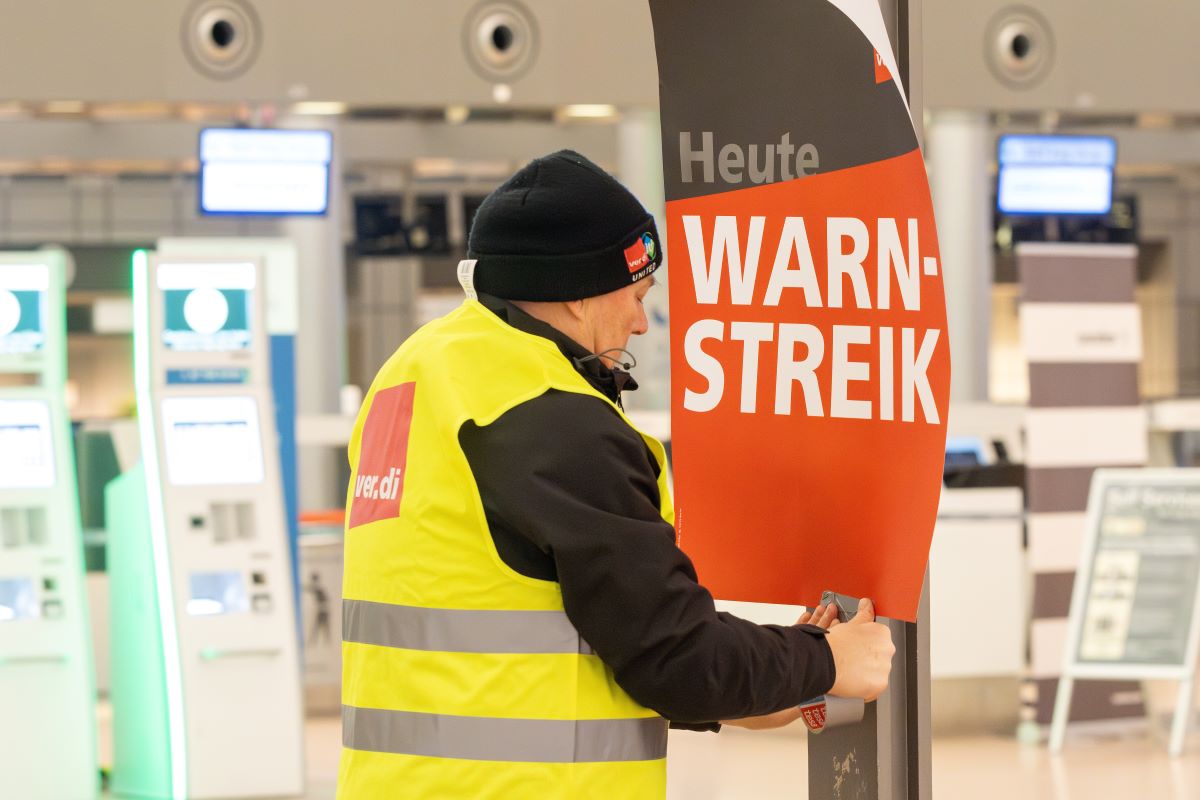
Verdi had been pushing for the full transfer of the public sector wage deal, reached on April 6th, to the BVD workforce. This involves a 5.8 percent pay rise over 27 months, at least one extra day of holiday, and higher bonuses for shift work.
Employers countered by demanding a 12-month extension of the current BVD contract without offering equivalent compensation.
READ ALSO: Five things to know about Germany's public sector pay deal
Arbitration is set to take place in the week following Easter. While a so-called "peace obligation" means no strikes can take place during this time, Verdi has warned that if no resolution is reached, renewed strike action at airports could follow, potentially disrupting air travel across the country.
Car remains most popular mode of transport
It seems neither climate discussions nor high prices can bring down the popularity of the car in Germany.
A recent mobility survey by HUK Coburg, found that the car has gained in popularity compared to previous years: 75 percent of the 4,222 participants named the car as their preferred means of transport -- three percentage points more than a year ago.
READ ALSO: How to navigate roads and trains in Germany over the Easter holidays
Although buses, trains and bicycles also gained popularity compared to the previous survey a year ago, they are still far behind car travel, with popularity values of well below 20 percent each, DPA reported.
Participants suggested that the three most important criteria for choosing a means of transport are low cost, speed and flexibility.
But safety also plays a role. Twenty-eight percent of survey participants said they felt that driving had become safer, about 12 percentage points more than a year ago.
German military service 'can begin immediately'
According to Defence Minister Boris Pistorius, a new scheme for voluntary military service set out in the coalition pact can start as soon as the new government takes office in May.
“We’ve continued developing the necessary foundations in recent months, so the next steps can follow immediately after the new government is formed,” Pistorius told DPA on Friday.
The SPD politician, expected to remain in his role following coalition talks with the CDU/CSU, said the reinstatement of military registration and monitoring would be among the first steps. Though parliament has "lost six months" to the federal elections, preparations at the Defence Ministry have continued in the background.
“Once the legislative process is complete, we can begin enrolling and training the first service members,” he said.
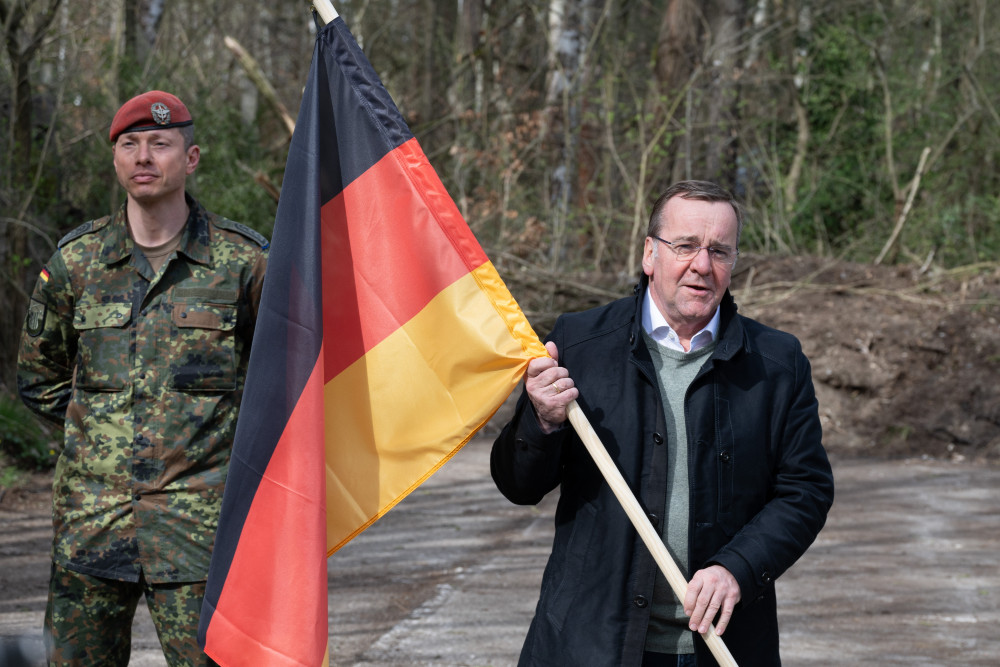
Despite the CDU/CSU's calls to reinstate mandatory service, Germany's incoming black-red coalition instead opted for the voluntary model suggested by Pistorius. This will involve a mandatory survey of young men - and a voluntary one for women - that will aim to root out the most motivated and apt participants.
READ ALSO: How Germany wants to expand military service for young men
Pistorius hopes to enroll around 5,000 new young men and women in the first year, while capacity and equipment is being built up.
“We expect to attract enough volunteers with an appealing service offer,” Pistorius said. “If one day that’s not the case, we’ll have to consider compulsory conscription for young men.”
Back in 2011 under former Chancellor Angela Merkel (CDU), Germany suspended its decades-long compulsory military service and dissolved most associated infrastructure.
However, under the constitution, mandatory service can be reactivated for men in cases of national tension or defence needs. The government say increased threats from Russia have justified this step.
With reporting by Paul Krantz and AFP
Comments