
Following an expected win for the centre-right Christian Democratic Union (CDU) and Christian Social Union (CSU) parties in Germany's February 23rd elections, the conservatives are currently holding talks with the centre-left Social Democrats (SPD) on forming a new government.
After a brief kick-off meeting on Thursday, the main phase of negotiations began on Friday, with 16 working groups trying to thrash out the details of a future coalition pact.
Though coalition talks have been known to last months in the past, CDU leader Friedrich Merz - who is likely to be Germany's next Chancellor - has put the teams on a tight deadline.
According to Merz's instructions, talks should be wrapped up by March 24th at the latest, with the new government taking shape as early as April 14th.
So far, the parties have set out a framework for their 'Grand Coalition' in a brief policy paper, which will form the basis for talks. However, as negotiations get underway, there are several questions that remain unanswered.
Citizenship and migration
To the relief of many foreigner nationals, a future CDU/SPD coalition would keep Germany's extensive citizenship reforms in place, meaning dual nationality and current residence requirements are set to remain.
However, the parties also say they want to revoke citizenship from "terror supporters, anti-Semites and extremists" who hold dual nationality.
So far, it's unclear if this would be permissible under German law.
There are also some contradictions inherent in the parties' migration policy, with the policy paper talking about "limiting" migration while encouraging skilled workers into the country. Over the next ten days, the parties will have to decide which of these goals they want to prioritise.
READ ALSO: Germany's dual citizenship law to remain under future CDU/SPD coalition
Military service
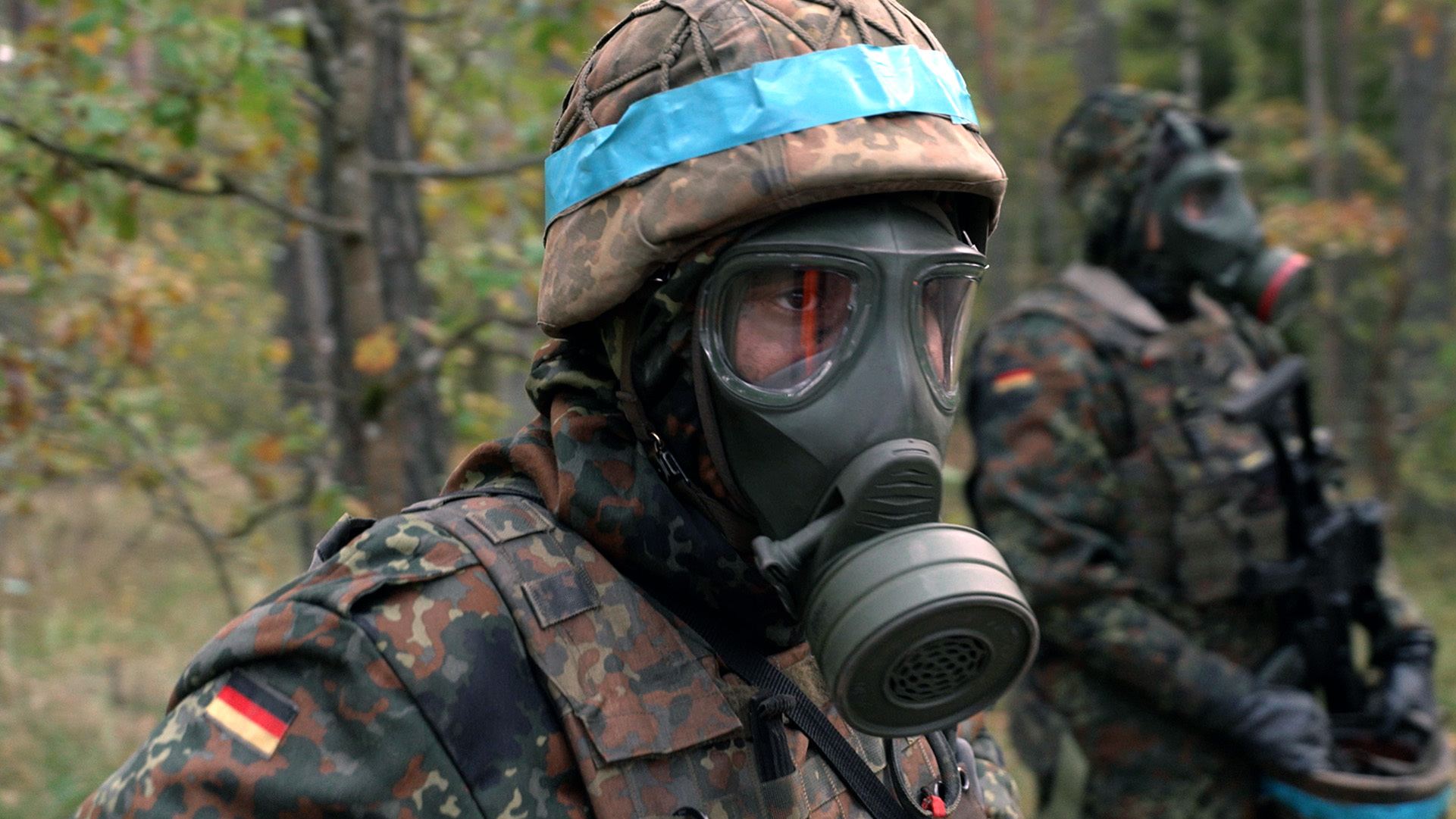
While there is a joint plan for the financing of the Bundeswehr, there's no mention of military service in the exploratory paper. However, prominent CDU politicians have recently called for some type of mandatory service to be re-introduced.
It therefore remains unclear if a new compulsory service model - or voluntary service year - might come into force and if it does, who it would apply to.
Future of the Deutschlandticket
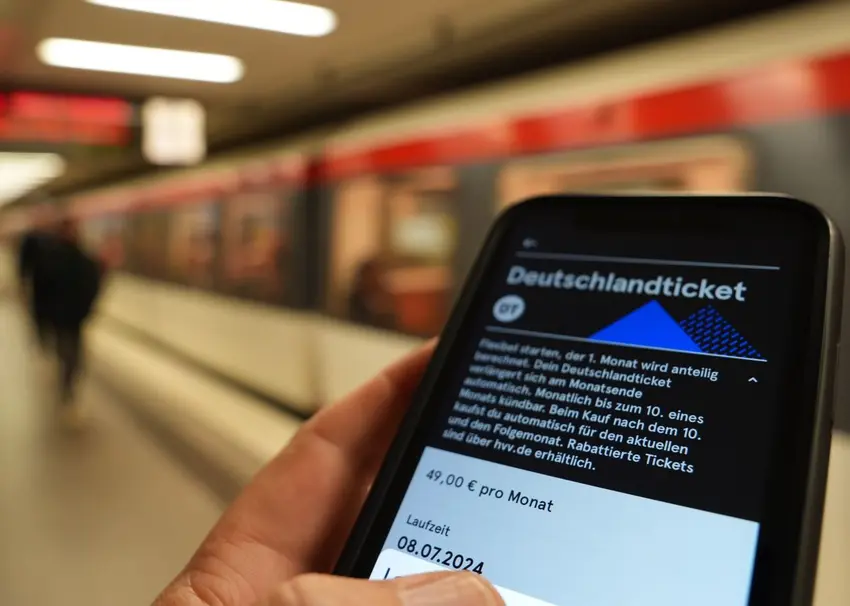
Merz was notably reticent on the future of the Deutschlandticket in the run-up to the election, with some prominent CDU MPs suggesting it should be scrapped.
In the initial policy paper, the parties say they want to discuss the "continued existence" of the ticket beyond this year - but there are so far no indications on how this could be financed.
READ ALSO: Will Germany's 'Deutschlandticket' survive after the elections?
Ukraine
Despite the volatile situation in Europe, there is little mention of foreign policy and security in the parties' exploratory paper. This leaves several questions open on Ukraine.
Will three billion euros worth of arms deliveries to Ukraine be authorised in the short term? Does the "no" to the delivery of Taurus missiles still stand? And what is Germany's position on a European nuclear defence shield and a European peacekeeping force for Ukraine?
All of these issues will need to be thrashed out in next week's talks.
Government cuts
Though Merz looks likely to be able to push his multi-billion euro spending plan through parliament next Tuesday, the parties say they "want to make savings" when it comes to the federal budget.
Deciding where to make these cuts is likely to cause some controversy between the centre-right and centre-left parties. As the new government paves the way for a multi-billion borrowing spree, it's also unclear if tax raises could be on the horizon.
READ ALSO: German parties reach deal over huge spending plan
Heating law
During the election campaign, the CDU had promised to repeal Robert Habeck's beleaguered heating bill, which paved the way for the replacement of fossil-fuel heaters and offered subsidies for heat pumps.
None of this is mentioned in the exploratory paper, meaning it's likely to be up for negotiation next week.
Pensions
Both sides have agreed to safeguard the level of pensions, which is currently set at 48 percent.
Though the actual pension people receive varies based on contributions, this means that an average earner paying in for 45 years is guaranteed almost half of the average German salary, which is currently around €3,260 per month.

While this may sound like a firm agreement, however, the parties are careful not to say what level of pension will be safeguarded. This means the current rate could change under the new government.
READ ALSO: EXPLAINED - The key changes affecting pensioners in Germany this March
Police powers
Following a spate of recent attacks in Germany, the conservatives have been keen to give more powers to the state in order to investigate and crack down on potential extremists.
Nevertheless, internal security and police and state powers are not detailed in the exploratory paper, suggesting that the parties could be in for a battle on this topic.
Nuclear exit
Germany has been in the process of shutting down its nuclear facilities, but the pro-nuclear CDU and CSU - and particularly Bavarian state premier Markus Söder - have called for this to be reviewed.
The issue isn't mentioned in initial policy proposals, however, and may be difficult to enact in practice.
Electoral reform
With the number of MPs in the Bundestag growing every year, the previous traffic-light coalition introduced a reform of Germany's electoral law that limited the number of directly elected politicians.
However, the trial run of this new system on February 23rd led to some disappointment as a number of MPs with direct mandates were unable to represent their constituencies.
To correct some of these teething problems, the CDU and SPD have promised to reform electoral law yet again. At present, though, it's unclear how they could do so.
Comments