
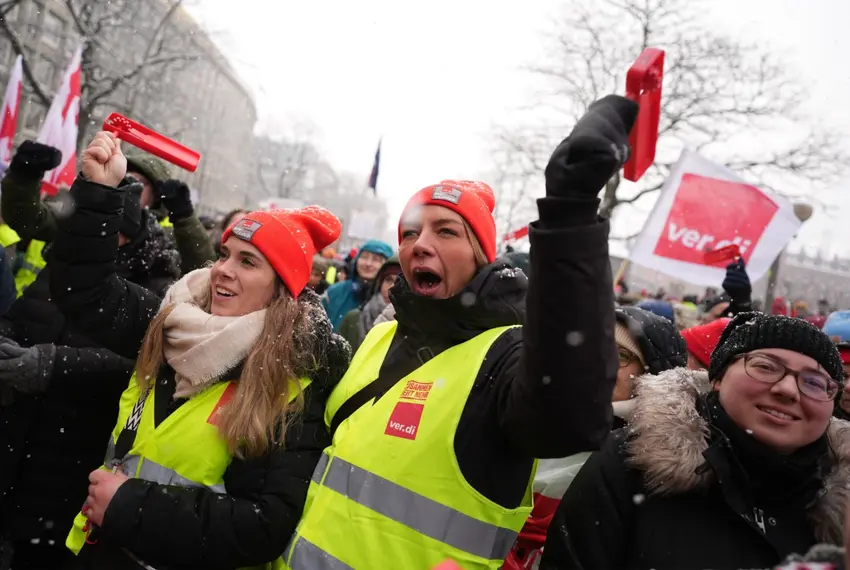
According to the Verdi trade union, the 'warning' strikes will happen throughout the country and will be held over the coming weeks. They will likely affect a range of public services, from waste disposal to nursery schools and public transport.
On Wednesday afternoon it emerged that a public transport strike would hit Baden-Württemberg, Bremen, Hesse, Lower Saxony, North Rhine-Westphalia and Rhineland-Palatinate on Friday.
The actions are to last all day, Verdi said. This means that almost 70 municipal transport companies will be hit, with around 53,000 employees being called out to stop work for the day.
Up to this point, strike action has been targeted in cities or smaller regions.
It follows two days of collective bargaining talks in Potsdam between employers and unions earlier this week. Verdi and the smaller dbb Civil Servants' Association have been trying to fight for better pay on behalf of around 2.5 million local and federal government workers.
Demands include an eight percent pay rise and extra vacation days.
But so far this has been rejected by government negotiators.
Due to the stalemate, Verdi boss Frank Werneke said on Tuesday that industrial action would be extended.
"There are no concessions on the subject of pay rises, improvements to working conditions or relief," he said, adding that that the deadlock sent a "fatal signal to employees and citizens".
Volker Geyer, chief negotiator for the dbb civil servants' association said demonstrations were on the way.
"We will be organising warning strikes and protests throughout the country over the next three weeks," said Geyer. "There is obviously no other way to get the employers out of their blockade."
It comes amid a wave of industrial action across Germany during collective bargaining.
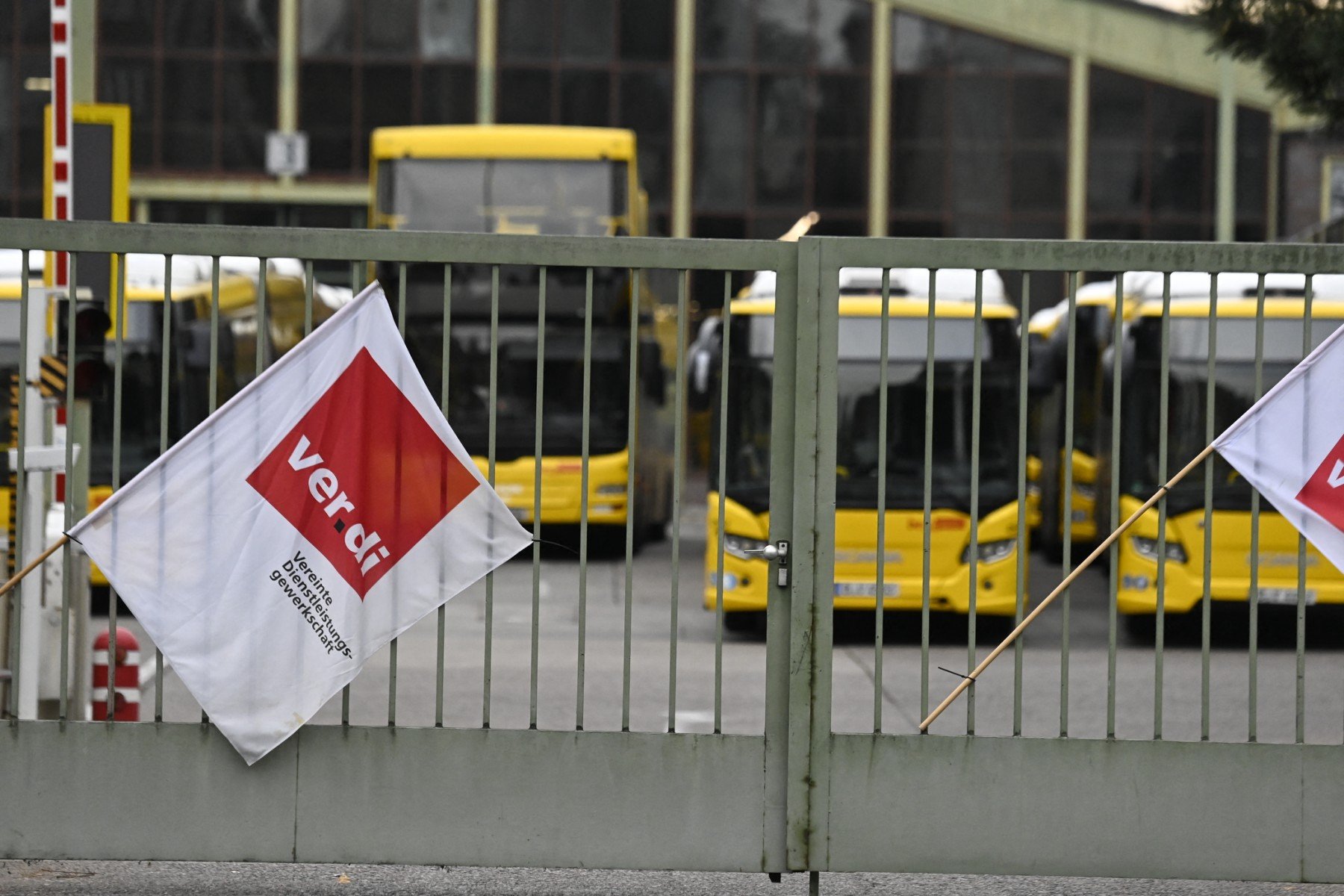
On Thursday, people in Berlin will also see a 48-hour warning strike called by Verdi on public transport run by the state operator BVG. Most buses, the U-Bahn and the tram network come to a standstill.
What are the unions demanding?
In view of the higher cost of living, the employee side is demanding an eight percent increase in income, or at least €350 more per month for employees per month plus three additional days off.
There are also calls for at least €200 extra per month for trainees and higher bonuses for people doing particularly stressful jobs that involve shift work, such as in the healthcare sector.
The unions say the high cost of living and rising inflation justifies their demands.
However, Interior Minister Nancy Faeser (SPD), who is leading the negotiations on the employer side, has previously said there is a "tense" financial situation at the federal and local government level.
But Faeser said she was "confident" that an agreement would be reached "in the third round of negotiations".
She said: "We want to find appropriate and fair solutions for the federal government and local authorities as well as for public sector employees."
The next round of talks is scheduled for March 14th-16th.
READ ALSO: Will Germany see more transport and public sector strikes?
Comments