
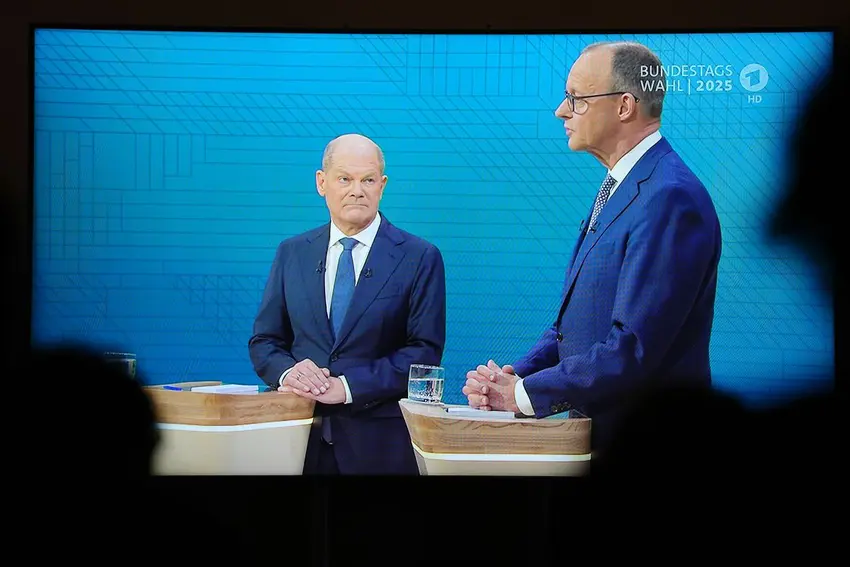
In a major debate ahead of the election on February 23rd, current Chancellor Olaf Scholz (SPD) met his biggest political opponent, CDU-leader Friedrich Merz for a televised 90 minute verbal dual on Sunday evening.
The two had some heated topics to cover – from economic and migration policy in Germany to world politics in the Trump era.
But commentators in the German media noted the event was largely uneventful with an ARD op-ed remarking that it was "pretty boring in places".
Here’s the debate in brief: what you need to know about what was said and what it means for the parties' campaigns.
Both candidates were keen to deliver their points related to the Union's recent push to tighten migration policies, and its willingness to vote with the far-right Alternative for Germany (AfD) party to do it.
Scholz said Merz had broken his word, and a long-standing political taboo, in doing so.
"And therefore one cannot be sure what the future will bring when things become difficult again," he added, suggesting that Merz and the conservative party might be expected to cooperate further with the AfD. He also suggested that the Union's proposal to push back undocumented migrants at the border could risk a bigger European crisis.
For his part, Merz contended that the CDU and CSU would not join a government with, or cooperate further with the AfD.
"I want to make it clear here once again that we will not do that," Merz said.
Merz’ claims on the economy lack context
Both candidates came prepared with statistics and figures to back up their main arguments, and they had clearly done their homework. But that’s not to say that every fact declared on the stage was completely accurate, or proffered in the right context.
For example, Merz pointed out that 50,000 companies went bankrupt under the traffic-light government, suggesting that it represented a wave of insolvencies not seen in Germany in the past 15 years.
But while figures from Germany’s statistical office can confirm that 50,000 companies had become insolvent since 2022; a Tagesschau report corrects the claim that the rate of insolvencies was unprecedented, suggesting that several years in the past 15 had higher rates of insolvencies than those under the Scholz government.
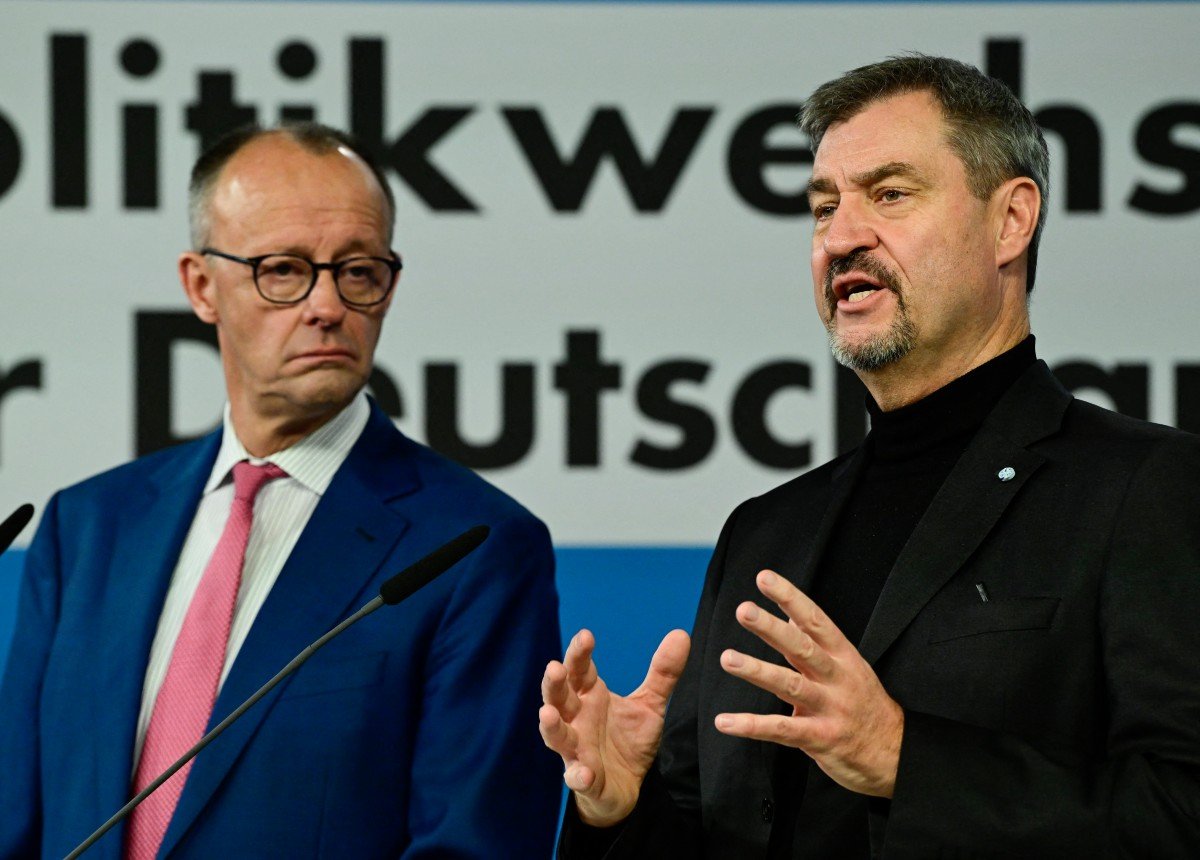
Merz also suggested that Germany is in “the third year of a recession”, and that this has not happened before.
It’s possible that statement could turn out to be correct, but to say so now is to predict that the current recession remains through the end of this year.
So far Germany has experienced falling gross domestic product (GDP) figures in the past two years. Whether GDP will continue to decline through the end of 2025 can only be seen in time.
Scholz on migration
To show that the conservatives aren’t the only party making moves to tighten Germany’s migration policies following high profile attacks involving migrants, Scholz brought asylum figures. He said that Germany had rejected 40,000 migrants under his leadership, and ‘irregular migration’ had fallen by 34 percent in 2024. Both of which are confirmed by state statistics.
But he added that last month, January 2025, saw the lowest number of asylum applications since 2016, which Tagesschau pointed out was not accurate. There have been several months reported to have lower asylum applications since 2016.
Looking at yearly figures, asylum applications peaked in 2016, and then dropped for several years with a low point in 2020. It rose again until 2023, and fell by about 100,000 applicants last year (from 350,000 to 250,000).
Scholz also claimed that deportations increased by 70 percent under his leadership.
This statement is backed up by deportation statistics, but doesn’t provide the context that Germany deported comparatively few people in 2020 and 2021 – the years just before Scholz took office – due to the covid pandemic. Looking at the past decade, the roughly 20,000 deportations carried out in 2024 was similar to the number of people deported under Merkel from 2015 to 2019.
So who won the debate?
The German Press Agency (DPA) reported that post-debate polling suggests Scholz won the duel by a razor-thin margin – 37 percent of viewers thought he won as opposed to 34 percent for Merz. But roughly a third of the audience said they felt no difference between the two candidates.
The main complaint, however, was that the clash didn't offer that much.
"Scholz and Merz said woefully little about the future of the country," said a review by Spiegel. "The big questions that Germans will have to deal with in the coming years, which will demand a lot from them, were neglected."
Nevertheless, Scholz followed up the event with an air of confidence.
Asked if he thought he performed well in an interview with Radio Eins, the Chancellor said, “I intend to win the election. And I think yesterday showed that it can be done."
Is it really enough to level the playing field?
Ahead of the debate, Scholz was in a tough spot. In the polls Merz's Union has maintained a solid lead with around 30 percent of the vote to the SPD’s 15 to 18 percent.
To have any real shot at maintaining his position as the leader of the German government, Scholz probably needed to pull off a more vigorous victory.
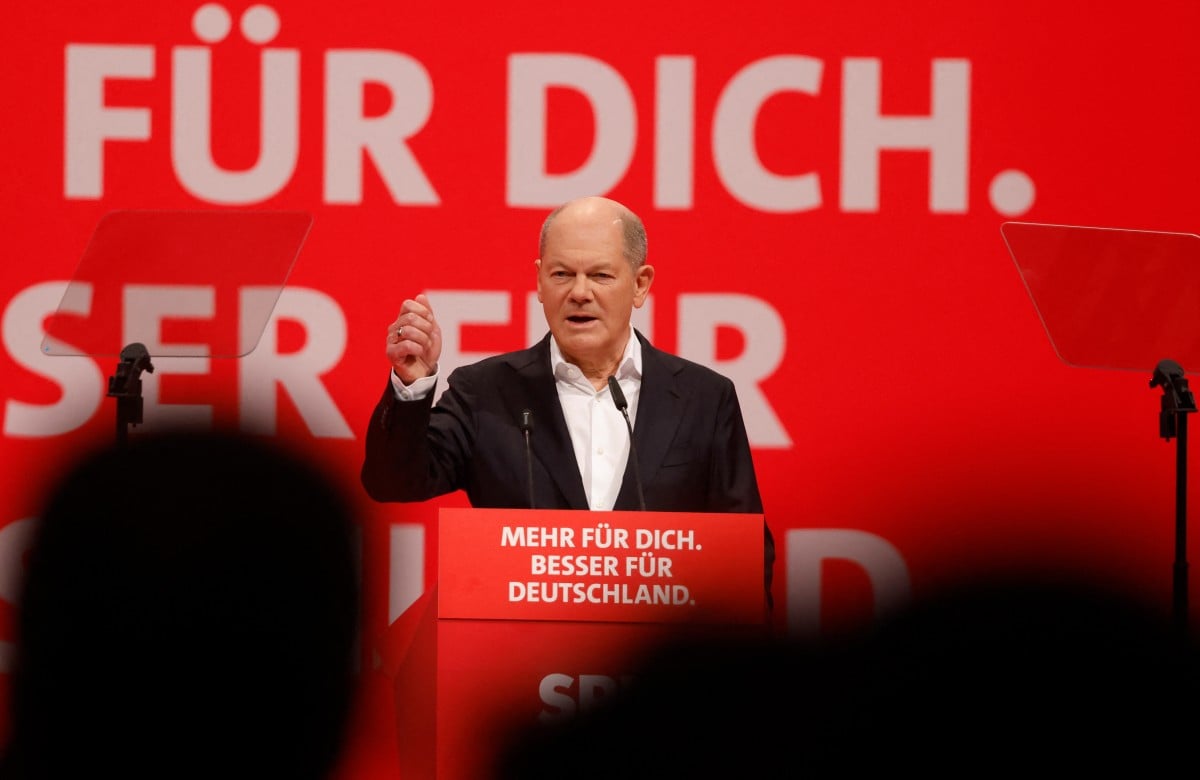
But on the other hand, a clear win by Merz would have essentially cemented the CDU's hefty lead. So Scholz appears to have succeeded showing that there is still a race to be had.
TV debates are known to have a limited impact on German voters. DPA said that even after a good performance "very few are likely to change their votes after an evening”.
Indeed, Germany’s political camps appear to be pretty locked-in. Polls have shown very little movement for any of the major German parties since the election began – even after outrage over the Union voting with the AfD sparked mass protests across the country.
Still, the top candidates will face off in more televised debates leading up to the Bundestag elections.
The next big one will be a four-way debate, including Robert Habeck (Greens) and Alice Weidel (AfD), to be broadcast by RTL and ntv next Sunday.
Comments