
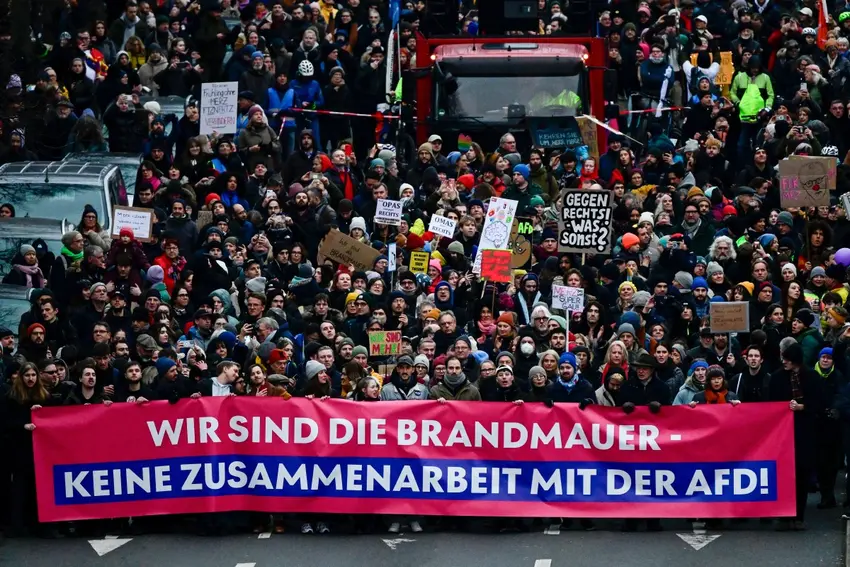
Weekend of protests against rising AfD influence
Demonstrators descended on Berlin on Sunday to protest the norm-shattering overtures by Germany's conservatives towards the far right as the country heads for a fraught election this month, drawing at least 160,000 people, according to police.
Organisers said 200,000 people had turned out to denounce the breach by the Christian Democratic Union (CDU) of Germany's unwritten agreement - dubbed the 'firewall' - not to work with the far right at the national level, which has been in place since World War II.
After the rally kicked off just outside the Bundestag, Germany's parliament building, some protesters chanted slogans including "Shame on you CDU" before moving on towards the party's headquarters.
Others accused the CDU, currently the main opposition party, and its leader, Friedrich Merz, of having made a "pact with the devil" by seeking the backing of the far-right Alternative for Germany (AfD) to pass an anti-immigration bill.
"(We want to) make as much noise as possible to call for the self-described 'democratic' parties to protect this democracy," protester Anna Schwarz told AFP.
On Wednesday last week, history was made when a conservative motion was passed in the Bundestag with support from the AfD. The resolution lacked the force of law but called on the government to launch permanent border controls and for the "rejection of all attempts to enter the country illegally without exception".
It came after a weekend of protests across Germany. Demonstrators in Aachen, Augsburg, Braunschweig, Bremen, Cologne, Essen, Frankfurt, Hamburg, Karlsruhe, Leipzig, and Würzburg took to the streets to protest the weakening 'firewall'.
The CDU's canvassing for the far-right AfD's support in parliament last week sparked widespread fury in Germany, less than a month ahead of a snap federal election.
READ ALSO: 'Shocking' - Voters in Germany react to CDU's migration crackdown plan backed by far right
How are voters feeling after historic week in the Bundestag?
Following the turbulent week of politics, many are wondering what effect - if any - the events in the Bundestag will have on voting behaviour.
However, a poll released Saturday shows the CDU/CSU is still maintaining a strong lead. In the latest ARD Deutschlandtrend, the conservatives had 30 percent of the vote, followed by the far-right Alternative for Germany (AfD) with 20 percent.
The Social Democrats (SPD) and Greens both received 15 percent in the poll.
Meanwhile, there was positive news for Die Linke (The Left), who achieved five percent in this polls. That would mean the party would clear the five percent threshold to make it into German parliament.
In contrast, the BSW - the party of ex-Linke stalwart Sahra Wagenknecht - only achieved four percent in this poll, along with the Free Democrats (FDP).
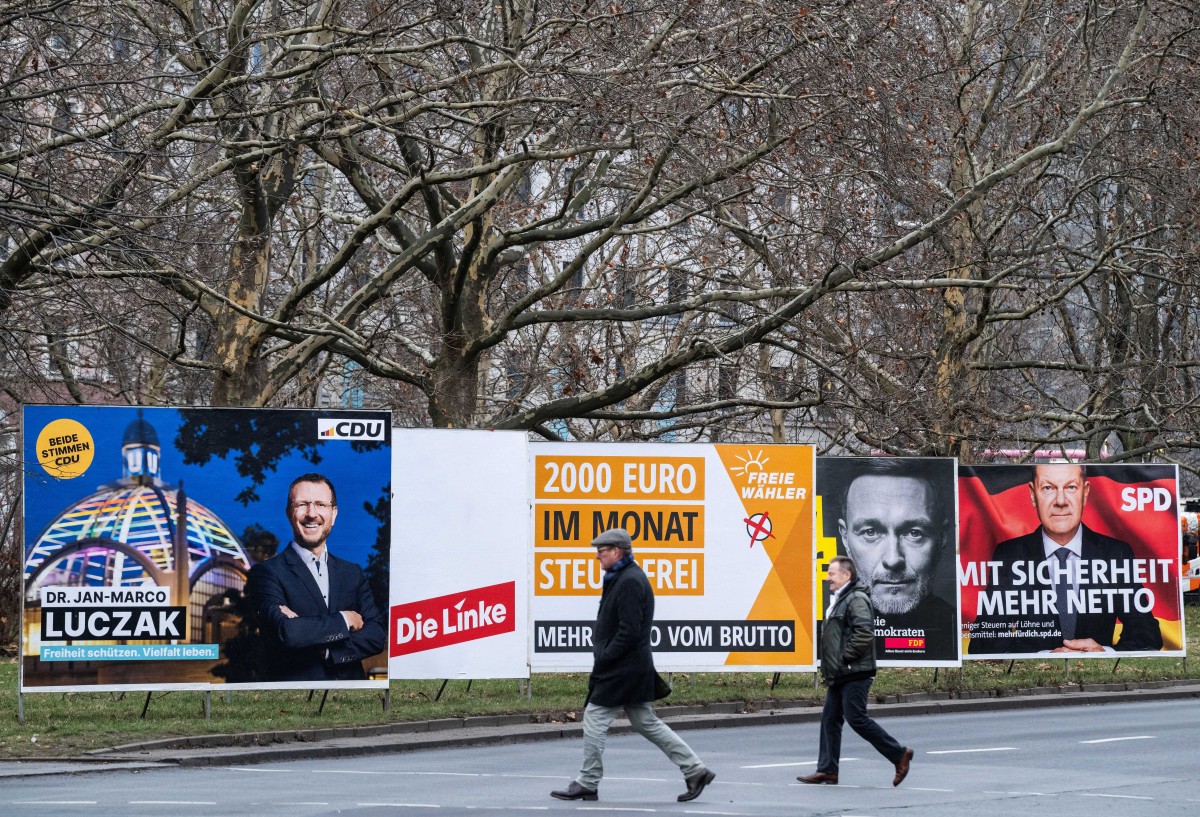
CDU aims to adopt new programme at party conference
As protests against the conservatives continue, CDU leader Friedrich Merz is to face delegates at its election party conference in Berlin on Monday.
At the event, Merz wants the party to adopt an ‘immediate programme’ with migration crackdown plans included.
The paper contains Merz's five-point plan, which envisages rejections at the borders and permanent border controls.
That motion was controversially supported by the far-right AfD in the Bundestag last week.
It it isn't clear whether there will be open criticism of Merz's collaboration with the far right from the ranks of the 1,001 delegates.
Horst Köhler, German ex-president and IMF chief, dead at 81
Germany's former president Horst Köhler, who also once headed the International Monetary Fund and was a strong backer of Africa, died Saturday aged 81 after a brief illness.
Köhler, head of state from 2004 to 2010, passed away in Berlin in the early hours, surrounded by his family, the Germany presidency announced.
President Frank-Walter Steinmeier led tributes to Koehler, saying that Germany had "lost a highly esteemed and extremely popular person who achieved great things - for our country and in the world".
In a post on X, Chancellor Olaf Scholz hailed Köhler as a "committed politician who worked throughout his life for a fairer world".
An economist by training, he was the first German head of state who was not a career politician.
Steinmeier said that when he was elected, the member of the centre-right CDU party was "virtually unknown".
Top-selling tabloid Bild memorably marked the news that he was seeking the presidency with the headline "Horst who?"
But the plain-speaking, unconventional politician quickly became popular in particular due to his criticism of big salaries earned by executives and the workings of the financial markets.
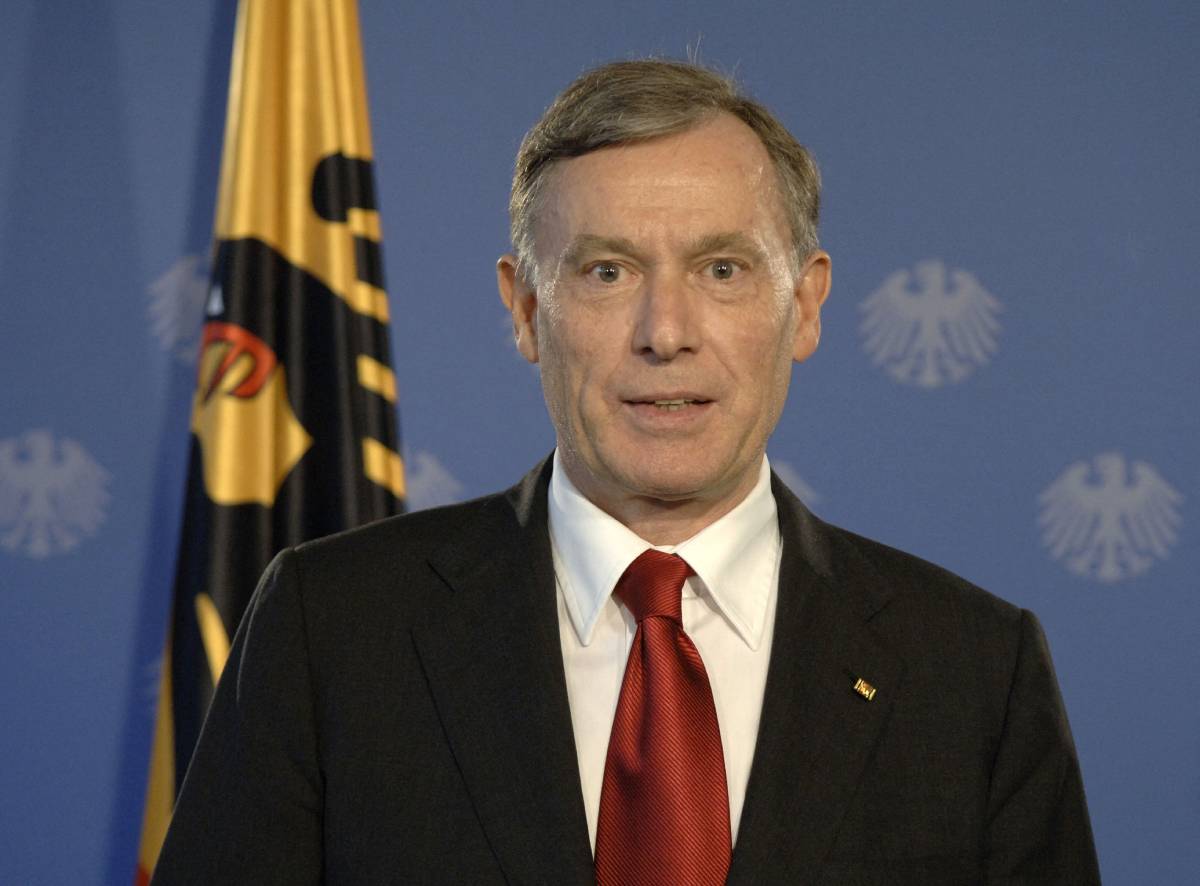
Photo by: ANDREA BIENERT / BUNDESREGIERUNG / AFP
Eyeing Trump and Putin, EU, UK, NATO leaders talk defence
EU leaders are set to huddle on Monday with Britain's prime minister and the head of NATO to discuss efforts to boost Europe's defences faced with an aggressive Russia as Donald Trump demands America's allies spend much more.
The gathering in Brussels is billed as a "triple first": the first time the European Union's 27 leaders meet since the US president's inauguration, their first-ever dedicated talks on defence and their first with a British premier since Brexit.
European nations have ramped up their military budgets since Russia launched its all-out invasion of Ukraine almost three years ago.
But officials concede they are still not arming themselves fast enough as warnings grow that Moscow could attack one of their own in the coming years.
Trump's return to the White House has given a fresh jolt to the debate - with the volatile leader saying Europe can no longer take US protection for granted.
Trump insists NATO countries more than double their current defence spending target to five percent of GDP, a goal out of reach for many.
Brussels estimates the bloc needs to invest an extra €500 billion on defence over the next decade.
Funding is the major question, with a number of member states pushing for massive joint EU borrowing.
But Germany - which faces a fraught election on February 23rd - has tried to shut down discussion of that sensitive topic.
"The worry is this meeting might become just another box-ticking exercise if we don't discuss the elephant in the room of financing," one EU diplomat said.
With reporting from AFP, DPA and Conor Faulkner
Comments