
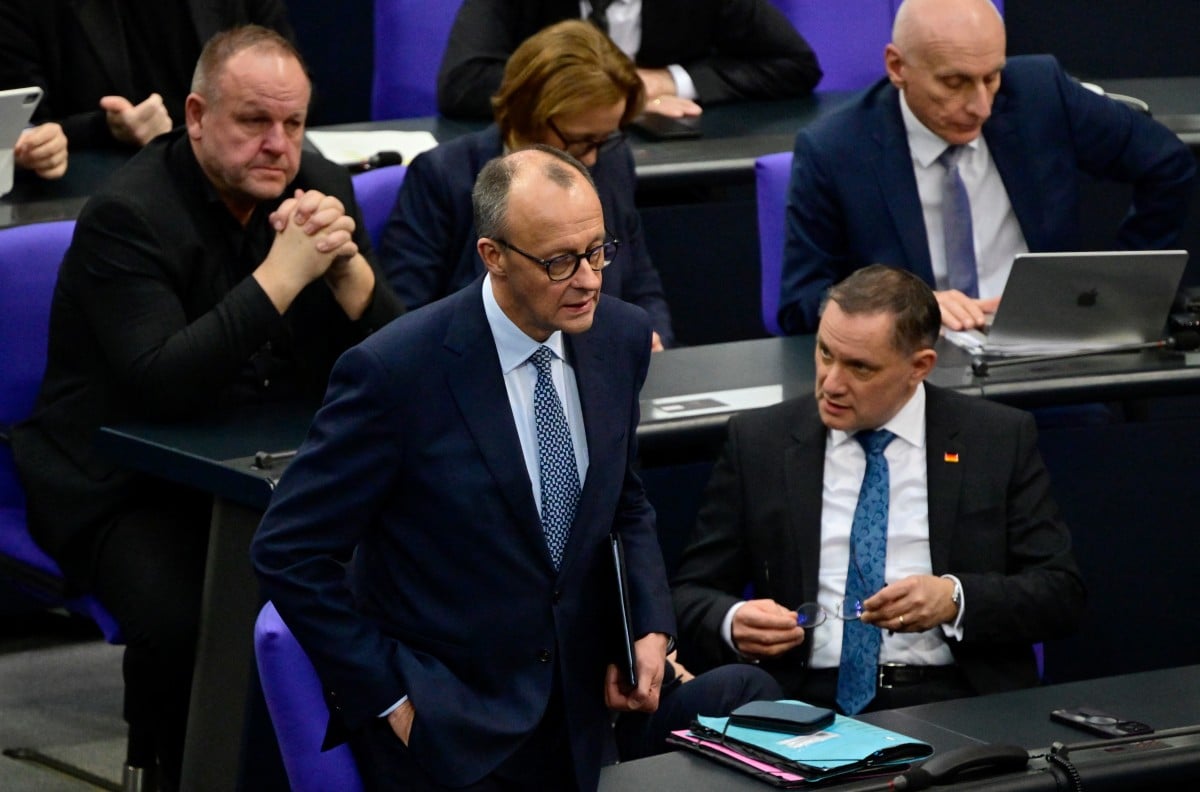
Germany's political landscape was shaken on Wednesday when a conservative motion to tighten up migration rules was passed in the Bundestag with help from the far-right Alternative for Germany (AfD).
While the AfD's chancellor candidate Alice Weidel called it an "historic day", many view it as a break in the 'firewall' that mainstream parties have against working with the AfD.
What are voters saying?
Voters of the CDU and CSU, whose lead candidate Friedrich Merz is on course to become Germany's next chancellor after the election on February 23rd - had mixed feelings, with some saying they would consider voting for other parties.
READ ALSO: EXPLAINED - How new German citizens can vote in upcoming elections
One voter, who asked to remain anonymous, told The Local: "It's not the best week for Germany. I've almost always voted CDU. We need to see how Merz plays this out over the rest of the campaign, but I'll switch my vote now if I feel I have to."
Another pointed out that breaking the taboo of working with the far right was a step too far.
"It is a shame. I support the measures that passed - but you simply don't vote with 'Nazis'," they said, in reference to some AfD's members views on, or associations with, the former Nazi party.
While CDU voters weighed whether or not to cast their vote for other parties, those who tend to vote for left-wing or progressive parties expressed more intense emotions.
"I feel frustrated, sad and scared," Hannah Reis, a Berlin-based podcast host, told The Local. "The latter because it shows what German soon-to-be Chancellor Merz is capable of."
Lisa S., who works with Null Müll Neukölln - a zero waste initiative in Berlin - told The Local that she was shocked to see that the vote passed.
"I knew that the CDU wanted to propose this law, but I didn't think that they actually would take it to a vote, or that they'd get enough votes because of the AfD and the FDP...
"If you consider the German history, it's shocking that the AfD is allowed to participate."
Asked if she knew people from affected communities who had strong feelings about the rise of right-wing politics in Germany, Lisa mentioned friends in the LGBTQI community who were very concerned.
But she also mentioned friends who had more complicated views.
"Yesterday I talked to a friend who came to Germany in the 80s as a Palestinian refugee," Lisa explained. "He asked me, 'who should I vote for?,' because even as an immigrant himself, he thought that maybe too many people are now coming to Germany."
'End of the Brandmauer'
The proposal which was passed on Wednesday night lacked the force of law - its effectively a motion calling on the government to permanently police all borders and deny entry to all irregular migrants, whether they claim asylum or not.
But a vote is set for Friday on another draft law from the conservatives concerning migration policy that may also be supported by the AfD.
As a social worker within Berlin's justice system, Karsten works directly with criminal offenders, including many that come from immigration backgrounds. But he doesn't think tightening migration laws is a viable solution.
"I expected this vote, and this change in direction for the CDU. This is really the end of the Brandmauer (firewall)," he told The Local.
READ ALSO: German word of the day - Brandmauer
He added that politically things appear to be developing similarly to how they did 100 years in Germany - not just in Europe but all over the world.
"If they really make this into a law it will only make bigger problems for society," Karsten said. "We have enough law, we are a law state.
"Instead we need stronger departments to make current law a reality. The laws are fine but the staff (to enforce them) is missing...when all the people are doing digital work, who does the real work?"
CDU leader Merz defended the policy but said he regretted that the AfD had backed the proposal instead of other mainstream parties.
He offered to hold fresh talks on migration with the SPD and Greens ahead of Friday's vote.
READ ALSO: 'Turning point for Germany' - what the far-rights cooperation with conservatives means
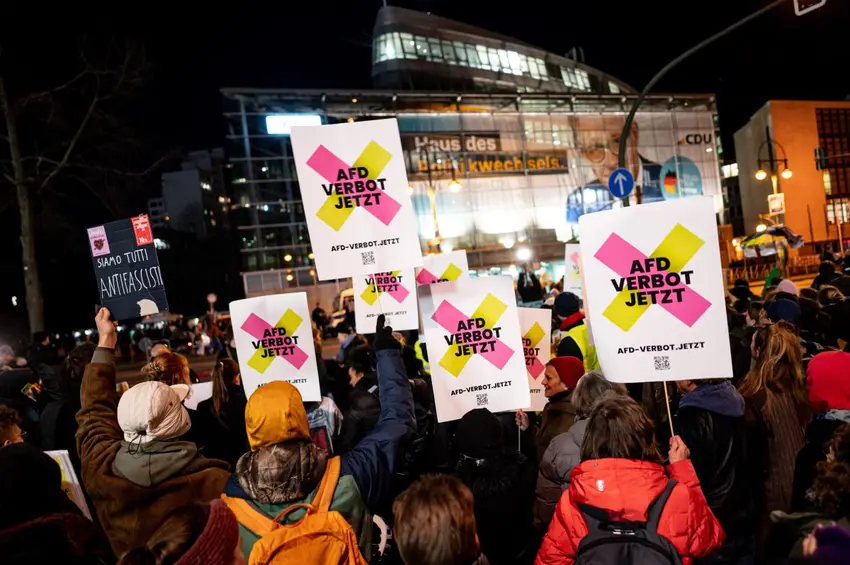
Meanwhile, thousands of people gathered outside CDU offices across Germany on Wednesday evening to protest against the events.
Amnesty International, Seebrücke and other organisations called for rallies under the slogan ‘Brandmauer statt Brandstiftung’ (‘Firewall instead of arson’).
In Berlin, protesters held banners that read: "Stop the hate."
"My main feeling is anger - I'm very outraged," Eva, a 56-year-old protester who gave only her first name, told AFP.
How will the CDU proceed?
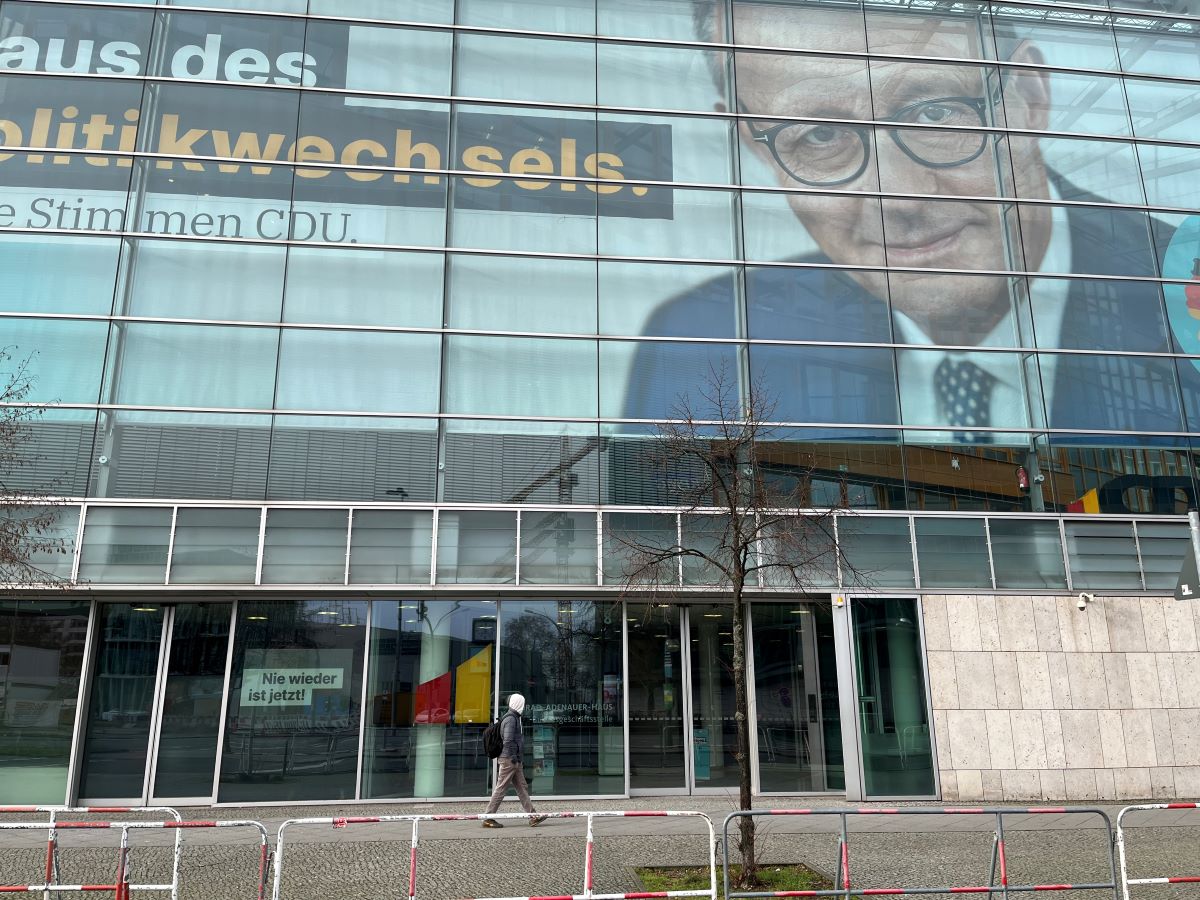
Everything looked calm around the CDU's Berlin headquarters on Thursday morning when The Local visited.
In the building's guest entrance two TV screens showed live news from Germany: A headline about the CDU proposal passing with AfD support scrolled across the bottom of a screen. In the next room several staff were looking at their phones, but they didn't seem disturbed.
From the looks of it, you'd never know that this was the HQ of a party that just broke historical precedent, and turned German politics upside down. Only a row of moveable barricades - presumably left by police after Wednesday night's protest - show any evidence of the backlash the party has invited.
The Local reached out to the CDU office in Berlin for comment, but had not received a response at time of publication.
With reporting by Aaron Burnett and Rachel Loxton
What do you think? Let us know in the comments or send us an email: news@thelocal.de
Comments