
Even as the attacker's motive remained unclear, the carnage that killed five people and injured over 200 has moved the flashpoint issues of security and immigration back to the centre of politics ahead of German elections scheduled for February 23rd.
Those concerns were fuelled by news that Saudi Arabia had warned Germany about its citizen Taleb al-Abdulmohsen, 50, who came to Germany in 2006 and was granted refugee status 10 years later.
Riyadh had warned Berlin "many times" that the psychiatrist and activist "could be dangerous", a source close to the Saudi government told AFP, adding that "there was (an extradition) request".
Police were still puzzling over why the driver smashed a rented SUV at high speed through the crowd of revellers on Friday, bringing death and chaos to a festive event in the eastern city of Magdeburg.
Psychiatrist Abdulmohsen - who was arrested beside the battered vehicle - has voiced anti-Islam views, anger at German immigration officials and support for far-right conspiracy narratives on the "Islamisation" of Europe.
READ ALSO: Suspect in deadly Christmas market attack railed against Islam and Germany
Die Welt daily, citing unnamed security sources, reported on Monday that Abdulmohsen had been treated for a mental illness in the past, but this has not been confirmed by authorities.
Abdulmohsen has been remanded in custody on five counts of murder and 205 of attempted murder, prosecutors said, but not so far on terrorism-related charges.
The mass-circulation Bild daily wrote that "although the background to the terrible attack in Magdeburg has not yet been clarified, it is already clear: There will be a 'before' and an 'after' in this election campaign."
It said "the attack changes everything" and will refocus the campaign, so far about Germany's dire economic situation, on the question of "whom people trust to make our homeland safe again".
'Shocked and angry'
The anti-immigration Alternative for Germany (AfD) party announced a public "memorial" event and march for the victims from 5:00pm in central Magdeburg, to be attended by its top candidate Alice Weidel.
Weidel charged on social media platform X that the attack "would not have been possible without uncontrolled immigration".
"The state must protect citizens through a restrictive migration policy and consistent deportations!" added Weidel, whose party is polling at around 20 percent but has been shunned as a pariah by all other mainstream parties.
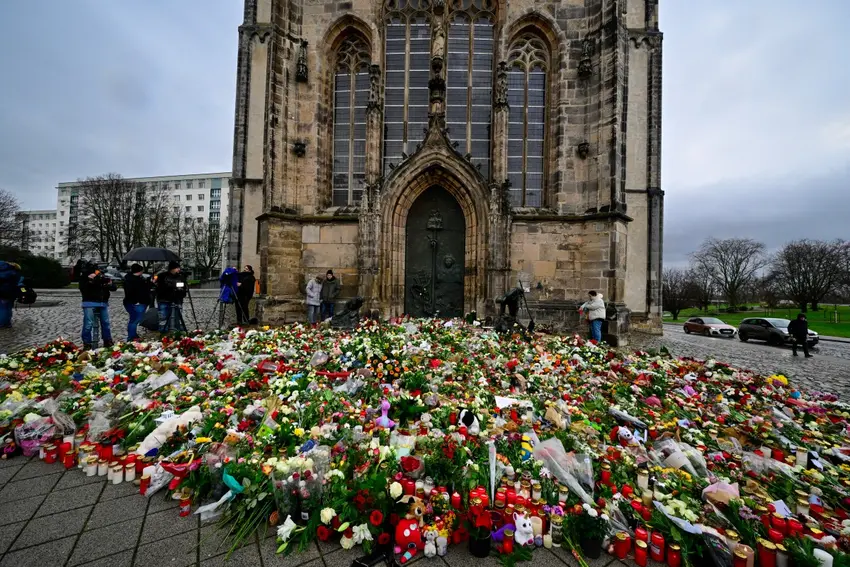
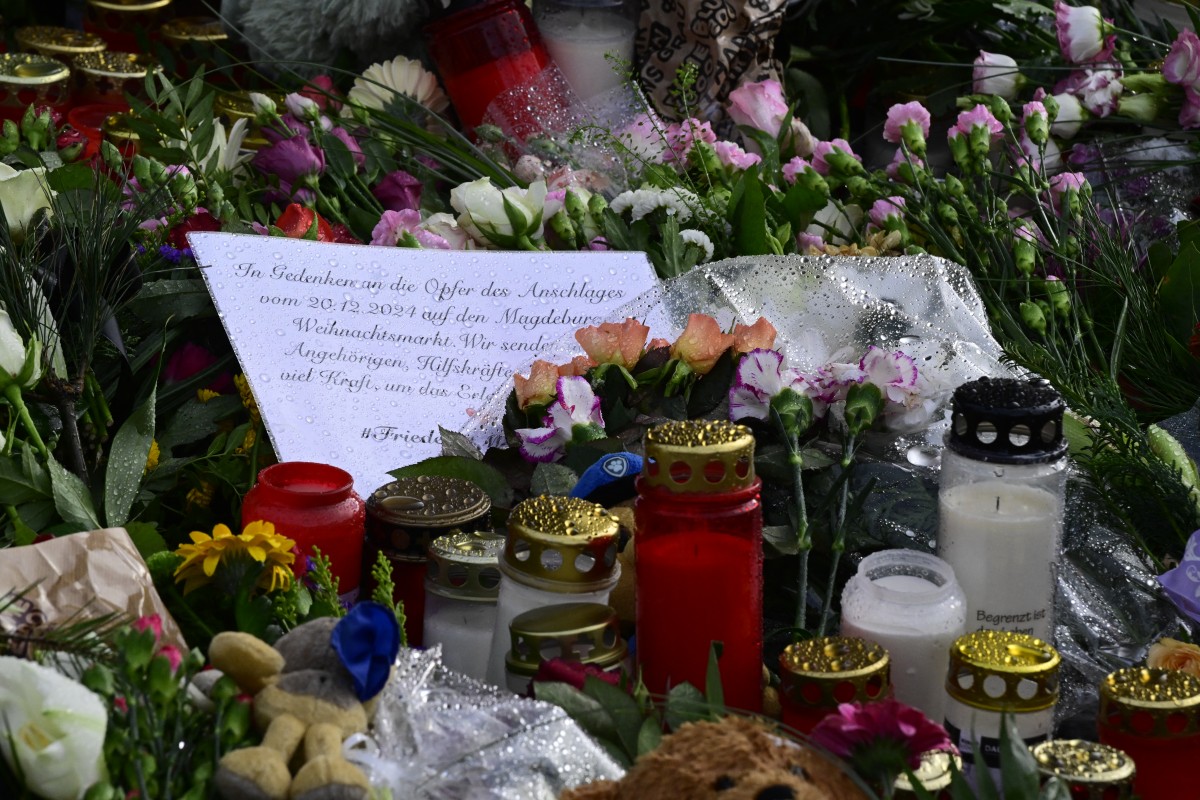
An anti-extremist initiative called "Don't Give Hate a Chance" was to rally at the same time, near the city's Johannis church, where thousands of flowers, candles and children's toys have been placed for the victims - a nine-year-old boy and four women aged between 45 and 75.
"We are all shocked and angry to see that people want to exploit this cruel act for their own political ends," the initiative said in a statement. "We must approach each other with openness, care, tolerance and humanity and build bridges instead of erecting walls in our hearts."
'Weakest link'
Political pressure has built on the question of potential missed warnings, and Chancellor Olaf Scholz's government pledged Sunday to fully investigate whether there were security lapses before the attack.
READ ALSO: Germany pledges security inquest into German market attack
Interior Minister Nancy Faeser and the heads of Germany's domestic and foreign intelligence services are due to answer questions at parliamentary committee hearings on December 30th, a senior lawmaker told AFP.
Faeser has vowed that "no stone will be left unturned" in shedding light on what information had been available to security services in the past.
She stressed that the attacker did "not fit any previous pattern" because "he acted like an Islamist terrorist although ideologically he was clearly an enemy of Islam".
Faeser also demanded cross-party support to pass laws that would give police greater powers to sift through mountains of social media data and to introduce video surveillance with facial recognition software.
German Christmas markets - among the country's most iconic and beloved festive events - have been specially secured since a jihadist attacker rammed a truck through a Berlin Christmas market in 2016, killing 13 people.
Police have also stepped up weapons checks following several deadly knife attacks, including one that killed three people and wounded eight at a summer festival in the western city of Solingen.
The Magdeburg event too had been secured with police and barricades, but the attacker managed to exploit a five-metre gap when he steered his rented BMW sports utility vehicle into the site and then raced into the unsuspecting crowd.
"A security concept is only as strong as its weakest link," counterterrorism expert Peter Neumann told news weekly Der Spiegel. "If one entry point remains unprotected, all the other concrete bollards are of no use."
Comments