
The suspect, who was remanded in custody by Magdeburg district court on Saturday evening, is a 50-year-old psychiatrist from Saudi Arabia who has lived in Germany since 2006.
The suspect is accused of five counts of murder, multiple attempted murders and multiple counts of dangerous bodily harm, Magdeburg police said Sunday.
He held strongly anti-Islam views and was angry with Germany's migrant and asylum policy, officials said Saturday.
But the motive for the attack remains unclear.
Magdeburg prosecutor, Horst Nopens, said one possible motive could be the suspect's "dissatisfaction with the way Saudi Arabian refugees are treated" in Germany.
Sorrow and revulsion
Visiting the city on Saturday, Chancellor Olaf Scholz condemned the "terrible, insane" attack that came just days before Christmas and eight years after a jihadist drove a truck into a Christmas market in Berlin.
Federal Minister of the Interior Nancy Faeser, who also visited Magdeburg, issued an appeal to people to not exploit the act for political means. "We must now do everything we can to ensure that the act is not abused - by any side," she said, amid planned rallies by right-wing groups.
The mass carnage, which saw an SUV plough at high speed through a dense crowd, sparked sorrow and revulsion, with a nine-year-old boy among the dead and casualties being treated in 15 regional hospitals.
The other fatalities were four women, reportedly aged 52, 45, 75 and 67, Magdeburg police said.
Germany has been hit by multiple deadly jihadist attacks, but evidence gathered by investigators and his past online posts painted a different picture of the suspect,Taleb al-Abdulmohsen.
A self-described "Saudi atheist" who as an activist helped women flee the oil-rich kingdom, he has railed against Islam but also against what he saw as Germany's permissive attitude towards refugees from other mainly Muslim countries.
Interior Minister Nancy Fraser said he held "Islamophobic" views.
Taha Al-Hajji of the Berlin-based European Saudi Organisation for Human Rights told AFP Abdulmohsen was "a psychologically disturbed person with an exaggerated sense of self-importance".
Call for unity
Abdulmohsen in his online posts spoke about his troubles with and suspicions of German authorities.
Last August, he posted on social media: "Is there a path to justice in Germany without blowing up a German embassy or randomly slaughtering German citizens? ... If anyone knows it, please let me know."
Die Welt daily reported, citing security sources, that German state and federal police had carried out a "risk assessment" on him last year but concluded that he posed "no specific danger".
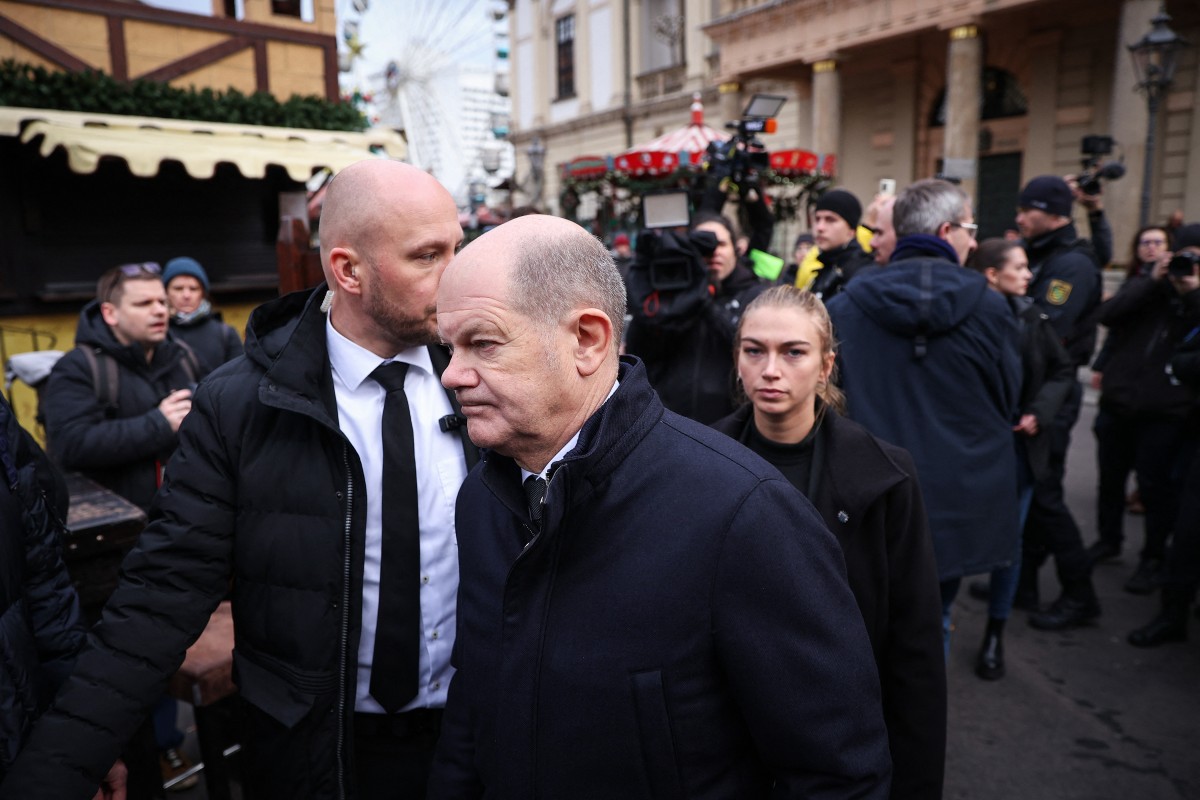
A sombre Scholz, dressed in black, visited the attack site Saturday together with national and regional politicians laying flowers outside the main church in Magdeburg.
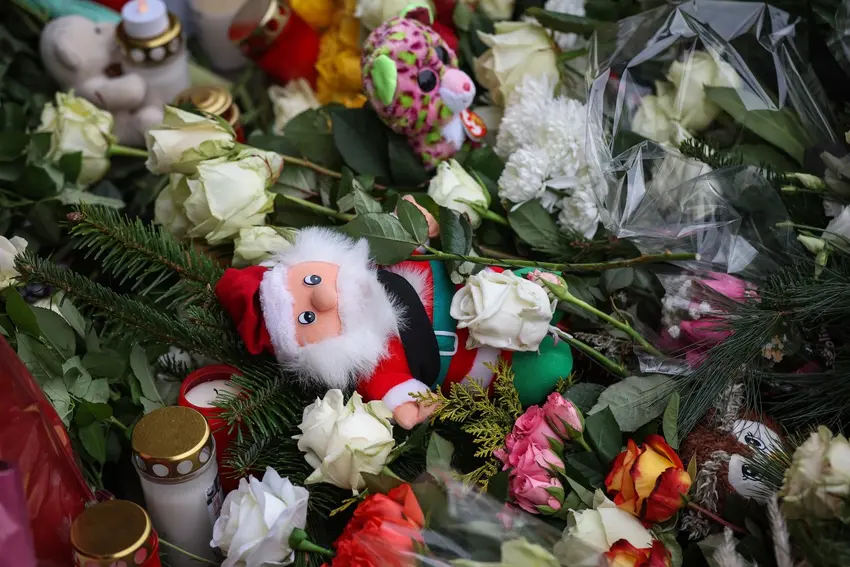
Mourning and bereaved residents have left candles, flowers, cards and children's toys at the Johanneskirche church, where a memorial service was planned at 7:00 pm (1800 GMT).
Scholz pledged the state would respond "with the full force of the law" to the attack but also called for unity as Germany has been rocked by a heated debate on immigration and security ahead of elections in February.
The centre-left chancellor said it was important "that we stick together, that we link arms, that it is not hatred that determines our coexistence but the fact that we are a community that seeks a common future."
He said he was grateful for expressions of "solidarity... from many, many countries around the world. It is good to hear that we as Germans are not alone in the face of this terrible catastrophe."
Sorrow and anger
Surveillance video of the attack showed a black BMW driving at high speed straight through a dense crowd, running over or scattering bodies amid the festive stalls selling snacks, handicrafts and traditional mulled wine.
Police said the vehicle drove "at least 400 metres across the Christmas market" on the city's central town hall square.
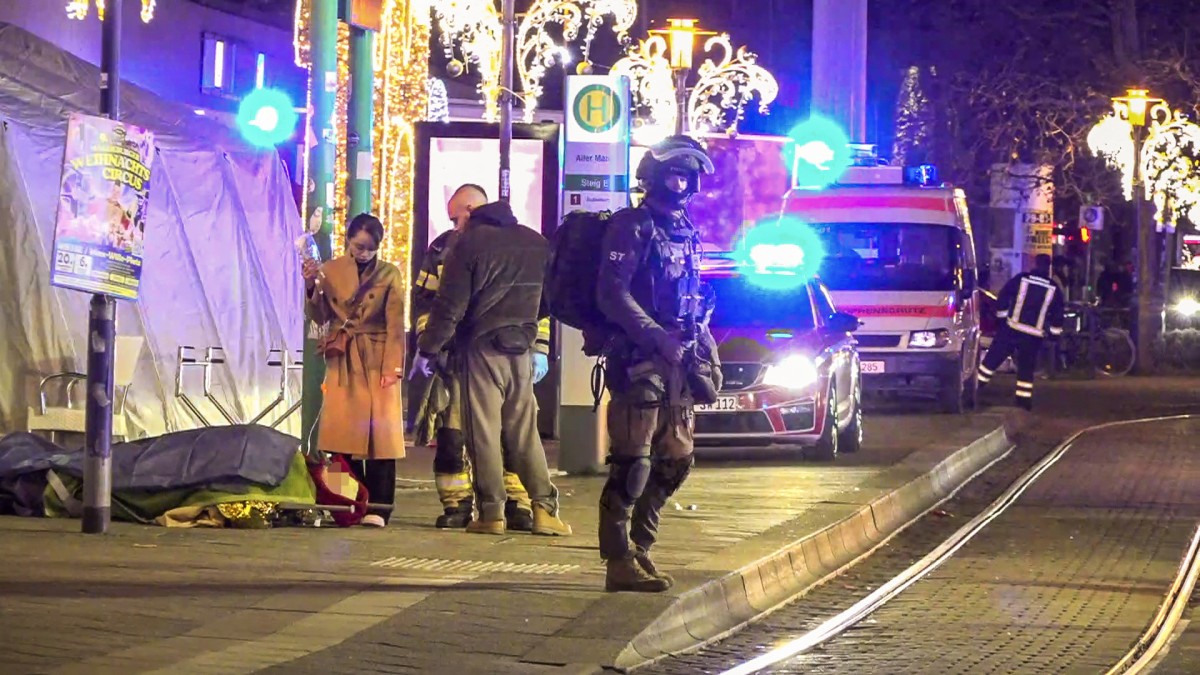
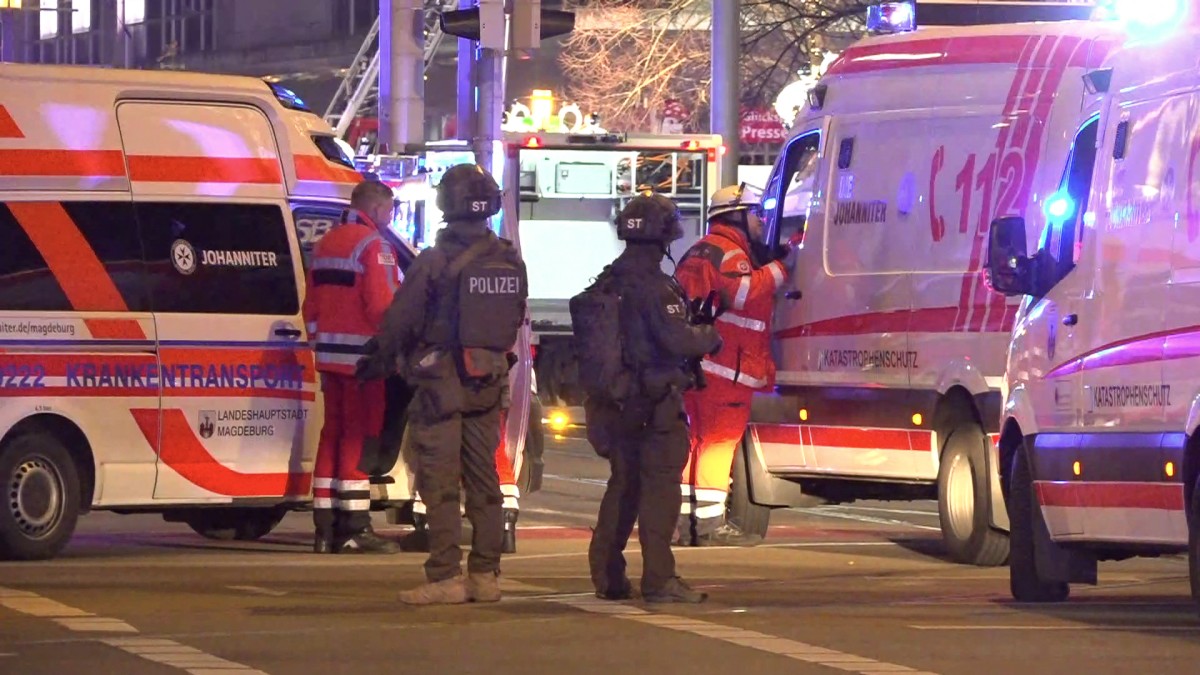
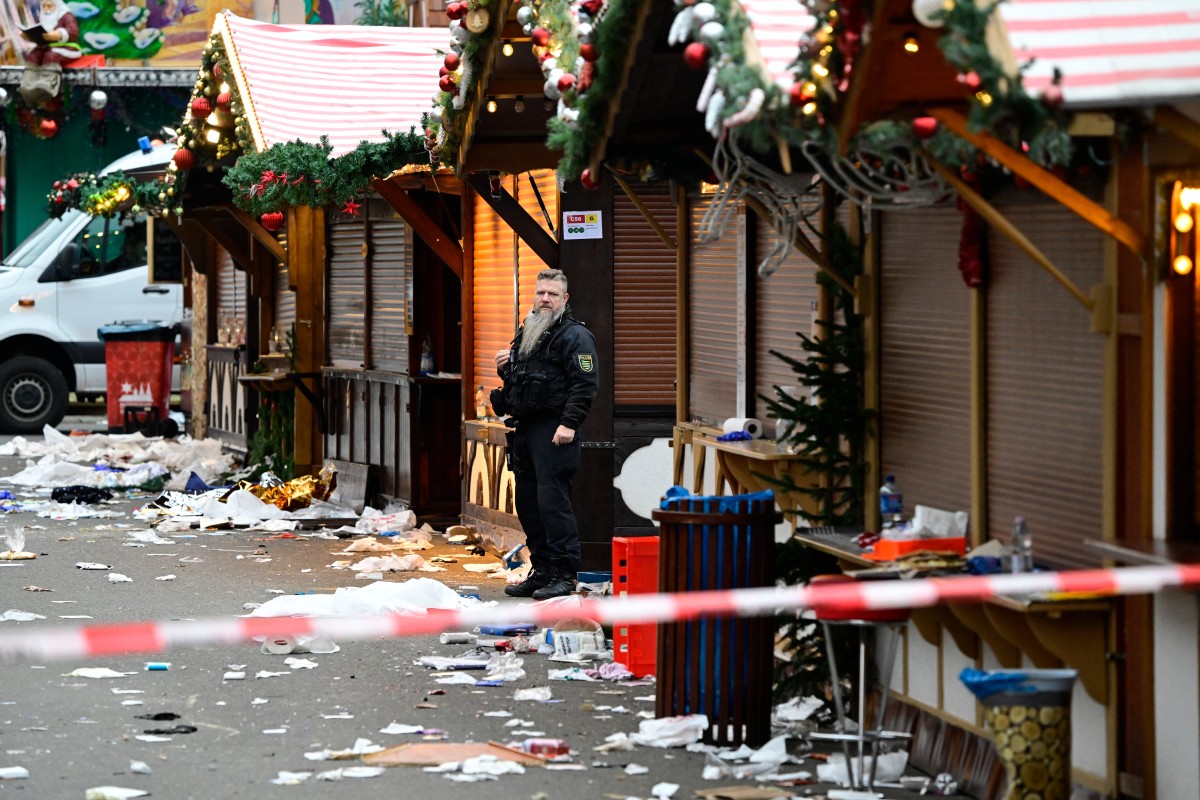
On Saturday, debris and discarded medical materials blew across the cordoned-off site, where stalls now stand empty around a giant Christmas tree, the event cancelled for the year out of respect for the victims.
One woman told Die Welt daily: "I don't know what world we're living in, where someone would use such a peaceful event to spread terror."
The sorrow and anger sparked by the latest attack, in which a child was killed, seemed set to inflame a heated debate on immigration.
The leader of the far-right Alternative for Germany (AfD), Alice Weidel, which has focused on jihadist attacks in its campaign against immigrants, wrote on X: "When will this madness stop?"
"What happened today affects a lot of people. It affects us a lot," Fael Kelion, a 27-year-old Cameroonian living in the city, told AFP.
"I think that since (the suspect) is a foreigner, the population will be unhappy, less welcoming," he said.
Michael Raarig, 67 an engineer, told AFP that "I am sad, I am shocked. I never would have believed this could happen, here in an east German provincial town."
Rise in jihadist attacks
He added that he believed the attack "will play into the hands of the AfD" which has had its strongest support in the formerly communist eastern Germany.
Security was stepped up Saturday at Christmas markets elsewhere in Germany with more police seen in Hamburg, Leipzig and other cities.
German footballers were holding a minute's silence and wearing black armbands in weekend matches in tribute to the victims.
The regional Evangelical church announced that at 7:03 p.m. (1803 GMT) "the time of yesterday's attack on the Christmas market, the bells of all churches in Magdeburg and many places of worship in the surrounding area will ring".
German Interior Minister Nancy Faeser has recently called on people to be vigilant at Christmas markets, although she said that authorities had not received any specific threats.
READ ALSO: Germany urges vigilance at Christmas markets amid terror concerns
Domestic security service the Office for the Protection of the Constitution had warned it considers Christmas markets to be an "ideologically suitable target for Islamist-motivated people".
Germany has in recent times seen a series of suspected Islamist attacks which have inflamed public opinion.
Three people were killed and eight wounded in a stabbing spree at a street festival in the western city of Solingen in August.
Police arrested a Syrian suspect over the attack that was claimed by IS.
In June, a policeman was killed in a knife attack in Mannheim, with an Afghan national held as the main suspect.
The German government this year imposed new border controls with European neighbours and pledged to step up deportations of rejected asylum-seekers.
Germany's conservative opposition leader Friedrich Merz, who was also in Magdeburg, has pledged in his election campaign to show "zero tolerance" on crime and "stop illegal migration".
German President Frank-Walter Steinmeier wrote that "the anticipation of a peaceful Christmas was suddenly interrupted" in the attack but he cautioned that "the background to the terrible deed has not yet been clarified".
Comments