
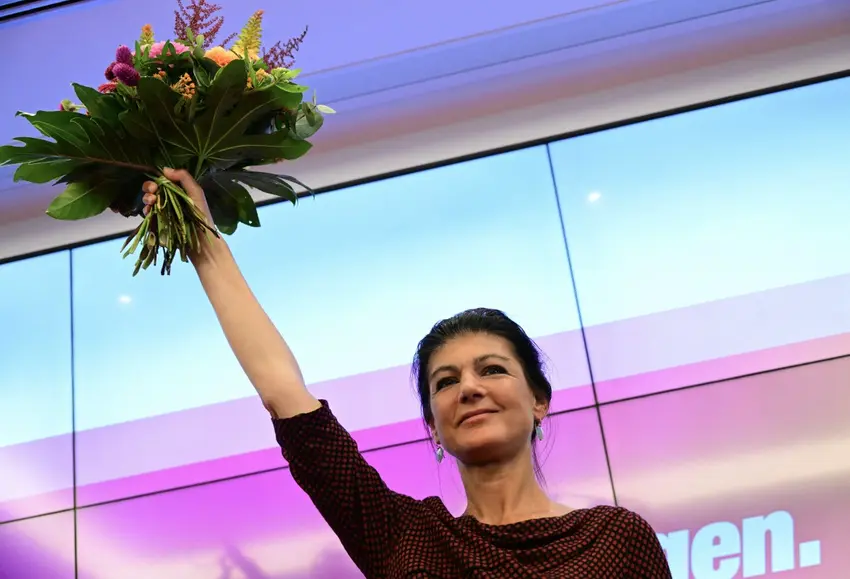
Almost three months after state elections in September, the CDU, SPD and far-left BSW have drawn up a "draft government contract", a source close to the coalition negotiations told AFP.
Details of the agreement will be made public Friday, the source said, adding that the parties had reached a "forward-looking consensus".
September's vote in Thuringia was marked by a victory for the far-right Alternative for Germany (AfD), the first time the anti-immigration party won a state election in Germany.
The AfD came away with 32.8 percent of the vote, with the conservatives in second place on 23.6 percent.
But the AfD was never expected to come to power because other parties have ruled out working with the far right to form a government.
READ ALSO: What the far-right AfD state election win means for Germany
The new party BSW, founded by firebrand politician Sahra Wagenknecht after she quit the far-left Die Linke, stunned the political establishment by coming third with 15.8 percent, ahead of the SPD's 6.1 percent.
Wagenknecht's party ran on a ticket of opposition to Germany's support for Ukraine and to the planned stationing of US missiles in Germany.
This was a major sticking point in coalition negotiations with the CDU and SPD, which both support weapons deliveries to Ukraine.
The coalition agreement to be published Friday includes a clear commitment to peace initiatives in Ukraine, according to German media reports.
Painful haggling
Two other former East German states, Brandenburg and Saxony, are also trying to cobble together coalition governments after elections in September.
In Brandenburg, the SPD, which narrowly beat the AfD to win the election, is in talks with BSW to form a government.
READ ALSO: Who are the winners and losers of Germany's key state election in Brandenburg?
In Saxony, three-way talks between the conservatives, the SPD and BSW broke down last week as the parties could not agree on defence and migration issues.
The CDU and SPD in Saxony are now moving toward a minority government, the only option they see to avoid a new election.
The painful haggling could be a sign of things to come at the federal level as Germany prepares for a snap national election in February.
SPD Chancellor Olaf Scholz has pledged to pave the way for the vote seven months earlier than planned after the collapse of his three-way coalition with the Greens and the pro-business FDP.
With migration and defence high on the campaign agenda, a strong showing is also expected for the AfD and BSW at the federal level as Germany grapples with an increasingly fragmented political landscape.
The CDU is currently leading in opinion polls at around 33 percent.
Party leader Friedrich Merz has said he would prefer to govern with just one coalition partner, most likely the SPD according to the latest projections.
Comments