

Germany has a reputation for lagging behind on digitalisation - and the workplace is no exception. For years, the Bundesrepublik has stood out as one of the last countries in the European Union where employment contracts have to be signed on paper, rather than online.
A new law that has just been approved by the Bundestag and Bundesrat aims to change all that. In order to reduce bureaucracy and costs for employers, the law will allow companies to move key documents such as work contracts and proof of employment online.
Set to come into force on January 1st, 2025, employment experts say the law is a step in the right direction - but doesn't go far enough.
What's changing for employees next year?
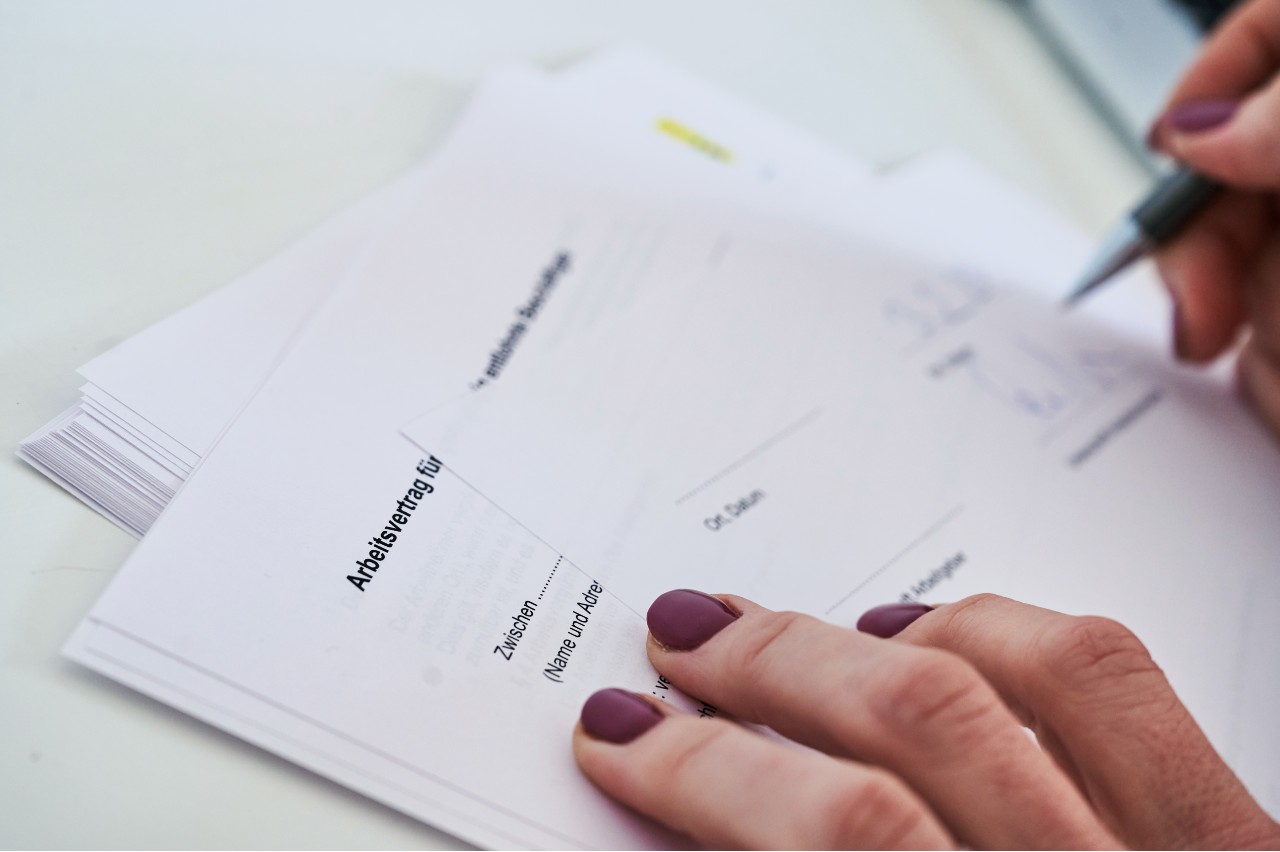
In most cases, traditional paper contracts will no longer be required under the new law - meaning that employees could in future get their contract via email or even via an online messaging app.
Currently, the Nachweisgesetz, or Verification Act, dictates that key contract terms have to be provided to employees in a physical format with a handwritten signature. This included information such as the start date of employment, the names and addresses of both parties, and agreed working hours.
READ ALSO: Will Germany's 'right to work from home' ever be introduced?
The new legislation dispenses with this rule, allowing the contract to be delivered in any printable electronic format. Although it still has to contain key information for the employee, no handwritten signature will be required, and qualified digital signatures won't be needed either.
Instead, new employees will simply have to input plain text into the document and verify to their employer that they have received and understood the document.
Does this apply to all contracts?
There are some exceptions - most notably fixed-term or short-term contracts, such as project work or a period of work to cover parental leave. These types of contract will stick require a physical signature in future.
This will also apply to sectors with a higher risk of illegal employment, such as hospitality, logistics, and meat processing.
Anything else I need to know about?
In addition to digitalising work contracts, other workplace documents will also go digital, paving the way to a far more online work environment.
Notices related to work schedules, maximum working hours, and rest breaks, for example - traditionally posted on bulletin boards - can soon be shared entirely online, such as through a company intranet.
Proof of work certificates, known as Arbeitszeugnisse, can also be delivered to employees electronically when they leave.
Applications for parental leave, part-time work during parental leave, and caregiving leave can also be submitted digitally. Employers, in turn, can respond digitally if they need to reject requests for part-time work based on operational needs. No handwritten signatures will be necessary in these exchanges.
Additionally, companies will benefit from shorter record-keeping requirements. Most daily business transaction receipts will only need to be kept for eight years instead of ten. That said, payroll records must still be kept for at least six years.
READ ALSO: Four steps to take straight away after losing your job in Germany
What are people saying?
While the law brings some welcome changes, experts believe Germany is still a long way away from the digital office of the future.
According to labour lawyer Julia Förster from the law firm Freshfields, more could have been done, such as allowing digital signatures for all fixed-term contracts.
Nevertheless, the changes could go some way to quelling the "astonishment" felt by foreign companies and employees when they encounter hand-written signatures in Germany, Förster told Spiegel.
Some critics also view the law as too incremental. The German Economic Institute (IW) in Cologne points out that of the more than 400 proposals for reducing bureaucracy submitted by businesses, only about 11 have been implemented in the new law.
The IW also believes the forecasted relief of around €1 billion per year is insufficient, given that bureaucracy costs the German state an estimated €65 billion annually.
Comments