
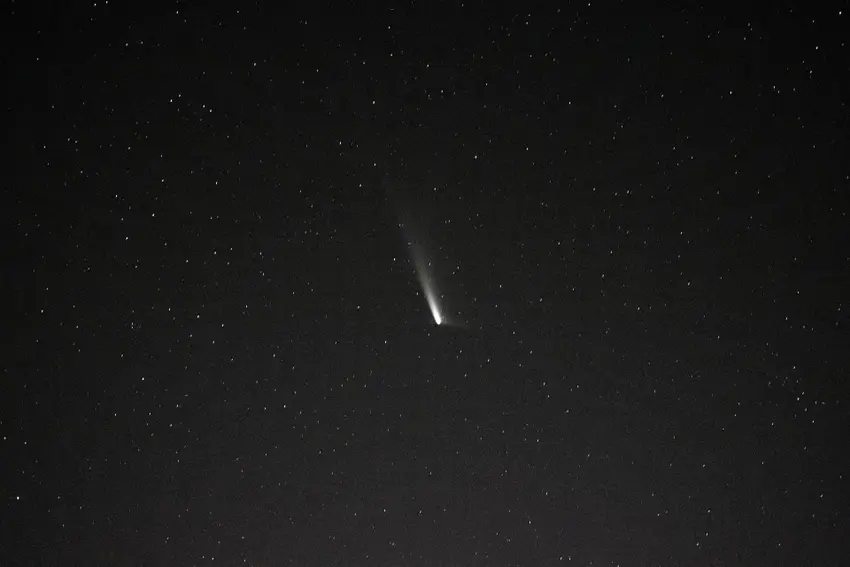
Astronomers first identified the comet in 2023, but it hasn't passed close enough to Earth to be visible until now.
As it passes through our solar system, the comet has become visible from certain parts of the planet - including India - as it has moved away from the sun.
On Thursday, October 10th, people in Germany and in other parts of Europe will start to be able to see it with the naked eye - although binoculars and telescopes should make it easier to see, particularly the comet's long, bright tail.
The best conditions to see the comet will be on Thursday the 10th and Friday the 11th, with the comet's light waning a bit from then until Tuesday October 15th. At that point, its visibility will drop off considerably and it will only be visible using a telescope by October 20th.
Of course, light pollution - such a from city lights - will make the comet harder to see. So it's best to head west out of the city to see it best, as it passes to the left of the Heze star in the Virgo constellation.
Bad weather could also affect your chances of getting a good view. While leftovers from Storm Kirk could impact visibility on Thursday, the forecast improves to sunnier weather on Friday. Given Storm Kirk's current forecast, people in the west of the country may see more negative effects on their chances of seeing the comet - but the storm is forecast to clear before the comet's visibility starts to dim.
Many scientists are calling Tsuchinshan-ATLAS "the comet of the century" - as it will shine brighter than anything in the night sky except for the moon - a rarity for stellar phenomena of its kind.
Comets that come close enough to earth to be visible to the naked eye on Earth are distinct rarities. Tsuchinshan-ATLAS marks only the fourth since the turn of the century. The last such great comet was NEOWISE in 2020.
READ ALSO: Storm Kirk: Ex-hurricane to sweep over Germany before warm weather returns
Comments