
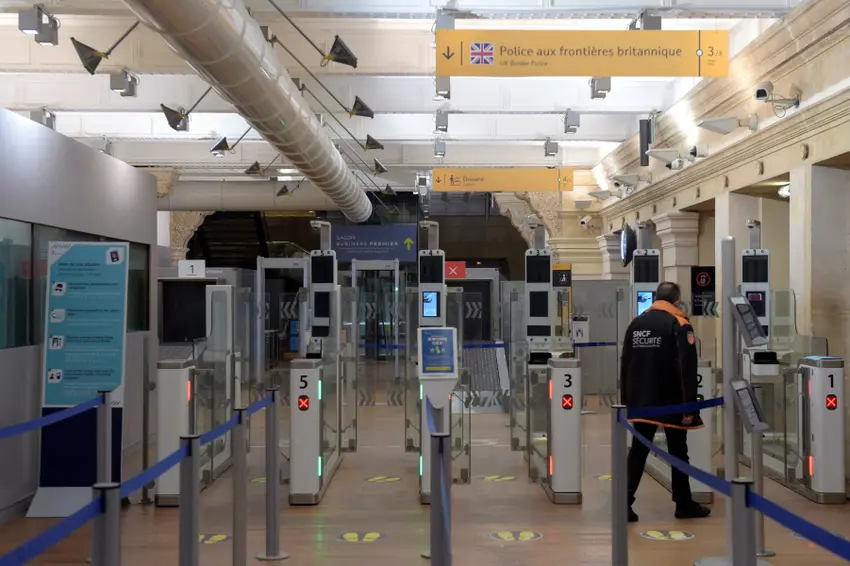
After several delays, EU Home Affairs Commissioner Ylva Johansson finally announced in August that November 10th would be the official launch date for the entry into operation of EES - a new layer of biometric border checks for non-EU travellers each time they enter the Schengen Area.
But sources in Brussels have now told The Local that several member states have raised concerns about the necessary preparations and that the system may face yet another delay or a “partial start”.
READ ALSO: Explained: What is EES and how will it affect travel
For the EES to go live, the “interoperability” system, the digital infrastructure that will connect large-scale IT databases related to border controls and operators in all participating countries, will have to be tested and fully functioning.
A source told The Local that member states were not yet provided the necessary functionalities for the live testing.
Recent articles in the UK media suggested that France, Germany and the Netherlands had raised concerns with the European Commission in this regard.
These three countries have the largest passenger traffic affected by the entry into operation of the EES due to their international airport hubs where thousands of travellers from non-EU countries arrive each day and, for France, the busy border with the UK, which is no longer in the EU.
National authorities, the Commission and eu-LISA, the agency in charge of the IT infrastructure, are said to be “in dialogue” and considering various options, including a phase-in period, a partial start or a simple delay. There are no details at present on the preferred solution or a specific start date.
An information campaign to raise awareness about the EES among non-EU nationals intending to visit the Schengen territory was supposed to start approximately three months before the launch, according to official documents, but it has yet to begin.
A European Commission spokesperson told The Local in an email: “Member States are working hard towards the implementation of the Entry/Exit System to ensure that it starts operation on time. The Commission is in close contact with all member states to support them to prepare for the entry into operation, as well as with eu-LISA.”
Countries are said to be “very keen” on the implementation of the scheme, which was designed to “protect borders” and ensure short-term visitors do not remain in the Schengen area for more than the 90 day limit in any 180-day period.
EU ministers may also address the topic at the EU justice and home affairs Council meeting on October 10th and 11th.
READ ALSO: In detail: Who is exempt from Europe's EES passport checks?
Under the EU Entry/Exit System (EES), non-EU citizens (except for residents and other exempt nationals) travelling to Schengen countries for a short stay will have to register their biometric data in a database that will also capture each time they cross an external Schengen border.
Passports will no longer be manually stamped, but will be scanned. However, fingerprints and photos will have to be registered in front of a guard at the first crossing, raising concerns that the extra time needed for this initial registration could generate long queues, especially in the UK, where there are juxtaposed border controls with France.
In May, Guy Opperman, then Under-Secretary of State at the Department for Transport, told a parliament hearing that there would be a “soft launch” of the scheme, with 6 months before “a full go live” during which EU member states and the UK could deploy flexibility measures should problems occur.
READ ALSO Why is the UK-France border such a problem for the new EES checks?
Comments (1)