
More Nazi forced labour uncovered at German biscuit firm
Germany's Bahlsen biscuit empire has apologised for the "painful" findings of a new report showing that it used several times more forced labourers than previously thought during the Nazi period.
The report was commissioned after family heiress Verena Bahlsen sparked outrage in 2019 by claiming that the firm "paid forced labourers as much as Germans and treated them well" during World War II.
But the study by two historians published this week identified almost 800 people -- many from Poland and Ukraine -- who were forced to work for the company, several times the previous estimate of between 200 and 250.
In a statement the Bahlsen family called the findings "uncomfortable and painful" and expressed regret that the company "didn't confront this difficult truth before now".
"We as a family did not pose the obvious question of how our company was able to get through World War II," the statement said Tuesday.
The company, founded at the end of the 19th century, used the forced labour to produce rations for German soldiers during the war.
READ ALSO: Why November 9th is a crucial day in German history
"Our ancestors... took advantage of the system in the Nazi period," the family said, calling the company's behaviour "unforgivable".
Verena Bahlsen swiftly apologised for what she called her "thoughtless" comments in 2019. She left the firm three years later.
Founded by Verena Bahlsen's great grandfather at the end of the 19th century, the biscuit company was previously known to have employed several hundred mostly women labourers, who were made to work against their will by Hitler's regime between 1943 and 1945.
The new findings suggest forced labour was used over a longer period, between 1940 and 1945.
Six people injured after balcony collapses in Hamburg
Police are investigating potential criminal negligence after a tragic accident ended a moving party in Hamburg on Wednesday night.
According to initial findings, five men and one woman were standing on the balcony of an apartment in Langenhorn at around 9:30pm when the floor gave way. The 18 to 27-year-olds fell several metres to the ground from the third floor.
One of the 27-year-olds suffered life-threatening injuries.
In the early hours of Thursday afternoon, the police had no new information on his state of health. The others escaped with minor and moderate injuries.
One of them is 19-year-old Emilian Busch. He and his friends had moved the washing machine and fridge into the flat together that day, Busch told DPA. The friend had wanted to move into the flat at the weekend. "But I guess that's all over now."
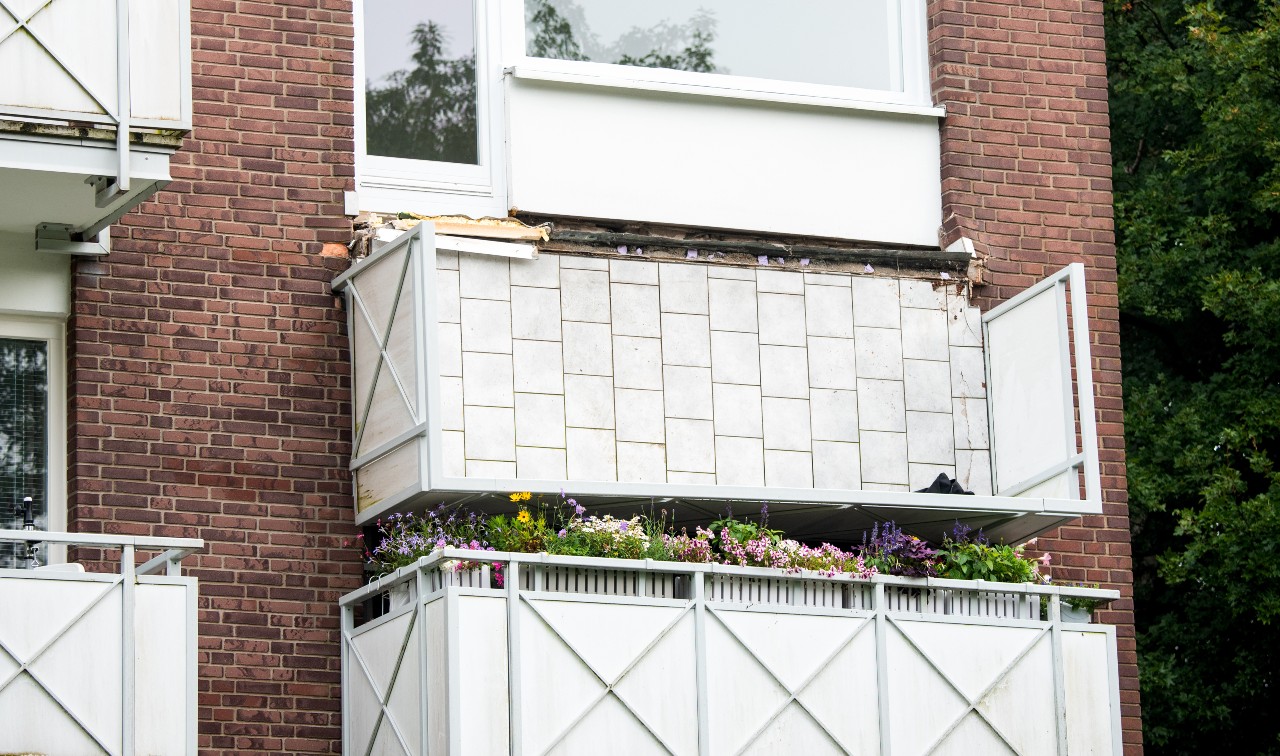
After the work was done, the removal helpers stood on the balcony to smoke when the floor slab suddenly gave way.
"We were standing there talking, then there were two loud cracks and then it went down," said Busch. "Then it just folded away and we all fell down three storeys."
The 19-year-old returned to the scene of the accident with his parents the day after the accident in order to better process what had happened.
As of Friday, it was still unclear why the floor slab of the balcony broke, causing the balcony to tilt downwards by 90 degrees.
According to the police, the Northern State Office of Criminal Investigation is now also investigating whether any criminal behaviour was involved. This could include construction defects or a dilapidated state of the building.
However, it also possible that it was simply a tragic accident, said a police spokeswoman.
Renewed fears of water supply sabotage in Germany
Authorities in western Germany have warned some 10,000 residents not to drink the tap water after a hole was found in a fence around a water tank that also supplies a nearby military base, in the second such incident this week.
Local authorities in the town of Mechernich said the cut fence was discovered Thursday afternoon and that tests were currently being carried out to determine if the water had been contaminated.
Germany -- a key ally of Kyiv -- has been on high alert for sabotage and attacks on military facilities in the country in the wake of Moscow's 2022 invasion of Ukraine.
"Due to unauthorised access" to Mechernich's drinking water system, "there may have been a health-endangering contamination of the drinking water," said a statement on the town's website late Thursday.
Residents of Mechernich and surrounding towns, some 10,000 people overall, were told to avoid using the water for drinking, showering, cooking or washing clothes.
Mechernich's water system site also supplies a nearby Bundeswehr military base, and the hole in the fence was spotted after patrols were increased this week following a suspected act of sabotage at a base near Cologne airport, local official Thomas Hambach told German media.
The Cologne-Wahn base was temporarily sealed off Wednesday after a hole was discovered in a fence near drinking water storage facilities.
Tests later showed "unusual values" in the water, the military said.
The defence ministry said authorities were investigating a possible act of sabotage.
Around the same time, NATO announced there had been an attempted trespassing incident late Tuesday at its base in the western German town of Geilenkirchen, which houses AWACS reconnaissance aircraft.
Ukraine rejects as 'nonsense' alleged role in Nord Stream blasts
Ukraine on Thursday rejected as "absolute nonsense" suggestions it was involved in the 2022 sabotage of the Nord Stream pipelines, which transported Russian gas to Europe via the Baltic Sea.
The Wall Street Journal reported late on Wednesday that Ukraine's then top military commander, Valery Zaluzhny, oversaw the plan to blow up the pipelines in September 2022.
"Ukraine's involvement in the Nord Stream explosions is absolute nonsense. There was no practical sense in such actions for Ukraine," Ukrainian presidential aide Mykhailo Podolyak told AFP.
"It is clear that the explosions of the Nord Stream pipelines did not stop the war, did not deter Russian aggression, and did not affect the situation on the front line," he said.
READ ALSO: Germany opens probe of likely 'blasts' against Nord Stream
"Moreover, such an action significantly strengthened Russia's propaganda capabilities," he added, suggesting Russia had "direct motives" for carrying out the blasts.
Nord Stream's twin gas pipelines, which ran from Russia to Germany under the Baltic Sea, came under intense scrutiny when Moscow invaded Ukraine in February 2022.
Several large gas leaks were discovered emanating from the pipelines in September 2022, with seismic institutes recording underwater explosions just before.
The pipelines were not in operation when the leaks occurred, but they still contained gas that spewed up to the surface and into the atmosphere.
The Journal report came shortly after German media outlets reported German investigators probing the sabotage were now focusing on Ukraine, and had issued an arrest warrant for a Ukrainian man.
Germans prepared to pay more for leisure activities
Germans are prepared to spend more money on activities in their free time - despite the fact that prices have already risen due to inflation.
This is the result of a survey by the Hamburg-based BAT Foundation for Future Studies.
According to the study, some price hikes that are perceived as reasonable actually exceed current price increases.
While ten years ago people only wanted to pay an average of €23.70 for a visit to a restaurant, in 2024 they felt €31.70 was reasonable - almost 34 per cent more. This is around ten percent more than the overall price increases between 2014 and 2024, according to the foundation's estimates.
The biggest price jump compared to 2014 was the collection box at church, which the survey respondents said they would give 50 percent more to: while €2.10 was still considered reasonable in 2014, the current sum is €3.10.
READ ALSO: What's getting more expensive (or cheaper) in Germany?
Next on the list was amusement parks, where Germans said they were prepared to pay 40 percent more for entry than a decade ago. The foundation sees several reasons for this - including the fact that visitors often see a visit to a leisure park as a special event.
With reporting by DPA and Imogen Goodman
Comments