
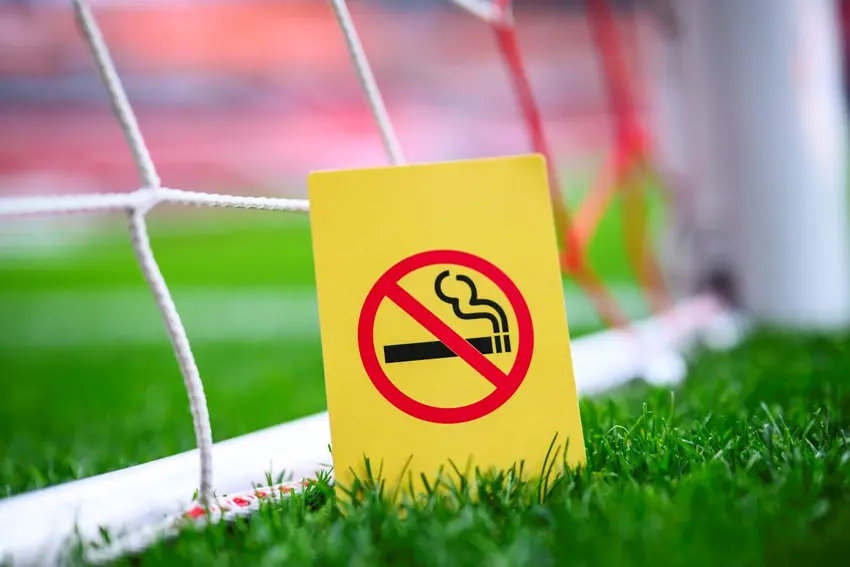
‘World No Tobacco Day’, called Weltnichtrauchertag in German, was created by the World Health Organisation in 1987 to draw global attention to the tobacco epidemic and the preventable death and disease it causes.
This year Weltnichtrauchertag is observed on Sunday, May 31st.
Tobacco use is often thought of as a problem of the past, especially in western countries where smoking rates have slowly declined in recent decades.
But according to the Robert Koch Institute, smoking is still the most significant cause of premature mortality in industrialised nations. In Germany alone, 127,000 people die as a result of smoking each year.
Still, anyone who has spent a night out in Germany recently can tell you that smoking is still prevalent in the country.
In fact, smoke-filled bars and clubs in parts of the country are known to be shocking to visitors coming from countries where smoking indoors has long been banned.
A brief history of Germany’s smoking policy
Today we tend to think of anti-smoking campaigns as a contemporary phenomenon, but in Germany they date back as far as the mid eighteen-hundreds.
From the beginning of the 20th century, during the Weimar republic, an anti-tobacco movement was growing, fuelled by the work of German researchers who began compiling evidence linking smoking to health hazards.
READ ALSO: German government pushes to ban smoking in cars with children
In the 1930s to early 1940s, anti-tobacco campaign posters were produced and disseminated in Nazi Germany. But overall tobacco policy was incoherent, with some Nazi leaders condemning smoking and others smoking publicly and denying its health risks.
Ne Fluppe in der Bahn anstecken? Heute undenkbar! Während S-Bahnen in Ost-Berlin schon jahrzehntelang rauchfrei waren, konnten Nikotinfreunde in West-Berlin noch bis 1984 in bestimmten Wagen (rotes „Raucher“-Schild über der Tür) ihrem Laster frönen. #WeltNichtrauchertag 🚭 pic.twitter.com/dEXsgOANd9
— S-Bahn Berlin (@SBahnBerlin) May 31, 2024
After the war, and the following division of the country, smoking policy diverged somewhat between former East and West Germany. For example, S-Bahn trains in East Berlin had been smoke free for years whereas trains in West Berlin maintained smoking carriages until 1984.
What are Germany’s current smoking laws?
Germany’s primary nationwide smoking law has been in place since 2007, which prohibits smoking in federal government buildings and on public transportation. Fines for violations can range from €5 to €1,000.
Additionally, it is illegal to sell tobacco products to minors or to let minors smoke in public.
Beyond those basic rules, however, Germany’s states retain the power to set and enforce their own smoking laws. Generally, smoking policies are similar across the German states but the fines for violations vary. Furthermore, the entire country is known for having a somewhat lax approach to anti-smoking legislation.
READ ALSO: OPINION - Why can't Germany cut out its smoking habit?
Bavaria, which bans smoking indoors at any bar or restaurant, has the strictest smoking laws. But even here, smoking is generally permitted on restaurant terraces, and sometimes in tents.
In other parts of Germany, the smoke-filled dive bars and Kneipen (pubs) can be quite shocking to foreign visitors.
Can anyone explain why so many Germans are averse to deodorant with aluminum but are totally fine with smoking like a chimney?
— Summer Rylander (@summeroutside) May 26, 2024
Technically, smoking in bars and clubs is only permitted in separated smoking rooms, but in many regions, including Berlin, the rule is rarely enforced.
In 2023, local leaders in Berlin’s Friedrichshain-Kreuzberg and Mitte neighbourhoods warned that there would be increased check-ins on venues to enforce the indoor smoking ban – with €100 fines for smokers and €1,000 fines for venues caught violating the rules.
This has led to more frequent spot checks and some clubs actually enforcing a ban on lighting up indoors.
But in most of the bars where smoking is prevalent, little has changed.
READ ALSO: Berlin's smoking culture drew me here. It also gave me a reason to finally quit
Comments (3)